


 Shkruar nga Pamfleti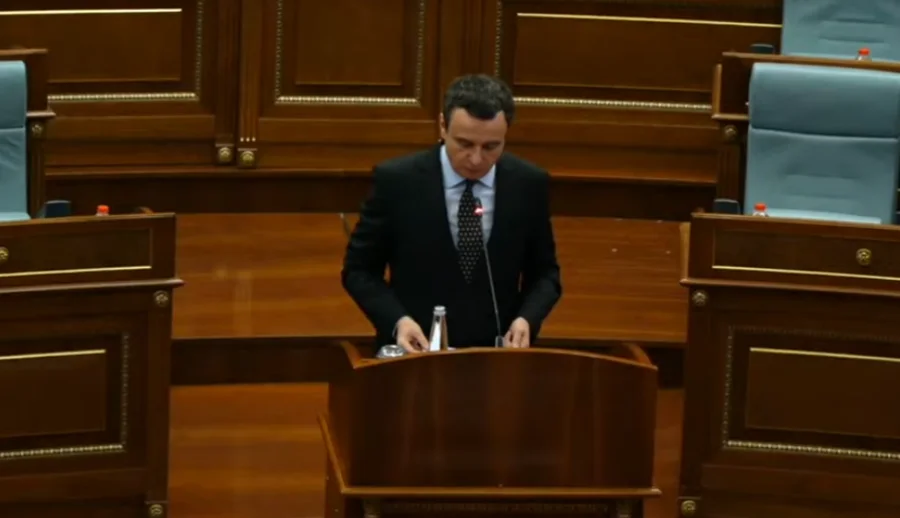
Polls are not made public in Kosovo, so there is little indication of how the elections will go...
Kosovo will hold elections on December 28 after a year-long political stalemate that led to the dissolution of Parliament and left a 1 billion euro gap in the small Balkan country's weak finances.
Prime Minister Albin Kurti's Vetevendosje party won the last elections in February, but failed to secure a majority or find a ready coalition party after a tough campaign.
Many fear that a repeat of this result could plunge Europe's newest state into further crisis, just 4 months before parliament votes for a new president and as deadlines for ratifying international loans approach.
"These elections will be the most important in Kosovo's recent history, because they are coming after a year of deadlock, but also 4 months before a new president is elected," said political analyst Artan Muhaxhiri.
"If Kurti wins again with around 42%, this whole deadlock will repeat, because the gap between Kurti and the other parties is huge, insurmountable," he added.
Polls are not made public in Kosovo, so there is little indication of how the elections will go.
But it seems unlikely that any of the main opposition parties would be willing to form a government with Kurti, who they say has fueled tensions with Kosovo's ethnic Serb minority in the north, done little to improve living standards and damaged Kosovo's reputation abroad.
Kurti, who came to power in 2021, blames the opposition for the impasse and remains publicly optimistic about the support of the 500,000 "hearts" needed to win an outright majority.
At a rally this week, he promised to raise salaries, spend one billion euros a year on capital investments and create a new prosecution unit to fight organized crime.
"I now believe that it has never been more realistic than now to have Kurti 3," he told Kanal 10, the local television station, using his mandate for a third term.
The year of political paralysis
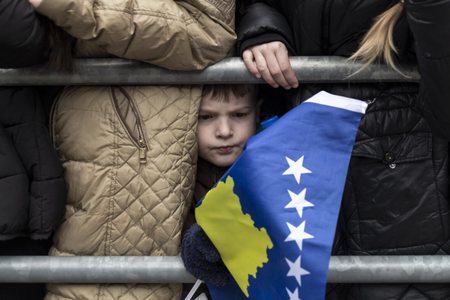
Kosovo gained independence from Serbia in 2008 with US support, which included a NATO bombing campaign in 1999 against Serbian forces, who waged a brutal campaign to suppress an uprising by the 90% ethnic Albanian majority.
Despite international support since then, the country of 1.6 million people has struggled with poverty, political instability and organised crime. Kurti's first term was the only one in which a Pristina government has completed a full term.
This instability was on full display this year, when lawmakers needed 73 votes over six months to elect a speaker of parliament, a position that had to be filled before a winning party could attempt to form a government.
Even then, Kurti could not secure a majority and withdrew to allow his ally Glauk Konjufca to take office. When Konjufca failed, President Vjosa Osmani dissolved parliament and called for December elections.
"At the moment, the state is not effective. Everything here needs to change because nothing is working," said 79-year-old Pristina resident Shaip Gashi.
Kosovo's strained finances
The result has been dire for Kosovo's finances, which are already strained by European Union sanctions imposed for what the EU called Kurti's role in fomenting conflict with Serbs in northern Kosovo, where they form the majority.
The EU is determined to lift these measures after Serbian mayors were appointed following local elections held in October.
However, around 880 million euros ($1.03 billion) of EU funds for Kosovo's budget have been delayed, as well as 127 million euros of financial support from the World Bank, including some aimed at strengthening the health and education systems.
These funds are urgently needed in one of Europe's poorest countries, which is lagging behind its Balkan neighbors in both sectors.
The World Bank told Reuters that 90 million euros of this support will be cut off if it is not ratified by the Kosovo Parliament by February 13. Deadlines for the rest are in April and May.
Some of the EU's money could also be at risk, politicians have said.
"People are anxious for things to move forward. They are trying to pay for medicine and electricity," said Vlora Çitaku of the opposition Democratic Party of Kosovo, which has campaigned for increased quality of life through healthcare and education, as well as wage increases. / Adapted from Reuters /


Lini një Përgjigje