


 Shkruar nga Pamfleti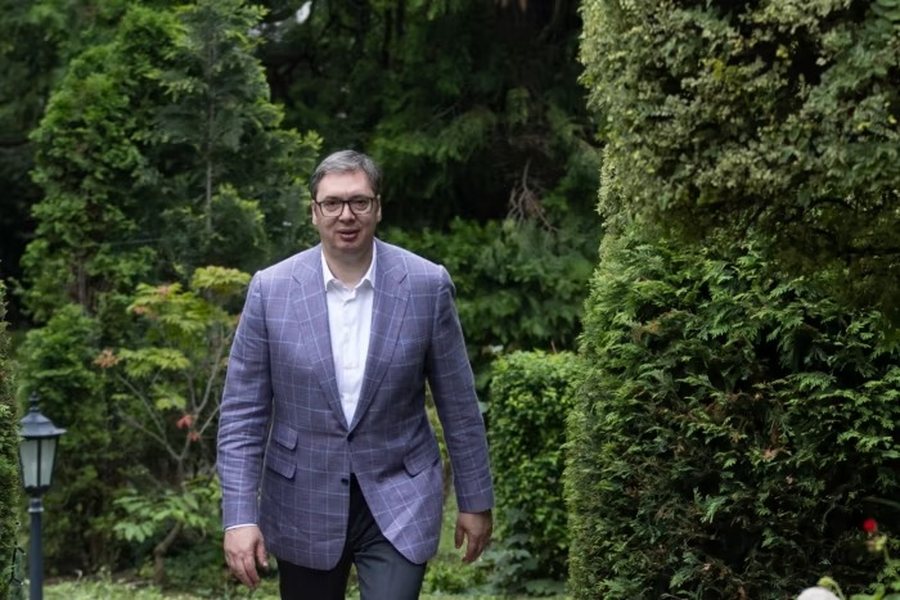
"Corruption displaces meritocracy."
The prestigious British "Financial Times" has devoted an article to the sale of weapons from Serbia to Ukraine, writing how this caused the West to change its attitude towards Serbia after the outbreak of tensions in the north of Kosovo.
Serbian President Aleksandar Vucic said he is not opposed to his country selling ammunition to middlemen who send those weapons to Ukraine, a signal that Russia's staunch Balkan ally is turning to the West.
Aleksandar Vucic has traditionally supported Moscow and refused to join Western sanctions against Russia after its invasion of Ukraine. But in a change of tack, the Serbian president said he was aware of US government reports that Serbian munitions have ended up in Ukraine through intermediaries and that he had no plans to stop that.
"Is it possible for it to happen? I have no doubt that it can happen," Vucic told the Financial Times.
"What is the alternative for us? To not produce it? Not to sell it?"
According to three Western diplomats in the region, the supply line that carries Serbian munitions to the Ukrainian front has been a decisive factor in an apparent turnaround since the US, NATO and the EU recently backed Serbia after a flare-up of tensions in Kosovo.
Asked if it was a deliberate step to win the approval of Western capitals, Vucic claimed that Belgrade tried to act in a "neutral way".
"But I'm not stupid. I am aware that some of the weapons may end up in Ukraine."
Vucic admitted he was walking a tightrope between Moscow and Western powers, but said he would not help the Russian war effort.
"We joined all the UN resolutions," Vucic said, referring to UN statements condemning Russia's occupation of Ukraine.
“We join re-export bans, such as dual-use [technology] in drones. . . We will not be a node to re-export something to Russia".
He added that the days when he spoke with Russian President Vladimir Putin every three months were over, noting that he has not been in contact with the Kremlin for a year except for receiving visitors from Moscow.
"This has never happened before," he said.
The US ambassador to Serbia, Christopher Hill, told the FT that Ukraine has surpassed every other issue in Europe and especially in the Balkans, where Russia has traditionally had influence.
"Ukraine is absolutely crucial and we're at a point where everyone needs to be on the same page," Hill said.
“When people are on board, relationships improve.”
Serbia's strong ties to Russia and its potential to disrupt regional security have led Western capitals to adopt a softer stance toward Belgrade, according to Janes, a reliable defense intelligence source.
"Given the risk of military escalation in northern Kosovo, Western governments do not want to risk another conflict in Europe," said Jane's analysts Stefano Marras and Ines Gonzalez.
This withdrawal approach carries risks, said Engjellushe Morina, a senior fellow at the European Council on Foreign Relations.
"Kosovo has made its own mistakes as part of the process — but the West's pandering to the essentially anti-Western orientation of Serbia's foreign policy helped pave the way for the latest violence," she wrote.
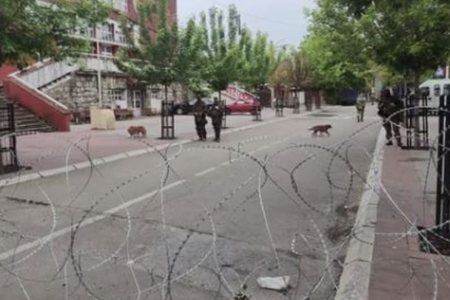
Vucic said he did not expect progress in northern Kosovo, where violence erupted last month when local Serbs sought to boycott the appointment of ethnic Albanians as mayors after contested elections.
The EU told Kosovo to repeat the vote and insisted that Serbs participate in the election and see the result.
Vucic said that this would be impossible until the demands of the Serbian community are met, such as the removal of heavily armed Albanian police units.
"Then we can start discussing other things," said Igor Simic, vice president of Lista Serbe, the main political party of the Serb community in Kosovo, who said he had little confidence in meeting those demands quickly.
"We are not thinking about the elections".
Domestically, Vucic also has to deal with growing anger after two mass shootings a month ago that left dozens of people, mostly schoolchildren, dead.
A series of protests in recent weeks reflected growing public discontent with the decade-long rule of Vucic and his SNS party, seen by protesters as increasingly autocratic and corrupt.
The president resigned from the party leadership and plans to form a group of his allies, but said the protests do not threaten stability. Demonstrations, like the Kosovo conflict, are unlikely to disappear. The largest protest, the fifth in a month, drew tens of thousands of people from across the country to Belgrade on Saturday.
"The shooting was a 'wow' moment," said Savo Manojlovic, leader of the NGO rights group Kreni Promeni (Go Change), which has helped organize the protests.
"You have it in every public enterprise, in every institution. Corruption displaces meritocracy," says the Financial Times article.


Lini një Përgjigje