


 Shkruar nga Pamfleti
Following this move by the US, NATO's top diplomat said there is serious concern, as "things in the Western Balkans could escalate quickly."
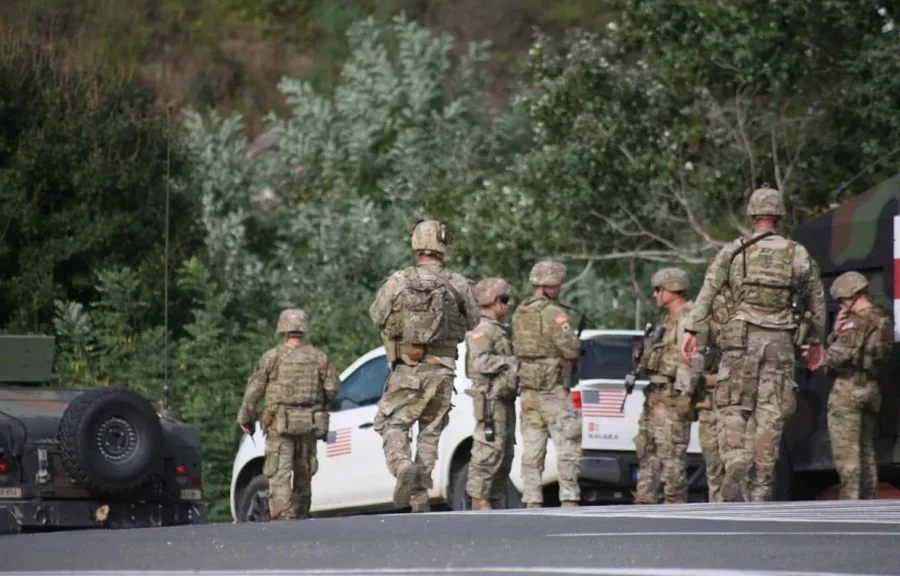
The United States, under President Donald Trump, is pressuring NATO to significantly reduce activities outside its traditional territory, including ending a key alliance mission in Iraq, POLITICO reports.
According to them, the US has also lobbied in recent months for the reduction of NATO's peacekeeping mission in Kosovo (KFOR), as well as for Ukraine and Indo-Pacific partners not to officially participate in the alliance's annual summit to be held in July in Ankara.
This initiative reflects the White House's effort to treat NATO as a strictly Euro-Atlantic defense pact and to undo decades of expansion toward crisis management, global partnerships, and values-based initiatives - areas that have long irritated the US president and his MAGA (Make America Great Again) political base.
Within NATO, this approach has been called a “return to the core mission,” meaning limiting “out-of-area” activities that go beyond the core tasks of defense and deterrence.
Pressure to withdraw from Iraq
NATO currently maintains an advisory mission in Iraq, aimed at strengthening security institutions and preventing the resurgence of the Islamic State. This mission was established during Trump's first term in 2018 and has been expanded several times since 2021, at Baghdad's request.
According to diplomats, Washington has sought to end the mission by September. In parallel, the US is expected to withdraw about 2,500 troops from Iraq under a 2024 deal with the Iraqi government, as part of Trump's commitment to end "endless wars."
Security experts warn that the withdrawal of NATO and the US could empower militia groups and destabilize the region, including northern Kurdistan.
However, there is opposition within the alliance. According to diplomats, most member countries are open to a gradual reduction of the mission, but not to a rapid end.
Early discussions on reducing KFOR in Kosovo
More worrying for European allies is the US signal to reduce NATO's presence in Kosovo. The UN-authorized KFOR peacekeeping mission, established in 1999 after the wars in the former Yugoslavia, currently numbers about 4,500 troops.
Engjëllushe Morina, senior policy fellow at the European Council on Foreign Relations, said the mission remains "essential" for regional security.
"If NATO withdraws, this could encourage Serbian separatists in northern Kosovo and have a ripple effect in the region, including Republika Srpska in Bosnia and Herzegovina," she said.
A senior NATO diplomat has said there is serious concern that "things in the Western Balkans could escalate quickly."
However, NATO officials emphasize that there is no timeline for the end of the mission in Iraq or for KFOR and that any decision requires the approval of all 32 member countries.
Pressure to exclude Ukraine and Indo-Pacific partners
The US is also pushing for Ukraine and NATO’s four official Indo-Pacific partners – Australia, New Zealand, Japan and South Korea – not to be invited to the formal meetings of the July summit in Ankara. According to diplomats, this is argued as an attempt to reduce the number of meetings and focus the summit on “core” NATO issues.
Such a decision would signal a greater focus on core alliance issues, leaving global partnerships in the background.
NATO has also decided not to hold the Public Forum this year, a side event that usually increases the summit's visibility and includes leaders, defense experts and government officials. Officially, this is due to budget savings, but some diplomats believe that the decision is indirectly due to US pressure to reduce funding for international organizations.
According to critics, at a time when NATO is trying to convince public opinion of the importance of its activities and increasing defense spending, limiting public communication could be harmful.


Lini një Përgjigje