


 Shkruar nga Pamfleti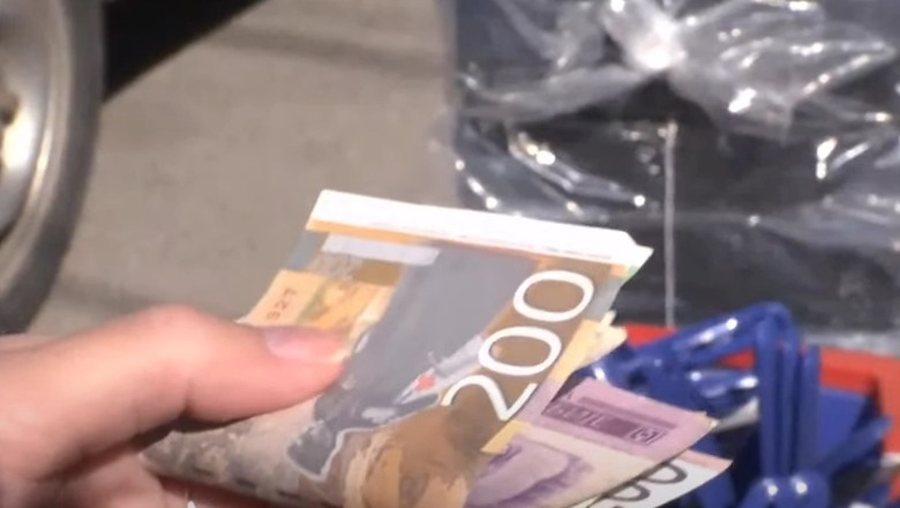
For the meeting set for Tuesday regarding the issue of the Serbian dinar, neither the Kurti Government nor the Central Bank have made it clear who exactly will represent Kosovo. Meanwhile, in Serbia they have declared that the head of the Office for Kosovo and chief negotiator Petar Petkovic will represent Serbia.
Two days before the meeting in Brussels regarding the ban on the use of the dinar as a means of payment in Kosovo, the Serbian media reported that the chief negotiator of Serbia, Petar Petkoviči, will be the head of the Serbian delegation.
"The delegation from Belgrade, led by the director of the Office for Kosovo, Petar Petkovic, will participate in the new round of dialogue in Brussels", announced the Serbian news agency "Tanjug".
Meanwhile, the Government of Kosovo has only shown who will not go to the meeting. Klisman Kadiu, Media Adviser to the Deputy Prime Minister Besik Bislmi, did not clarify who will go to the meeting, but only referred to the editors in the answer which states that the political level, the chief negotiator and members of the negotiating team will not participate in this meeting .
The answer has not been offered by the Central Bank of Kosovo, which has also received the regulation, according to which from February 1, the only currency for cash operations is the Euro.
Regarding this meeting, the Deputy Prime Minister Bislimi and the spokesperson of the European Union, Peter Stano, clashed at a distance last week. Bislimi has accused the EU mediator, Miroslav Lajcak, of having violated the principles he set himself at the beginning by calling a meeting without coordination with the parties. The EU spokesperson has called Bislim's statement unacceptable.
The opposition has blamed the Government for, as they said, introducing the dinar as an issue in the dialogue. Zenun Pajaziti, member of the Presidency of the PDK, said that the Government bears full responsibility regarding the issue of the dinar.
"The government has not made any creative effort to address this issue. Moreover, he raised the issue of the dinar as a matter of dialogue. This government has full responsibility for making the dinar such a topic, which is costing the government and us as a country. These, like other times, have entered into topics without an agreement with the partners, those who we constantly have full coordination and then the withdrawal has cost us a lot... We are not dealing with a seriousness of solving these problems that have was part of the dialogue, but completely populist actions, which more than an attempt to solve these problems once and for all, are aimed at luring voters for the upcoming election processes", said Pajaziti.
The analyst Albinot Maloku says that it is noticed that the mediator does not have a clear idea for solving the major issues of the dialogue.
"As long as there is no concretization, for reasons that are obligatory, the EU has told the parties that it is not necessary to have a signature for it, that you must implement this agreement and that on the basis of this non-vision of the EU anyway that will maneuver - the parties each in their own way with the maximum will to give a destructive direction to the dialogue process", stated Maloku.
Since February 1, the new CBK Regulation on cash has entered into force - which states that the only means of payment in Kosovo is the euro currency.
Since that date, the dinar has not been allowed to enter Kosovo. At the border point in Jarinje, vans filled with this Serbian currency have been turned back in several cases.
The state of Serbia allocates millions of euros to Serbs in Kosovo after paying them - through a parallel system - salaries, pensions and social assistance.
Belgrade has severely criticized the CBK Regulation, interpreting it as the goal of the Government of Kosovo to deport Serbs.
The CBK regulation has also been criticized by the international community, which has said that the decision was taken without prior consultation and without considering the impact on the Serbian community.
The CBK has said that the decision will be implemented through a transitional phase of no longer than three months, but without explaining what this phase envisages./ Koha


Lini një Përgjigje