


 Shkruar nga Pamfleti
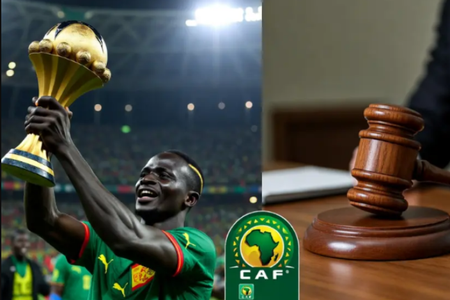
Two months after the Africa Cup of Nations final in Rabat, the Confederation of African Football changed the tournament's winner. On March 17, the CAF Appeals Board stripped Senegal of the 2025 AFCON title and declared Morocco the champions.
The decision is related to the final episodes of the final. At the end of the match, Brahim Diaz fell in the area. The referee did not award a penalty at first, but after verification with VAR decided in favor of Morocco.
Senegal's reaction took the matter off the field. Coach Pape Thiaw ordered the players to leave in protest. Sadio Mane intervened to calm the team and get them back into the game, but his effort did not change the course of events. The Appeals Board assessed that Senegal had violated the tournament regulations and applied Article 84, recording a technical defeat 0-3. With this decision, the trophy went to Morocco.
The case was immediately added to the list of precedents where sports justice has changed the official result. One of the most famous examples remains the Serbia-Albania match of October 14, 2014 in Belgrade, in the Euro 2016 qualifiers. That match was interrupted after incidents that began with the entry of a drone onto the pitch and continued with tension in the stands and on the field. The Albanian players also faced physical violence, while some of them suffered injuries.
UEFA initially closed the case with a double decision. Albania lost the match 0-3 on the table, while Serbia was deducted three points and imposed additional disciplinary measures. Later, both federations appealed. The case ended up in the Court of Arbitration for Sport, which overturned the decision and awarded Albania a 3-0 victory. This decision had a direct impact on the historic qualification of the Albanian national team for the European Championship.
The similarity with the Senegal-Morocco case lies in the fact that the sporting result was ultimately determined by the legal bodies and not by the game on the field. The main difference is the weight of the moment. The Albania-Serbia case occurred in the qualifying phase, while the CAF decision affects the final of a continental tournament.
There are other instances of disciplinary interference with severe consequences in the history of African football. In 2019, Ismaily was disqualified from the CAF Champions League after fans threw objects at the assistant referee and Club Africain players during a group stage match. Although that case was resolved on appeal, he confirmed that CAF uses severe measures when it considers that discipline has been violated.
The two-month delay in the decision on the 2025 AFCON final is related to the procedural route. Initially, the CAF Disciplinary Board imposed lighter measures on Senegal. The Royal Moroccan Football Federation then appealed. In the final review, the Appeal Board concluded that Senegal's departure from the field constituted a violation of the regulations and justified a technical defeat.
The decision definitely changed the balance of the tournament. Morocco officially takes the continental title, while Senegal faces the sporting consequences of the protest on the pitch. The case confirms that in football, even after the end of the match, the result can change when the disciplinary bodies consider that the rules have been violated.



Lini një Përgjigje