


 Shkruar nga Pamfleti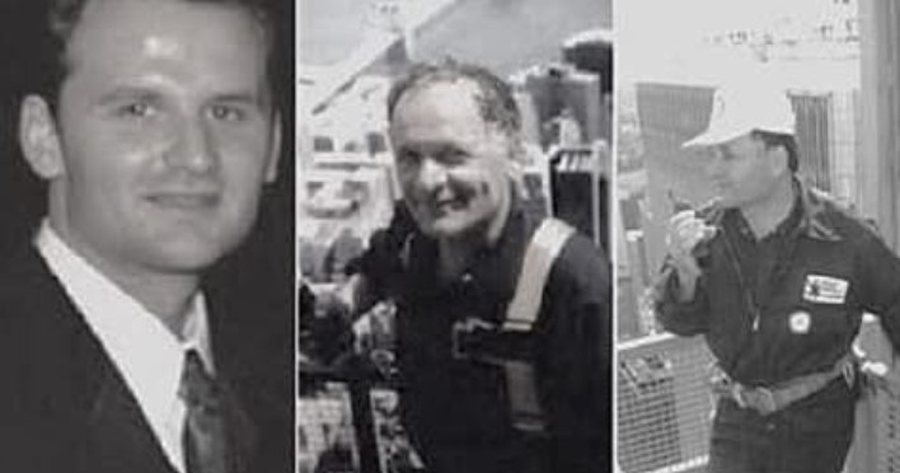
In memory of the terrorist acts of Islamic fundamentalists on September 11, 2001, where among the 2,981 victims, three of our compatriots, Frrok Camaj, Mon Gjonbalaj and Simon Dedëvukaj, lost their lives -
On the morning of September 11, 2001, I was at home in North Quincy, Boston, preparing to slowly depart for Logan International Airport in Boston, where my wife, Natasha, and I were security guards. Suddenly, I learned from the news broadcast by CNN that a domestic airliner had hit one of the Twin Towers in New York. Was it an incident? No, because a little later, another plane hit the second tower. Then I realized that in this case, it was not an incident, but a deliberate and horrific act of terrorism. I later learned that both planes had been hijacked by fundamentalist terrorists. And these terrorists were Arabs.
I do not want to go into further details of the events that followed, because I have described them in the pages of the novel, which, thanks to the care of Mr. Nasir Aijaz, was published in 26 episodes, in the pages of the magazine “Sindh Courier”, published in Karachi, (Pakistan), which he directs. But from that day, the idea of writing a long story dawned on me.
Especially since around noon that day, from the radio and television news broadcasts, we learned that these terrorist acts had been committed with the knowledge and approval of the head of Islamic fundamentalist terrorism, Bin Laden, who was hiding at that time somewhere in the Afghan Highlands. But, nevertheless, this idea remained foggy in my mind. However, during the following days I read with great attention the daily American newspapers that came to us at the airport and that were dedicated to this unimaginable tragedy, which was simply called 9/11.
I was thus introduced to the history of the Taliban, to the criminal activity of Bin Laden, to the doctrine of the fundamentalists preached by him, to the history of the “Twin Towers”, to a similar assassination that had occurred a few years earlier, in one of the towers. But, nevertheless, I was unable to find the threads that would help me build the structure of the composition and the characters that would move along the lines of this prose.
Then, unable to find the key to accomplishing this difficult creative task, I gave up. For weeks and months, even years, I waited to read a literary work about 9/11. In fact, several novels were published, but none of them described how this tragedy happened, how the terrorists were able to pass so unscathed through one of the checkpoints of Terminal 'B' of Boston's Logan International Airport.
In 2005, the famous American director, Oliver Stone, made the successful film WTC (World Trade Center), but this film was also dedicated only to the heroism of firefighters, many of whom, after the collapse of the "Twin Towers", with their courageous interventions in their ruins and the buildings that also collapsed around them, saved hundreds and hundreds of people, even giving their lives. Thus came the year 2008. Again in America and in the world, books dedicated to 9/11 were published, but again, none that told what happened in the two planes that hit the "Twin Towers" during this tragedy of unimaginable proportions.
But one day I was browsing the book “Albanians of America”, a major work by Vehbi Bajrami, a well-known journalist and publicist from Kosovo and director of the Albanian newspaper 'Illyria' published in New York. And, suddenly, I stopped at the chapter; “The Albanians who remained in the ruins of September 11…”. I had heard of these Albanians, but it had never occurred to me that they, three in total, among the nearly 3,000 victims, in the “Twin Towers”, were characters in a literary work.
They were Frrok Camaj, Mon Gjonbalaj and Simon Dedvulaj, from the Albanian regions of Montenegro. Through them, the lines of events that had occurred in the "Twin Towers" would be unraveled, to which other characters would be added...! But to create variety, one would be from Kosovo, a second from the Albanians of Montenegro and the third an Arbëresh, that is, Albanians who settled in Southern Italy, since the 15th century, to escape the Turkish invasion, who, like the first two, worked as window cleaners, on the upper floors of the "Twin Towers".
Another action scene would be one of the planes that is hijacked by terrorists, where the main characters are five of them, two stewardesses, two pilots and some passengers. As is known, none of them are alive, because this plane, as well as the other one, that hit the "Twin Towers", turned into dust and ashes, but it is understood that after they had kidnapped one or two of the stewardesses, the terrorists had killed the pilots, hijacked the plane and hit one of the towers with it. The same thing had happened in the second tower.
The next place of action of the novel would be at a checkpoint in Terminal B, where among the employees, almost all immigrants, as they had been in reality, was Sokol Kama, or, more precisely, I, a former journalist of the Albanian Radio-Television, in the guise of this character. They were also joined by Arab terrorists, among whom, five of them, with real names, of those who hijacked one of the planes, and finally Bin Laden, as well as the architect of these attacks, Mullah Omar, who lived somewhere in the mountain caves of Afghanistan.
Kisha dëgjuar se në njërin nga dy avionët qe goditën kullat binjake, udhëtonte një vajzë, e cila në fund të shtatorit të viti 2001, do të martohej me një gazetar që punonte në një kanal televiziv në New York, martesë që nuk u bë, sepse ajo mbeti e vdekur dhe bashkë me tërë pasagjerët e tjerë të atij avioni. Kjo ngjarje shumë e dhimbshme, për rrethanat e mësipërme në të cilat ndodhi, më shërbeu për të krijuar personazhin e Zhaklinës, stjuardesë e avionit që bën udhëtimin e fundit nga Bostoni, sepse do të martohet me gazetarin Stiv, i cili punon në CNN.
Pasi studiova edhe materiale për njohjen edhe më të thellë të historisë së talebanëve dhe terrorizmit islamik në përgjithësi, nga burimet në google, në pranverë të vitit 2008, nisa të shkruaja një roman me titull; ‘Shtatori i gjëmës së madhe’.
Mirëpo kishte një detaj qe nuk e dija. A kishte pasur në “Kullat binjake”, pika kontrolli? Por ato tashmë nuk ekzistonin. Atëherë shkova në një nga rrokaqiejt me të lartë të Bostonit, takova atje një nga punonjësit e Sikuritise dhe pyeta; nëse veç tij, në katin e parë të këtij rrokaqielli, a kishte në katet e mësipërme, punonjës të tjerë sikuritie?
Ai m’u përgjigj se ishte i ri në këtë detyrë, kështu që unë duhej te pyesja shefin e tij dhe më zgjati një kartëvizite, ku ishin shënuar të dhënat e zyrës së Sikuritisë që mbulonte atë rrokaqiell. M’u duk e tepërt të bëja këtë takim, ndaj nisa të shkruaja kapitujt e parë të romanit. Një paradite të fillim prillit të vitit 208 dëgjova të trokitura në derën e apartamentit.
E hapa dhe pashë përballë meje një mesoburrë, veshur me rroba gjysmë ushtarake dhe gjysmë civile, fytyrë të zbehtë dhe shikim depërtues, që pasi më përshëndeti, më pyeti: “Vij nga FBI-ja. Ju jeni Skifter Këlliçi”? “Po”, – iu përgjigja. “A mund të bisedojmë pak së bashku”? Natyrisht e ftova të futej në dhomën e ndenjes. Pa e zgjatur, më pyeti sërishmi: “A keni shkuar filan ditë dhe filan orë, në rrokaqiellin në rrugën ‘Uashington Strit’, a keni hyrë në atë rroka-qell, a keni kërkuar nga punonjësi i Sikuritisë, të dini…”. Pohova me kokë. “Përse”?- vazhdoi ai. Atëherë u kujtova se cila ishte arsyeja që e kishte shtyrë këtë oficer të FBI-së, të vinte të më takonte. Isha nën mbikëqyrjen e saj.
I shpjegova arsyen…! I tregova se isha shkrimtar se po shkruaja një roman kushtuar 9/11. Mora guxim gjithashtu t’i shpjegoja, se në rast se punonjësit e FBI-së dhe të FAA-së, (Administrata Federale e Aviacionit), me rregullore të re, nuk do të lejonin që pasagjerët të merrnin me vete në avion brisqe, sado të vegjël, shishe me lëng aromatik sprai, shishe me pije alkoolike, gërshërë dhe sende të tjera të mprehta, tragjedia nuk do të ndodhte, sepse me mjete të tilla terroristët, kishin vrarë stuartesa, pilotët dhe kështu ishin bërë zotër të avionëve.
I would also like to add that my wife, Natasha, who worked as a supervisor at one of the checkpoints in one of the terminals, had explained several times to her superiors, and even to FBI and FAA employees, that the above items should not be allowed for passengers to take with them on planes, as there was a risk that they could be turned into dangerous tools by potential terrorists.
The FBI officer regretfully nodded his head and showed me a photo of me talking to the security guard in that skyscraper, a photo he refused to give me despite my request, and after greeting me, he left. A few months later, I finished writing the novel, which was published in May 2010 in Albania. Fortunately, it was warmly received by readers.
Here in America, my American colleague, Carrie Hooper, who, among other languages, also speaks Albanian, revised the translation by the Albanian translator, Anita Muharremi from Kosovo, and thus the novel 'September of the Great Disaster' with the title Disaster September' was published by Lulu Press. Recently, Mr. Nasir Ilijaz published the entire novel in episodes in the Pakistani magazine 'Sindh Courier', which is published in English, and as he explained to me by email, it has been well received, not only by Pakistani readers, but also, thanks to the internet, by readers from other countries of the world. Memorie.al






Lini një Përgjigje