


 Shkruar nga Pamfleti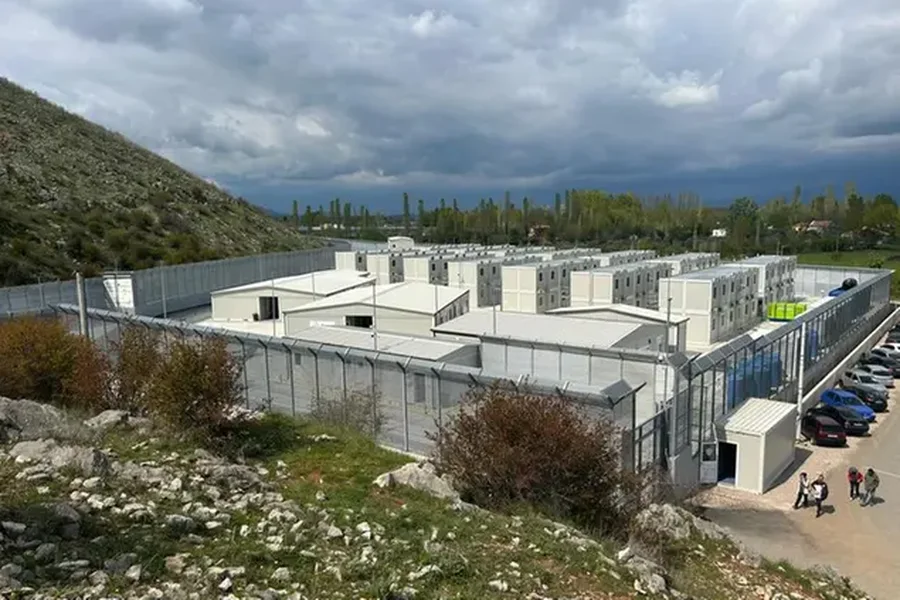
"We saw the center with our own eyes, spoke to almost all the people detained in the first two weeks and consulted the critical events register in depth, revealing a very serious picture," say Scarpa and Strada.
Italian MEP Rachele Scarpa and MEP Cecilia Strada called for urgent intervention by the Council of Europe due to "clear violations of fundamental rights." Critical incidents were 2.7 per day in the 13 days monitored, with approximately 10 suicide attempts.
The lives and safety of people detained at the Gjadra Repatriation Detention Center in Albania are at risk. This is the alarm sent to the European Committee for the Prevention of Torture of the Council of Europe by Democratic Party MP Rachele Scarpa and MEP Cecilia Strada.
The parliamentarians have drafted a written report on the critical issues that emerged during their inspection visits, along with notes made by their opposition colleagues and representatives of the Asylum and Immigration Roundtable.
"In light of the serious discrepancies between the reported practices and the European Convention on Human Rights, with clear violations of the fundamental rights guaranteed therein", MEPs asked the committee to "consider an urgent visit" by Council of Europe experts "to investigate the legitimacy and proportionality of these measures".
The report focuses on the detention of those brought to Albanian centers after the change of destination operated by the government: on March 28 of last year, with a decree, the Giorgia Meloni government transformed what were detention centers for asylum seekers into repatriation centers, in an attempt to save the Albanian project.
While awaiting the decision of the Court of Justice of the European Union on the concept of a safe country, which is due by the summer, the Ministry of the Interior has transferred 41 people who were being held in Italian Inland Revenue Reception Centers, to fill the very expensive (in human and economic terms) centers that have remained empty.
"We saw the center with our own eyes, spoke to almost all the people detained in the first two weeks and consulted the critical events register in depth, revealing a very serious picture," say Scarpa and Strada.
Ten visits, between 9 and 27 April, reveal a major lack of transparency, difficulties in finding information and transfer methods "contrary to respect for human dignity". To date, the MEPs underline, the selection criteria for people to be relocated abroad are still unclear and none of the people transferred had understood that they would be taken to Albania.
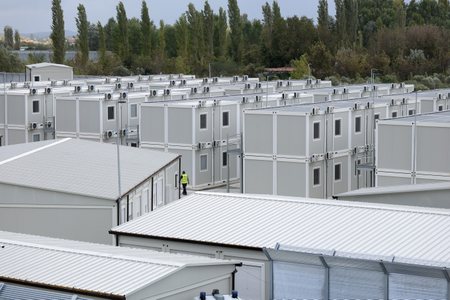
What is worrying is the psycho-physical state of people locked in containers: in two weeks, 35 critical events have been recorded, "mainly serious acts of self-harm, up to attempted suicide."
Critical events
"Like all Italian CPRs," add Scarpa and Strada, "the one in Gjadra is a pathogenic place." This is demonstrated by reading the critical events register, consulted by parliamentarians, which "qualifies the center itself as a context that puts the health and lives of detainees at risk."
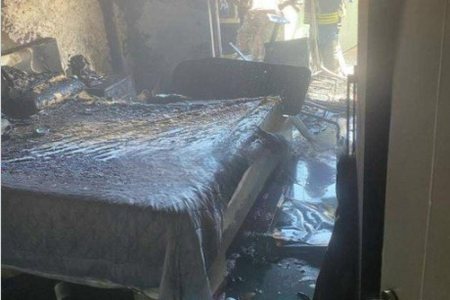
Among the critical events, 2.7 per day in 13 days, there are about ten suicide attempts "mainly by drowning or hanging", acts of self-harm and collective protests, events that "belong to the same category of violence displayed on someone's body that deserves special attention, since the transition between an act of greater or lesser severity is absolutely unpredictable", the report says. In addition, the number of critical events may have been higher because, based on the evidence collected by the deputies, there was a possible delay in their registration.
The report highlights that detainees in Gjadra are exposed to a double disadvantage: the lack of a nearby hospital, the first accessible one being in Tirana, more than an hour away by car. In cases of hanging, the place of rescue must be between 15 and 30 minutes away. And, moreover, isolation even during the recovery period by the mental health services of the national health system “represents another risk factor”.
Then there are tools that are dangerous for a detention context and that prove the "negligence" of those who designed and built the centers: the fire sprinklers are "positioned above the tables of each housing module" and therefore "are easily accessible by climbing on the tables".
This allows and has already allowed prisoners to use them “as a support to tie improvised ropes” when suicidal thoughts exist.
Fitness visit
As in the case of institutions in Italy, the Albanian Civil Procedure Regulation must also comply with the 2022 directive of the Ministry of the Interior that regulates life within these places. And this requires that each person must undergo a medical examination to assess his/her suitability for detention. In other words, the doctors of the national health service must take into account the psycho-physical conditions suitable for life in that specific confined community.
For female members of parliament, it would have been necessary to carry out “a reassessment of their suitability” “by personnel independent of the governing body”. Therefore, according to Scarpa and Strada, “it turns out that no selection was made aimed at excluding people with psychiatric vulnerabilities from being sent to the Cardiovascular Care Centre (CPR) in Albania”.
Only eight of the transferred men had undergone a physical examination in the previous days. In fact, for the most part, the last visit dates back to the previous months, even to November 2024. A citizen of Georgian origin, who before the transfer was in the Recreational Reception Center in Bari, "was already undergoing therapy with various drugs - we read in the report - it seems that he had been taking methadone until recently, suspended 10 days before" the trip to Albania. His last visit was on November 26, 2024.
Within three days in Gjadra there were eight acts of self-harm, "with at least one episode of manifestation of suicidal intentions," parliamentarians report.
Until the managing body requested a reassessment of his suitability for detention and he was returned to Italy "on an unknown date." / Adapted from Pamphlet by Domani/



Lini një Përgjigje