


 Shkruar nga Pamfleti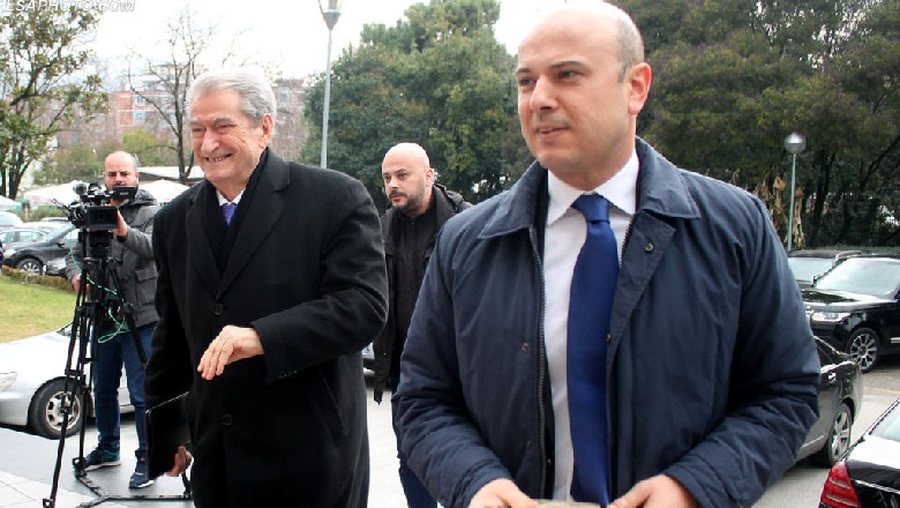
The security measure "Compulsion to Appear" against Sali Berisha and the taking of his passport, removing the opportunity to move abroad, has divided jurists and lawyers into two camps. Will it be necessary for the procedure to be passed by the Assembly, to which article GJKKO is referred... these questions have been raised in the public opinion, which the show "Debat" with Alba Alishan on A2 CNN tries to give an answer to.
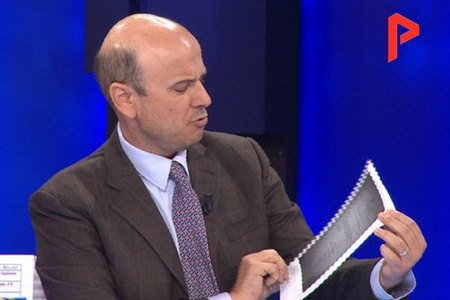
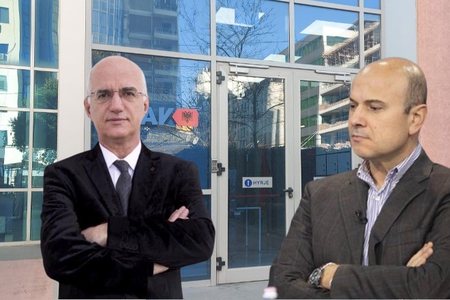
Invited to the studio, Isuf Shehu, lawyer and jurist, has brought to attention two articles of the Constitution, for the Berisha case, article 27 and 72, which deal with deprivation of liberty and restriction of liberty, and has argued that this is the difference between them.
"Regarding Article 27, which talks about the personal freedom of the individual, which means that in the situation where Berisha is, the interpretation of Article 72 may be subject to review and evaluation by the Constitutional Court. I consider it with Article 27 of the Constitution, which deals with the restriction of personal freedom, that is, isolation, house arrest, detention can be conceived as freedom, as an infringement of freedom, but in such cases the interpretations can be as comparative precedent to determine what defines freedom, in the sense of Article 72 regarding the position of the subject, who is the representative of the public in the Assembly.
If we talk about Article 72, it is said that freedom cannot be limited in any form, there are a number of freedoms, but looking at the context of Article 72, I see it connected to Article 27, which talks about personal freedom, detention, arrest. A person's freedom cannot be restricted except in the following cases, in case he has been sentenced to imprisonment, for non-implementation of court orders. There are precedents, and other court decisions in other countries, having the quality of the subject and with the meaning of freedom based on Article 72, we can understand broader issues, such as freedom of movement abroad, to exercise one's functions , so it's not just about personal freedom", said Isuf Shehu, lawyer and jurist.
On the other hand, Julian Kola, the lawyer, said with conviction that as long as it is a "Compulsion to Appear" measure, there is no need for the GJKKO to address the Assembly, He should have acted differently in case there was a stronger measure like arrest and imprisonment, but in this particular case, according to him, there is no reason why the procedure was initiated by the Assembly.
"Starting from the quality of the subject, former president, prime minister and leader of the opposition, and interpreting the provisions, I think that the restriction of freedom or the decision of GJKKO does not have to be addressed to the Assembly, for the obligation to appear because based on the individual interpretation, we are not dealing with the restriction of freedom, but of movement, that if we force him to stay in a place within austerity measures, it is a measure that at the moment does not need to be addressed to the Assembly. The law provides for deprivation of liberty or restriction of movement, legally they are not the same thing. The Assembly should consider only if his freedom has been taken away, but limited," he said on A2 CNN.
Currently, Sali Berisha is under an obligation to appear and cannot leave the country in connection with the privatization file of the former Partizani complex. According to SPAK, the former prime minister with concrete actions influenced the adoption of laws or by-laws which were adapted to the demands of 5 owners, among whom the beneficiary was his son-in-law, Jamarbër Malltezi.




Lini një Përgjigje