


 Shkruar nga Ferenc Németh
The US administration's approach to the fragile Balkan region is far from clear...
Donald Trump's second presidency could challenge the entire security architecture of the Western Balkans.
Quick deals between Trump and favored local groups seeking political and economic benefits could cause the first cracks in the system.
The leaders of Serbia, Republika Srpska (the Serb-majority entity of Bosnia), North Macedonia, but also Albania, may hope that their support for Trump will bring political and economic benefits.
Aleksandar Vučić and Milorad Dodik hope to translate their personal ties to the Trump administration into tangible political gains in Kosovo and Bosnia and Herzegovina, respectively.
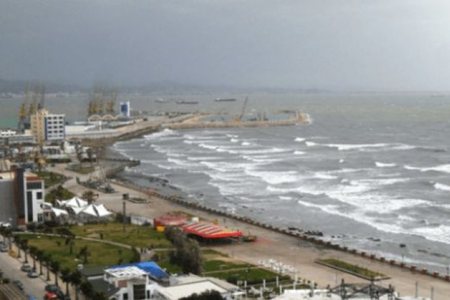
In the short term, the main benefits that local leaders can expect from the US are economic. During the Biden presidency, members of the Trump family have shown interest in real estate opportunities throughout the region, particularly along the Albanian coastline and islands and in downtown Belgrade. These ventures have cemented relationships with the current governments of Albania and Serbia, respectively.
The role of Richard Grenell, Trump's presidential envoy for special missions, will also be important.
Grenell has cultivated strong relationships with Serbian political and economic elites, supported the country's old political elite, and expressed dissatisfaction with Kosovo Prime Minister Albin Kurti.
The current administration’s stance on Kurti’s “Kosovo first” policy could serve as a basis for history to repeat itself: in 2020, the US encouraged the opposition to file a no-confidence motion against Kurti, resulting in the fall of his first cabinet. Kurti is pro-American, but he has shown greater independence than some previous Kosovar leaders and is particularly cautious about agreements with Serbia.
With Kurti no longer in the position of Prime Minister, it may be easier for the White House to broker another "peace deal" between Serbia and Kosovo, as happened under the first Trump administration in 2020.
The old political elite in Kosovo, along with Serbia's Vučić, have always been more inclined to broker dubious deals, especially when significant economic benefits are attached.
As long as the US remains preoccupied with Ukraine and the Middle East, the Western Balkans, in terms of bilateral or national issues, will not be at the top of the American foreign policy agenda.
But it is unlikely that the US will decide on a full military withdrawal from the region. There are currently about 600 US troops in Kosovo, and NATO headquarters in Sarajevo is headed by an American commander.
While a reduced American presence in KFOR may be possible, it is unlikely to mean the closure of Camp Bondsteel, the base in Kosovo that is the largest US facility in the region and offers Washington an excellent geopolitical location in Europe. Although American contributions to KFOR could easily be replaced by other allies (notably Turkey), the absence of American soldiers on the ground – practically and symbolically – would be felt and exploited by outside powers.
The real danger is that the US will inadvertently begin to dismantle the security and political architecture it has spent decades building and maintaining in the Western Balkans. Driven by Trump’s desire for quick wins and his engagement with admired local leaders, this could create the first cracks in that system, especially in Kosovo and Bosnia and Herzegovina.
These cracks would surely be exploited by local and external groups, ultimately with unintended and potentially serious consequences for Europe. / Pamphlet adapted from Cepa.org /



Lini një Përgjigje