


 Shkruar nga Pamfleti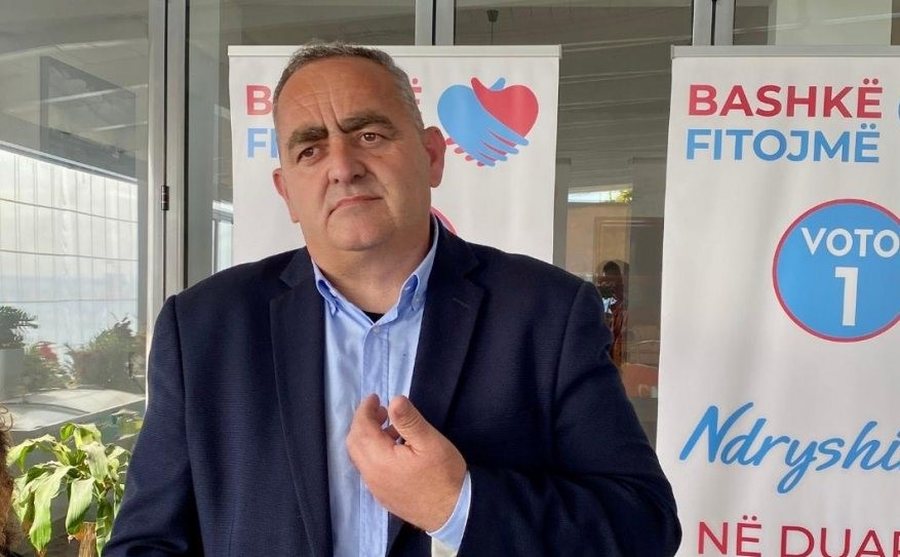
Today, the Special Court against Corruption and Organized Crime remanded Fredi Beleri, the elected mayor of Himara, in prison. He was arrested 3 months ago under suspicion of electoral corruption by buying and selling votes. Beleri has rejected the accusations as politically motivated.
His arrest has provoked tensions in relations between Albania and Greece. The Albanian government has stated that the case is in the hands of justice, and has nothing to do with the fact that Mr. Beleri belongs to the Greek minority.
The Special Court against Corruption and Organized Crime decided today again the prison sentence for the elected mayor of Himara, Fredi Beleri, who was arrested red-handed by the police on suspicion of electoral corruption and vote-buying more than 3 months ago. .
The Special Court again rejected the repeated requests to change the security measure, to enable the swearing in and taking office as mayor, as well as the invalidity of acts by his representatives, who have claimed a political ban of their client.
Mr. Beleri was arrested two days before the local elections at midnight on May 12 in his bar in Himare, where he was in the presence of other people, and where the police reported that they caught him red-handed trying to buy votes from some citizens for him. won his mandate.
A few days later, the Central Election Commission declared Mr. Beleri the winner of the local elections with a close result against the socialist candidate.
He has denied the accusations of buying and selling votes and has repeatedly asked to take the oath according to the law, claiming a political attack that is being made against him by the party of the opposing candidate in power, the Socialist Party led by Prime Minister Edi Rama.
The event provoked tensions between Albania and Greece. A series of officials of the Greek parliament and government have asked the Albanian authorities to release Mr. Beleri to take the oath of office, mentioning that this issue will affect relations between the two countries and Albania's progress towards the European Union.
The latter has stated that the issue of Beleri is a matter of new justice, which is not influenced or pressured by the government and the socialist majority.
Mr. Rama expressed surprise at how the release of an Albanian citizen of Greek nationality accused by SPAK of buying and selling votes is demanded.
He emphasized that this issue of Albanian justice has been politicized to the point that a protest is organized in Albania by elected authorities in Greece, calling the intervention of the Greek party in a matter of Albanian justice surreal.
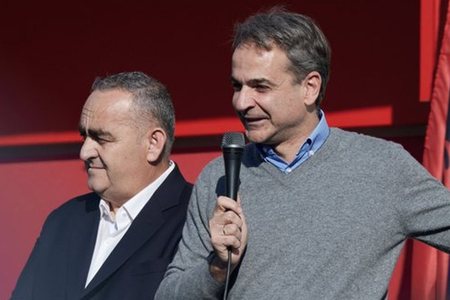
Prime Minister Kyriakos Mitsotaqis invited a week ago the President of Albania, Bajram Begaj, for an informal dinner with state leaders today in Athens.
President Begaj responded negatively to this invitation, due to the impossibility of traveling to Athens, stating that he had a previously defined agenda.
This invitation to Mr. Begaj is appreciated by observers as a diplomatic way to express Athens' dissatisfaction with Prime Minister Rama, who mostly represents Albania in foreign affairs.
The respect of the rights of the Greek minority in Albania returns from time to time as a topic that disturbs the relations between the two countries throughout the transition for various reasons; sometimes with property issues, sometimes with maritime borders, sometimes with issues of religious buildings, sometimes with issues of military cemeteries or the law of war, and finally with allegations of electoral corruption.
In the last decade, Albania has followed the approach defined by the Rama government as "Zero problems with neighbors", while Greece claims that Tirana fulfills EU standards, where Tirana is trying to integrate. /VOA




Lini një Përgjigje