


 Shkruar nga Pamfleti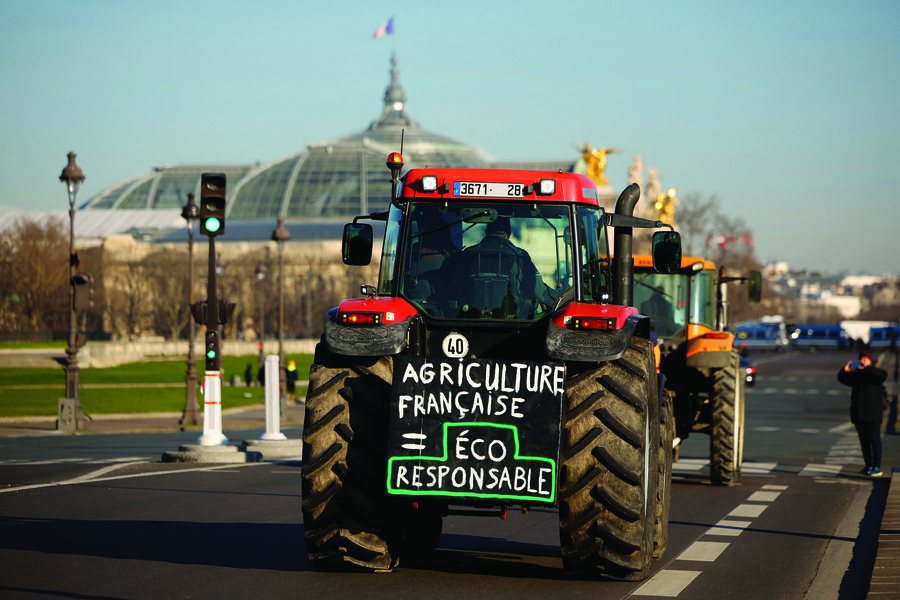
The final blow was delivered by the blocking of IPARD funds, which despite often not going in the right direction, were a hope to give some breathing space to the sector.
Published in 1886, Naim Frashëri's poem "Cattle and agriculture" remains today one of the classic works that, in addition to promoting national sentiment, is a hymn to work and working people.
The poet shows in beautiful and moving scenes the daily activity of the shepherd, the dairy farmer, the farmer who puts oxen in front of the field.
Decades have passed, many things have changed, but agriculture continues to remain a weighty sector of the local economy, occupying 20% of the Gross Domestic Product from 2% which is the average of the European Union and 11% the second country after us, Kosovo .
Despite its size, the sector has never been privileged. Inherited problems, land fragmentation after the 90s, the lack of orientations in crops that can have a competitive advantage, low or completely absent subsidies, have made agriculture a completely unproductive sector that fails to exploit economies of scale , having low yield and high costs.
INSTAT data show that in 2022 and 2023, agricultural growth was close to zero, and even in the second and third quarters of last year it turned negative (-0.5% in July-September). Livestock especially is suffering more, as shown by the tendency of the decline of cattle and milk production.
Chronicles of farmers who fail to sell their products have increased significantly in the media. One year wheat is produced (here the farmers are not to blame because the Ministry of Agriculture encouraged them) and the next year, the product remains unsold stock and no one comes forward.
The next year, surplus onions are produced and after a few months they are thrown into the river. Then potatoes are produced and not sold, because the product is coming from Serbia, or some other cheaper country in the region. The famous apples of Korça again fail to sell, they do not even find their way to be processed.
Local milk is being replaced by imported milk, because it is cheaper.
Even in the market of Lushnja, with the area known as the agricultural barn, you find more imported goods than the country. But the voice of the farmers is completely powerless. Few listen to them when they complain about the increased costs, the lack of labor force that has fled to emigration, the strong competition from the region, or neighboring countries. The contrast is strong with the farmers of Europe.
A farmers' revolt is breaking out all over Europe. In Belgium, Germany, the Netherlands, Poland, Romania and Spain, farmers have stood up. And to think that the agricultural sector is, in fact, very pampered by the EU, which offers subsidies worth as much as a third of the bloc's budget.
However, farmers are feeling that these funds are slipping out of their hands, which has fueled protests. These subsidies have protected them from competition from across the bloc for decades.
Since the early 2000s, Albania has been the most active in embracing free trade and removing tariffs, but somewhere in the process, it forgot to make many sectors, especially agriculture, more competitive. Even the government with its policies often had a negative impact, as in the case of the elimination of the VAT compensation scheme for farmers.
The final blow was delivered by the blocking of IPARD funds, which despite often not going in the right direction, were a hope to give some breathing space to the sector.
Unlike a century and a half ago, agriculture today fails to inspire anyone. Even the tourism sector, which is expected to be booming this year, will most likely turn to imports to provide the necessary products from the demand that will be very high.
The signals of the operators are even that they will try to get the bread ready from outside (in frozen form).
After all, in a market economy, the solution will always be found. No one risks being left without bread or food. Lost will be the rural economy, which if it continues to be outside the attention of incentive policies, risks being left desolate by emigration, which is not stopping.
We must understand that the agricultural economy is us. Agriculture or livestock is what we consume. When we talk about farmers and agriculture, livestock farmers and livestock, we are talking about a fifth of the Albanian economy and, why not, indirectly also about its impact on tourism or emigration. Rural problems are also ours.
Therefore, as is happening in Europe, where the city became one with the countryside, we must become spokespersons for those who do not have a voice, sensitizing public opinion./Monitor


Lini një Përgjigje