


 Shkruar nga Pamfleti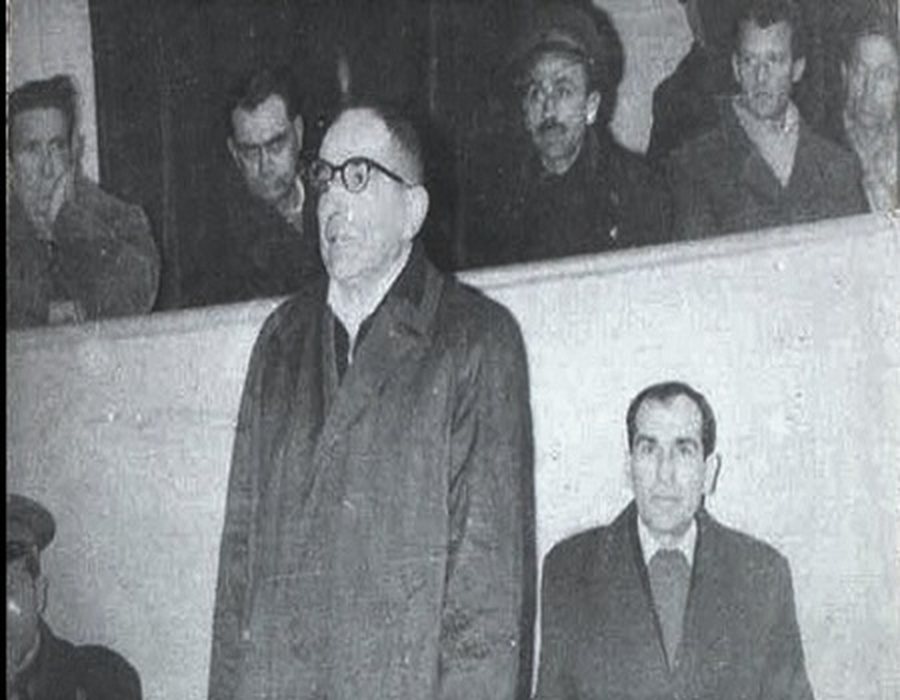
On the basis of archive documents, Father Çiprian Nika's honest testimony is clear: "I don't have the weapons behind me. It was some rubbish left by the Germans a long time ago, since they had taken refuge and lived in our seminary". The desolate Father Çipriani thought that it was about 3-4 random pieces of junk left as trophies after the Germans fled, and he said that with sincerity, not knowing that he would appear in the picture, next to a bunch of brand new rifles , who had entered one morning in that assembly and that church. "It is the duty of man to always tell the truth, but not to tell all the truths", - ordered Aristotle, but it was the time of Lilo Zenels, and not of the Aristotles. "We put the entire archive with historical value into two large bins," testifies Father Zef Pllumi. - It was an immense wealth of documents of the National Renaissance, as well as the writings, letters, memories and manuscripts of Luigj Gurakuqi, Hasan Prishtina, Monsignor Doçi, Monsignor Bumçi, etc. There were also Gjeçov's documents, Fishta's fund, etc."
"We generally arranged the manuscripts in metal suitcases, which had once been ammunition boxes and were left empty by the Germans, because they were convenient, against moisture. And the painful irony consisted in the fact that in books, magazines and exhibitions they took out our pictures in front of those boxes accompanied by the signature: 'Here is the ammunition hidden in the church, in those boxes that with their German writings, had something like this about ammunition. ...'! Of course, this was a 'small' mischief of the Security, difficult for anyone to understand"!
"It was an ugly act, which cost us a lot," Father Leon Kabashi testifies. - It seems to me, the order had come from Tirana. The employees of the Security of Shkodra, entered from the courtyard of the Franciscan high school, connected with a student (xhakua) and the assistant cook, who apparently had been told before that the clergy is finished, while you will reward yourself. Father Alex Bacli, who had seen the suspicious movements, stayed all night under surveillance (in the sacristy) and could see the entrances and exits of that night in the church, but because it was quite far and dark, he could not distinguish exactly what was going on. it was done there"!
"When the light came out, - says father Zef Pllumi, - the Security forces brutally broke up the assembly, gathered all the friars, organized that 'fine check', even between the altars, and in one of them, they found a lot of weapons...! They took all the friars out to the courtyard, most of them ended up in handcuffs, slapped and spat on, kicked and cursed, which had never been seen in any country in the world. The assembly was trampled in such a way that the surrounding residents still don't forget it today. It didn't take long and the guests and the authorities did it. Yugoslav television cameras were immediately present to document this event, the fire of which had just been set."
In the face of this truth, this is how the propaganda was made: "The numerous and different types of weapons that were found hidden in the seminary, assembly and other institutions, - affirms the Franciscan provincial Mati Prendushi, - we kept them very carefully . Weapon depots, a part of rifles, machine guns, bombs and mortars and the corresponding ammunition, we took from the Italian army". (Rakip Beqja, "Hostile activity of the Catholic Clergy, 1944-1968", p. 72).
In the altar of the heart of Christ, in the former Franciscan church Shkodër, weapons of war (bullets, machine guns and bombs) are hidden above and at the bottom, to be used against the popular power. (Idem. p.80).
"In the altar of Saint Ndou, in the Franciscan church, weapons were found. A few days later, even in the big church in Shkodër, German-made war weapons and boxes of ammunition were found", - it is said in another place. "On December 16, 1946, the State Security section discovered in the Mirdita abbey, inside the church and in the cell, weapons and other compromising materials", - announced the head of the Mirdita Security, lieutenant Bardhok Biba.
"In 1946, weapons of war, rifles, bombs and machine guns hidden by the clergy in the archdiocese of Shkodra were discovered in large quantities... Priest Donat Kurti, having broken down the wall of his room, shows the place where the cache of hidden weapons was located, which the Catholic clergy he had received from the Germans", - it was said in another place.
In the face of this propaganda that was made in the national and international opinion, how could the truth be revealed, when the only witness was God and brother (brother) Ndou, the gatekeeper of the church? He refused to hand over the keys and open the gate to admit the new powderless guns, long rifles and polished Mausers, at about 4.30 in the morning of that black day. For this action, they massacred him as if not worse!
"We were in Ulcinak prison," recalls Terezina Zorba. - At night they came and took Father Mati Prendushi. The next day he told us that together with Father Pal Doda, Donat Kurti and Çiprian Nika, they took them to the Franciscan Church, opened the altar of Shna Ndou, put rifles and machine guns in their arms and photographed them several times.
Gjithçka, pra, ishte organizuar e përgatitur si s’ka më mirë. Regjisorët kishin qëlluar specialistë të përkryer…! Ishin nga ata që pyesnin: “Kako si ti Pope…”?! e që drejtonin këtë lojë të dhimbshme. Por, tani le të kthehemi për disa çaste tek përgjigjja që i kishte ardhur lutjes së Imzot Frano Gjinit: Ja shkresa e fundit: Ju njoftojmë se të dënuarit me vdekje: 1. Mons. Frano Gjini, 2. P. Mati Prendushi, 3. D. Nikollë Deda, të gjithë nga Shkodra, u ekzekutuan më datën 11.3.1948, në orën 5 paradite dhe fjala e fundit ka qenë:
– “Rroftë Krishti mbret, Feja katolike dhe katolikët në botë. Rroftë Papa! Gjaku dhe trupi jem mbeten këtu, por shpirti dhe zemra është te Papa! Rroftë Shqipnia”! Mons. Frano Gjini.
– “Jam i pafajshëm; po vdes në krye të detyrës t’eme. Rroftë Krishti mbret! Rroftë Papa! Rroftë Kisha Katolike! Rroftë Shqipnia! Ja baj hallall gjyqit dhe atyne që do të shtinë mbi trupat tonë të pafajshëm”. Patër, Mati Prendushi.
– “Rroftë Shqipnia! Po vritem në punën time! Rroftë Krishti mbret! Rroftë populli shqiptar”! Mons. Nikollë Deda.
P/ Kryetarin e Gjykatës, Kapiten I-rë
Misto Bllaci
11 mars 1948, ora 5 e mëngjesit…! Burgu i fretërve ka lëvizje e zhurmë më shumë se asnjëherë tjetër…! Hekura duarsh e shula dyersh, zhurmë makinash e trokitje çizmesh, përbëjnë sfondin e atij mëngjesi të vrenjtur…! Te vendi tashmë tradicional i pushkatimeve, janë rreshtuar 16 vetë, ndër ta 4 janë klerikët më në zë, Imzot Gjini e Deda, At Prendushi e Nikaj…! 12 të tjerët, janë qytetarë që nga gjyqet e mëparshme, janë dënuar për kryengritjen e Postribës: Abdulla Kazazi e Guljelm Suma, Xhelal Hardolli e Bilbil Hajni, Fahri Rusi e Caf Dragusha, Cin Serreqi e Dulo Kali, Kol Prela e Pjetër Pali, Paulin Pali e Murat Haxhia.
Pra, drejtësia e historia, i është borxh edhe atyre për të provuar përfundimisht të vërtetën e, për të zbuluar pafajësinë e tyre. Ata janë intelektualë e inxhinierë, avokatë e deputetë, por mbi të gjitha, janë patriotë e martirë të demokracisë shqiptare. Një shi i imët i shtohej atij sfondi vajtues në orët e para të mëngjesit…! Ashtu flokëthinjur, të lidhur pranë njëri-tjetrit, klerikë, myslimanë e të krishterë, qëndrojnë para një grope të madhe, që ngjasonte me një gojë të hapur e gatshme, për t’i përpirë. Një heshtje si vetë vendi në të cilin ndodheshin, varret…!
AKTI I DYTË – ZBULOHET E VËRTETA…!
Të vërtetën e dinte vetëm Zoti e, frat Ndou, portieri, të cilit i kishin kërkuar çelësat… por tashti edhe ai nuk mund të fliste, sepse e kishin çuar edhe atë tek Zoti…! Çfarë mund t’i ketë mbetur pa thënë, kësaj drame të përgjakshme? Nuk kanë kaluar as katër muaj nga pushkatimi, dhe një valë e re arrestimesh shpërthen sërish në Shkodër, e bujshme dhe tepër e veçantë, për llojin e saj. E veçanta konsistonte te të arrestuarit. Është një grup tashmë të rinjsh, 20-25 vjeçar, tre nga të cilët, janë jo vetëm anëtarë partie, por edhe punonjës të Sigurimit të Shtetit. Më 28 korrik 1948 do të arrestohen:
Pjerin Kçira – 25 vjeç, anëtar partie, aspirant në seksionin e Sigurimit Shkodër, korrespondent i “Zërit të popullit”.
Gjovalin Mazreku – 20 vjeç, anëtar partie, kapter në seksionin e sigurimit, Shkodër.
Lin Çollaku – 23 vjeç, anëtar partie, kapter në seksionin e Sigurimit, Shkodër.
Zef Bardhoku – 24 vjeç, anëtar partie, nëpunës.
Nush Simoni – 22 vjeç, nëpunës banke.
Edhe për ta – rituali i zakonshëm. Po cila ishte akuza? Natyrisht, do të bëhej shpejt e shpejt edhe për ta një…!
Proces-verbal
“Prokuroria ushtarake e Tiranës, me funksion në Shkodër, me Akt-akuzën e saj datë 26.5.1949, i sjell për gjykim kësaj gjykate çështjen penale për të pandehurit Pjerin Kçira… me shokë se:
– Kanë qenë anëtarë të një grupi të organizuar në mbledhje të fshehta.
– Kanë bërë agjitacion e propagande me gojë e me shtyp.
– Kanë marrë vendime që të kryejnë atentate kundër funksionarëve të partisë e të pushtetit dhe kanë kërkuar të bëjnë atentat kundër një anëtari të Sigurimit, por që nuk e kanë kryer nga frika se mos diktoheshin… etj”.
Kur u formua dhe çfarë ishte ky grup?
Mbi bazën e dokumenteve rezulton që grupi u krijua më 18 korrik 1948, dhe se në një mbledhje të rregullt me votime kanë zgjedhur kryetar Pjerin Kçirën. “Koçi Xoxe nuk ka dominuar mbi sekretarin e parë të partisë, E. Hoxhën, prandaj ky i fundit, është fajtor e përgjegjës për gjithçka që po ndodhte në Shqipëri”.
Ishte ky mendimi i anëtarëve të këtij grupi, në atë periudhë të turbullt, kur një “tradhti” zbulohej në Shqipëri e, që me vonë (3 mars 1949), u hiqej mandati edhe vetë Koçi Xoxes e Pandi Kristos (Arkivi i Kuvendit Popullor). Pra, veprimtaria e grupit rezulton të jetë zbuluar në krye të dhjetë ditëve…! Të ishte një armiqësi apo truk që organizonte Sigurimi, i cili nuk kursente as edhe shërbëtorët e vet kur duheshin zhdukur gjurmët…?! Dhe, hetimet do të zgjasin njëmbëdhjetë muaj, e natyrisht edhe torturat me devocion të posaçëm, po i realizonin Ali Xhunga, Kasem Troshani e shumë të tjerë, që deri dje kishin qenë shokë të tyre…!
Madje, gjatë procesit gjyqësor, të pandehurit akuzojnë për këto tortura dhe të mësipërmit detyrohen të vijnë dhe të dëshmojnë në gjyq, siç e ka kërkuar mbrojtja. Por natyrisht, as që mund të ndodhte ndryshe. U provua “katërcipërisht”, se deklaratat e të pandehurve, ishin marrë “pa asnjë detyrim e presion”…! Akuzohen gjithashtu për atentate që kishin dashur të bënin kundër Abaz Lazes, Lilo Zenelit, Ali Begut, etj.
Dhe… një procesverbal tjetër:
“Sot, më datën 28.5.1949, trupi gjykues, i përbërë nga kapiten i parë, Vangjel Kocani, kryetar, dhe toger Haxhi Beqiri, e kapter Ali Tirana, anëtarë, me prokuror, kapiten i parë, Harito Nashi, hapin gjyqin kundër të pandehurve…”!
Për të arritur kështu në pretencën e prokurorit, që dënon Pjerin Kçirën e Nush Simonin, me 20 vjet, Zef Bardhokun me 15 vjet, Gjovalin Mazrekun me 13 vjet, e Lin Çollakun, me 8 vjet. Të nesërmen, më 11.6.1949, pas mbrojtjes formale, gjykata vendos për Pjerin Kçirën; dënim me vdekje, me pushkatim, e gjithçka merr fund. Kjo, së paku zyrtarisht, në bazë të dokumenteve të arkivuara.
Pjerin Kçira, dërgohet tek Zalli i Kirit e pushkatohet, siç ishin pushkatuar shumë të tjerë para tij e, siç do të pushkatoheshin edhe shumë të tjerë, pas tij. Ku qëndron e veçanta?! Fatkeqësisht, dokumentet e arkivit, nuk na ndihmojnë…! Ato ose janë zhdukur, ose me qëllim janë ndryshuar, që të mos përmendet fare ai sekret, që lidh bashkë këto dy akte, të kësaj drame të përgjakshme! Ndoshta e veçanta, kishte filluar që më herët…! Ajo kishte filluar që atëherë kur Pjerin Kçira, nga Antar-Partie, kthehej, në armik i popullit, po me një ndryshim tepër të madh…!
Dikur, anëtar partie me privilegje e favore. Dikur, aspirant i Sigurimit të Shtetit e përgjegjës i Burgut të Kishës. Dikur, hetues i At Mark Harapit, Dom Anton Muzajt e, sa e sa të tjerëve. Dikur, i njohur e i fuqishëm me miq e shokë, oficerë e hetues të Sigurimit. E tashti, përsëri a-p, por me vulën e zezë si armik i popullit. Pra, antipod i asaj çka kishte qenë dikur; nga persekutor, në i persekutuar e, kaq menjëherë e papritmas…!
Për hir të së vërtetës, duhet pohuar që të rinjtë kishin qëlluar trima dhe realizuan një gjyq, që do të kujtohej për shumë kohë për llojin e vet.
Të 16 seancat do të vazhdonin njëra pas tjetrës, për të arritur në pikën kulmore, kur kryetari i gjykatës, do t’i mbyllë gojën Pjerin Kçirës. Ai, për të pastruar ndërgjegjen, nxjerr një sekret që e digjte prej kohësh, por që do të binte si bombë mbi trupin gjykues e mbi të gjithë sallën: “Mos mendo se bën me mua siç kemi bërë me klerikët katolikë, duke ia futur armët në kishë e, duke i detyruar përmes torturave çnjerëzore të pranojnë se janë të tyret…! Për të mbuluar poshtërsitë tuaja e, të Enver Hoxhës, ju doni të dënoni njerëzit e pafajshëm”!
Natyrisht, kjo shokoi plotësisht kryetarin e trupit gjykues, që deri atëherë me zor po e mbante veten e po zotëronte situatën. Nuk kishte rrugë tjetër. Seanca duhej të mbyllej.
– “Neve, që kishim radhën të gjykoheshim mbas Pjerinit, – dëshmon Ernest Përdoda, – gjyqi do të na bëhej me dyer të mbyllura…! Deklarata e tij për futjen e armëve në kishë i kishte futur frikën…”!
- "Pjerini was my student," testifies father Leon Kabashi. - In 1947, while I was being tortured by Anesti Kopali, to prove the false accusations about weapons, I was tied to a post without eating, drinking or sleeping. Pjerini passes by me, to whom I addressed with the words: Is this the real communism, will the innocents disappear?! He took one look at me and left without saying a word. After a while, the guard came with some water and food and untied me...! I could understand that he, something was at stake. With the last word, he brought to light the great truth that Sigurimi himself had introduced the weapons and for this he was shot, becoming a martyr of the truth..."!
While the fellow sufferer of the cell, Mr. Ahmet Bushati, remembers the last moments: - "They came singing the national anthem and as soon as they put him in the dungeon, with the signal we had, he immediately started telling me about his attitude and the court decision...! I tried to convince him that they can't shoot him, but he calmly replied: - 'No, no! That they will shoot me, I know that well, I'm sure, because I debunked them where it hurts the most, but I did mine. - The next day we parted, because Pjerin was taken to the Gestapo Prison".
- "It was 1949," remembers former prisoner Gjon Ljarja. I was arrested in the Sigurimi prison, called 'Gestapo Prison'. Pjerin Kçira, who was sentenced to death by firing squad, was put in a prison-dungeon, where death row prisoners were usually kept, those days...! One morning I heard that the bars of the doors were opened and someone entered him and as soon as he left, Pjerini began to sing loudly: 'But like the leaf of God's leaf', and other patriotic songs...! From dinner, he was able to tell me that he had been informed of the shooting, and that at lunch he had also met his mother and fiancee, for the last time before the shooting".
- "We wanted to give him hope, - continues another witness, - telling him that we intervened in Tuk Jakova e, that his life would be spared, but again no! - Everything is over! - was Pjerini's answer, - just please bring me a priest, so that I can confess for the last time. And if they won't allow him as a priest, let him disguise himself and dress as a peasant, and come to me, because I'm definitely waiting for him for the last confession".
Mr. Gjon Ljarja continues: - "Around 10 p.m., we heard the sound of keys and doors again, we lost our minds. Pjerini began to shout loudly: 'Goodbye, make me halal friends'! And so, he went out into the yard, while the sound of a car's engine starting up filled everything. Then, grave silence again...!/Memorie.al


Lini një Përgjigje