


 Shkruar nga Pamfleti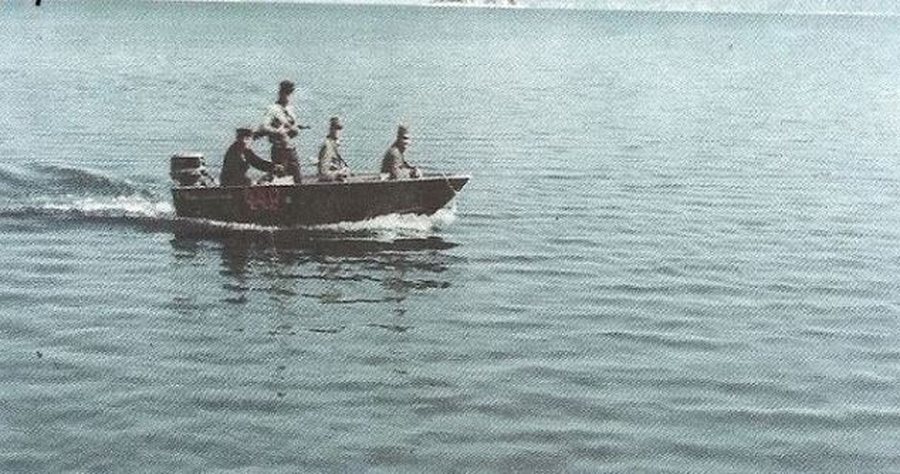
When the new head of the Albanian delegation to the United Nations, Bashkim Pitarka, arrived at the lunch given at the apartment of the head of the French delegation, he looked irritated as he looked at the three American diplomats. "I will not shake hands with the Americans and the Russians", - said the Albanian diplomat in a loud and noisy voice. "They ordered me". Joseph V. Reed, the deputy head of the American delegation, extended his hand to him as "a member of the human race," but Pitarka waved it back and, nervous about the reserved reception, seemed certain that they were not sitting in a condescending row in the room dining.
Some delicate moves in diplomacy are resolved with connections through countries that do not have formal relations. The United States, as well as other countries, use complicated preparations, which vary according to the degree of friendship or even practical needs. For example, Washington was represented in Iran through the Swiss Embassy when Islamic radicals took over the American Embassy in 1979.
Because of Iranian intentions and fears for their security, none of the American diplomats were working there anymore. In Washington, Iran is technically represented by the Algerian Embassy, but it also operates offices in several cities. The United States allows Iranians to work there, to cooperate with the requests of hundreds of Iranian partners in the United States of America. Iranians have represented Tehran in Washington.
They were provided with passports or residence permits. These channels usually did not fully function because Iran doubted Switzerland's neutrality. During the negotiations last week for the release of the "Wall Street Journal" correspondent, Gerald F. Seib, the Swiss authorities were unable to get any answers from the offices of the Foreign Ministry. Turkey and Pakistan, which have good relations with both sides, helped make this deal happen.
The United States severed diplomatic relations with Lebanon after a mob burned down the American Embassy in 1979, and Belgium represented the country's interests. Anti-American demonstrators also often marched in front of the Belgian Embassy in Tripoli.
In the case of Albania, which excludes any contact with any superpower and some other governments that the United States of America does not recognize, for example North Korea, Vietnam, Cambodia and Angola, without formal ties, relations are represented through the states of the third.
But American and Vietnamese officials meet regularly in Hanoi and Ho Chi Minh City, where they discuss the fate of Americans missing since the Vietnam War. Angola is another delicate case. State Department officials admitted that only an informal agreement with Western embassies helped protect American citizens there.
In Cuba, again American business is involved by a section of interests under Swiss circumstances and care, operating more like an embassy. It has about 20 American diplomats within it. Havana and Washington have used their regional interests to negotiate objectives such as punishing plane hijackers and emigrating Cubans to the United States of America.
But some issues, such as Cuban troops in Angola, have been discussed at the highest levels. In Nicaragua and Afghanistan, although Washington also funds anti-government rebels, it still has diplomatic relations and an embassy. But the ambassador's post has been vacant in Kabul since 1979, when the American ambassador, Adolph Dubs, was assassinated.
Perhaps the most suitable place for relations between countries that had enmity or, had no relations, was the United Nations, where many countries kept their representatives. Talks on restoring US relations with Mongolia last month were led by the head of the US delegation, Vernon A. Walters, and deputy chief Herbert S. Okun, who spoke Russian, the language used by the vast majority of Mongolian diplomats.
The affairs of the Department of State were guided with detailed explanations, also determining the direction for the officials, who met with diplomats from opposing countries. "I nod at them twice," he says, "when they don't react, I retreat."
Salvaging the yacht, interpretations of "melting ice"
The rescue and release of an American yacht with four people on board, by Albanian authorities, brought a strange confusion to official Washington in June 1987. Since the termination of diplomatic relations, there had been no sign of rapprochement.
The provision of help and their release without any problems brought different reactions to the American authorities, where some of them interpreted it as a sign of the "melting of the ice" between the two countries.
The whole event and the interpretations related to it, which happened in June 1987, are brought in the next article of the "New York Times", which the newspaper offers to the readers, where the conjectures about a possible opening of Albania to the West are also addressed. as well as the different opinions of different diplomats./ Memorie.al






Lini një Përgjigje