


 Shkruar nga Pamfleti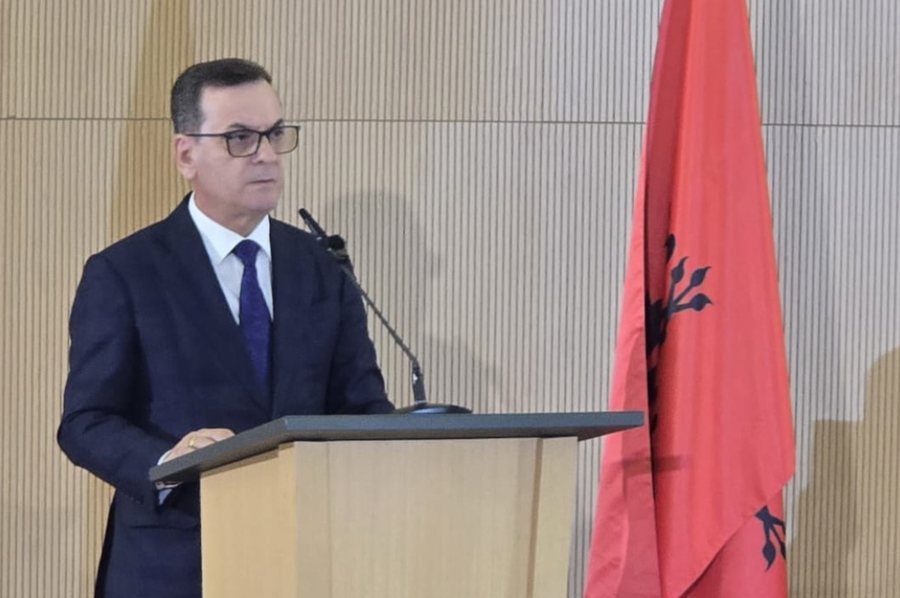
According to him, the murder of Judge Astrit Kalaja in the courtroom was "a death foretold."
The President of the Supreme Court, Sokol Sadushi, at the meeting of the Judges of the Republic, has issued harsh criticism of the Supreme Judicial Council (SJC) and politicians.
According to him, the murder of Judge Astrit Kalaja in the courtroom was “a death foretold.” Sadushi also said that for years, judges have been the target of insults, threats, and denigration.
"For years, judges have been the target of insults, threats and denigration. Instead of protecting the independence of the judiciary, its authority has been attacked. Instead of building respect for justice, contempt for it has been encouraged. Instead of building trust in the law, public opinion has been allowed to be poisoned by the language of hate and ignorance," said Sadushi.
Sadushi criticized politics, blaming them for the climate that has been created against judges, while saying that government officials have encouraged contempt for justice.
"Senior politicians of the country, whether in power or opposition, feel comfortable today to insult, anathematize or ridicule the judge who makes a decision, perhaps without even reading the reasoning, without waiting for the appeal and without respecting the judicial hierarchy. Instead of respecting the legal process, they rush to put "justice" themselves on microphones and cameras, judging the magistrate as if he were a political party," he said.
Further, Sadushi criticized the justice actors themselves.
“Before pointing the finger at others, we must start with ourselves. We must honestly admit that Albanian justice is not yet at the height that society expects of it. We must say it openly: delays in the adjudication of cases, unnecessary procedural delays and failure to respect legal deadlines for the reasoning of decisions are visible wounds that damage public trust. There are cases where processes drag on for years, without a justified reason, turning the citizen’s expectation of justice into a separate punishment. There are decisions that remain unjustified in time, and others that vary from one court to another, creating uncertainty and a perception of a lack of coherence and justice. A judiciary that is not predictable in its jurisprudence loses the force of law and the respect of the public. When the citizen is not sure what justice he will receive for the same situation, then the entire structure of trust is shaken. Likewise, the way we communicate with the public is often closed, "cold, incomprehensible to the citizen," he said.
The Head of the Supreme Court was very critical of the High Judicial Council: “The High Judicial Council, as the body responsible for governing the system, cannot remain silent most of the time and react only sometimes, when the situation becomes unbearable. This approach is incomprehensible and unacceptable. The High Judicial Council must understand the role that the Constitution has given it, not to remain in the shadows, but to speak with force and dignity on behalf of the entire judiciary. It is a governing body, not a technical office; it is a representative of the system, not an extension of institutional silence. It must know how to tell other powers, loudly and clearly, in what state the judiciary is in, what its wounds are, what its needs are and what the consequences of inaction are. The High Judicial Council must show with dignity the high position that has been given to it by the Constitution, to confront and not to vegetate, to confront and not to conform. The Council cannot be a body that adapts to the circumstances; it must be a body that changes them. The judges who have been elected to this collegial body by We, the judges of the Republic, must understand their irreplaceable role. They are not there to remain silent or to maintain false balances; they are there to protect the system from collapse and disrespect. They must not forget that very soon, after the end of their mandate, they will return to the courts from which they came; and then they will feel for themselves how grave the consequences of their inaction are. They will understand how much they have lost for the judiciary that they did not protect properly and how little they have done to change the situation that they today denounce with silence.




Ky nuk merret me thelbin e problemit të sistemit gjyqesor i cili i sorrollat qyretaret nga shkalla e psre në të dyten,bga e dyta në të paren për rigjykim,pastaj nga e para në te dyten dhe bga e dyta në gjykaten e lsrte dhe nga kjo në apel për rigjykim dhe bga apeli në gjykaten e larte.Kështu qytetareve nuk u mjafton jeta të të marrin drejtesi sepse kjo drejtesi kriminale nuk jep drejtesi.Fajtore eshte politika por edhe kta gjyqtaret janë po aq fajtore.Të mos e kërkojnë fajin tek te tjeret por tek vetja.Këta e vranë Astrit Kalanë.