


 Shkruar nga Eljan Tanini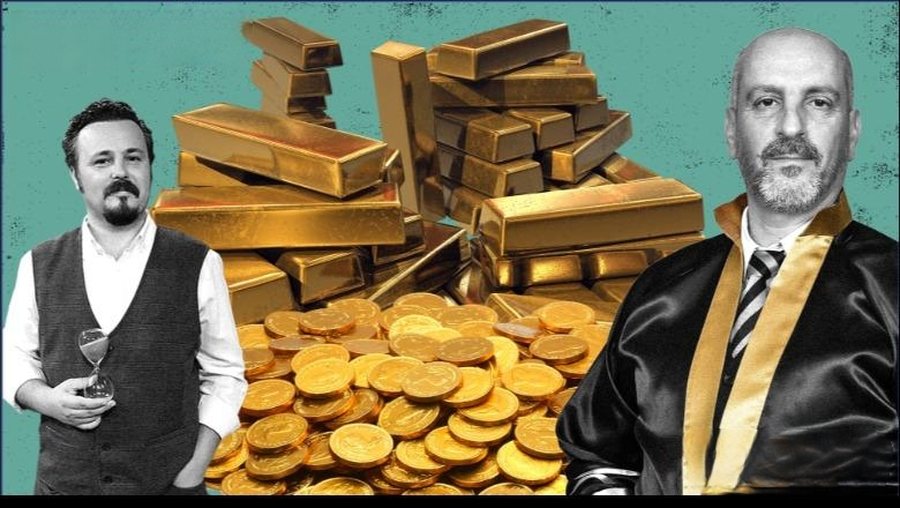
Theft of Albanian Gold Over the Years. The History of Lost Treasures.
Albania, a country with a rich and fraught history with various periods of conquest and political transformation, has consistently suffered from the theft of its most precious assets, including gold.
Over the centuries, the Albanian treasury has become the object of greed and plunder, by foreign invaders, politicians, and various groups that have had an influence on the fate of this country.
Despite the fact that most of these assets have been lost over various periods, the history of the theft of Albanian gold is a painful testimony to the fraud and abuse of national wealth.
Invited to the studio of the show 'Esence', the economics researcher Enriko Ceko , to talk about this topic. "Esence" comes every Friday at 21:00 on Report TV.
Eljan Tanini : -The Albanian Treasure: Why has it been stolen over the years? Why do you start your study with Queen Teutë?
Enriko Ceko: -Albanians have not always had deep economic knowledge throughout their history. When a system collapses, it also leads to the destruction of the economy. Albanians have not chosen most of the political systems they have had. In 150 BC, Queen Teutë had her treasury taken away after losing a battle. Similarly, Rome strengthened Demetrius Faris, but he also lost the war. King Gent was also forced to resist Roman rule, paying taxes in gold and grain.
Eljan Tanini: - Were Albanian taxes and princes taxes or fines? From whom?
Enriko Ceko: -Albanian taxes have always had two directions. Albanian principalities, in general, have had problems with paying taxes. Gjergj Kastrioti, with his extraordinary abilities, managed to create a strong economy for Albania. Venice also demanded large payments from Skanderbeg, including the Vlora salt mine and other assets.
The Ottoman Empire , when it conquered Albania, implemented the Tanzimat Reform. The land they ruled belonged to the state, and Albania considered itself a part of the empire. At one time, Albania had 2,000 inhabited centers and 32 vilayets, headed by a spahi who also gave the tapi. Part of the state's production was given to about 32% of the domestic product.
Eljan Tanini: -Did the Ottoman Empire also impose special taxes in Albania?
Enriko Ceko: - After the Roman period, Albania came under the rule of the Byzantine Empire, and then under the Ottoman Empire. During this period, foreign invaders continued to abuse Albania's wealth. During the period of Skanderbeg, Venice and other foreign powers demanded high taxes and wealth from Albanian territory. Some of these wealth, such as the salt mine of Vlora, was taken by the Republic of Venice as payment for support.
Furthermore, the Ottoman Empire, which ruled Albania for five centuries, exploited the country as a great source of wealth. Albanian lands were state-owned and a large portion of their produce was given to the empire. This included various taxes and confiscation of property. During this period, much wealth left Albania for the empire. Ismail Qemali is considered a figure known for his loyalty to the state. He sold his wealth to support the Albanian state.
Eljan Tanini: Did you see other cases? Upheavals and riches at different times?
Enriko Ceko: - Prince Vidi once lost his gold (tons) while boarding a ship, but some of the wealth later passed into the hands of Esad Pasha. Even Fan Noli's driver was an intermediary in tenders, and Noli himself received three months' salary in cash from the state budget. When Zog left Albania, he said that he took 50 thousand gold francs and 2 million dollars at that time, while it is thought that he had taken a total of 450 thousand gold francs. The history of Albanian gold is a story full of extraordinary events, including the escape of King Zog, the Nazi invasion, the British confiscation and treasure robberies that have shocked various nations. Although the amount of Albanian gold has been smaller compared to other European countries, it has always been an object of greed and robbery, experiencing many dramatic and intriguing moments. The Italian invasion of Albania on 7 April 1939 forced King Zog to flee, taking with him about 183 kg of gold (approximately 567,000 gold francs). This act is documented, and was accompanied by strong accusations from the communist government after World War II, which accused Zog of plundering the Albanian treasury.
During World War II, the German invaders took 2,500 kg of gold from Albania, after the capitulation of Italy. This gold included 198 gold bars, 7 bars and 22 bags of gold coins, and was transported to Germany to avoid falling into the hands of the anti-fascist allies. This act is one of the largest robberies that the Albanian treasury has suffered.
After World War II, the treasure captured by the Germans was confiscated by the British at the Merkers saltworks. Although the communist government of Albania demanded its return, an incident in the Corfu Channel, where two British ships were sunk, caused a series of clashes and the refusal to return the gold. This treasure included gold coins and Albanian banknotes worth about 3 tons of gold.
Eljan Tanini: -Wealth and theft during the communist regime?
Enriko Ceko: - Enver Hoxha , Zog's sister's lover, as stated in some sources, also had an important role in the economic developments of the period. When the communists took power, many data are missing, but it is believed that in 1944 they seized 320 kg of gold. It is also thought that over 43 million gold coins were taken, in addition to other gold values.
Eljan Tanini: -Thefts and debts after the fall of the regime?
Enriko Ceko: -In 1991, Teodor Keko found materials for gold chests that were sent to Dubrovnik, while it is believed that about 8 tons of gold were removed to Moscow. Albania recognized the arrears in 1991, which gave rise to the debate about the return of the gold taken from the Germans, which amounted to 2,550 kg of gold. One of the well-known events is the issue of the bombs in the Corfu Channel. They were not placed by Albania, but we did not report them, and this gold went to the families of the killed soldiers.
Eljan Tanini: - Are there other lost assets and financial crises due to these causes, without also establishing political ties with very strong countries?
Enriko Ceko: -Margaret Thatcher wanted to establish contacts with Albania, but we turned our backs on her. In an interview, Winston Churchill said that Albania was close to his heart and he wanted to develop relations with it. In the last years of the communist regime, Albanian money was gambled on the stock market. The Krraba treasure was stolen in 1997-1999, where about 372 kg of gold were taken. It is believed that this theft occurred in several stages. After two major robberies, the communist regime stored the gold in the Skrapar mountains for more than 45 years. After 1990, the treasure was transferred to Kerrabë for safer storage. However, in 1998, a spectacular robbery took place in the Kerrabë tunnels, where 340 kg of gold were stolen. The robbery was carried out by several individuals and the main perpetrators were not fully identified. According to the investigation, the theft began in 1997 and was completed after a long period of planning and action. Most of the gold remained missing, and only five people were arrested and sentenced to 21 years in prison for this act.
About 2 billion dollars have been lost by Albanians in pyramid schemes. In 2013-2014, the theft of obsolete banknotes occurred. The Bank of Albania, the most technologically strong building, has lost 700 billion lek, money that was destined for destruction. Also, 1 billion lek has been lost and is being lost in vain from the Albanian state budget almost every year! /Shqiptarja.com




Lini një Përgjigje