


 Shkruar nga Pamfleti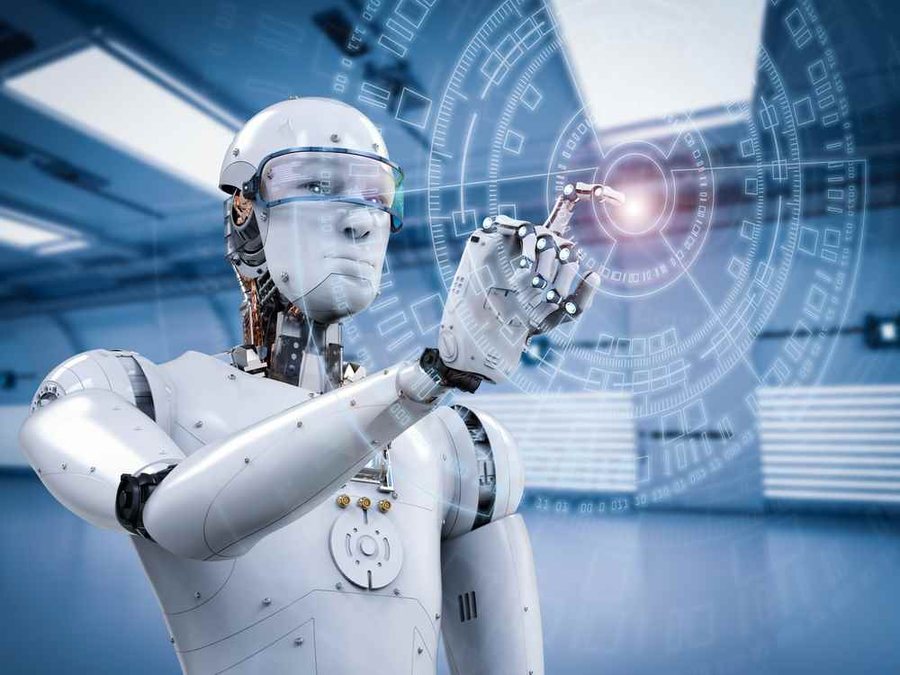
Experts predict that Artificial Intelligence (AI) could replace the equivalent of 300 million full-time jobs over the next few years.
A study by investment bank Goldman Sachs concluded that AI could take over 1 in 4 jobs in the US and Europe. With all the technological advances, AI will change the way we work, making some jobs unnecessary, but also creating new jobs.
Generative AI, such as ChatGPT, capable of creating content indistinguishable from human work is a major advance, the report said.
Earlier last year, British telecoms giant BT announced it was cutting 55,000 jobs by the end of the decade, including replacing around 10,000 employees with Artificial Intelligence (AI) as a way to cut costs. This means that in itself, the most endangered professions are also the ones with the highest salary.
During a summit held last November on AI, Elon Musk, the owner of X and Tesla, said that Artificial Intelligence will be the force that will directly affect the industry in terms of jobs, stating that there will come a time when the countries of work will no longer be necessary.
What are the most endangered professions?
The British The Independent brings some of the professions that according to experts are most at risk, starting not only from the work process, but also from the salary.
So among them are professions such as coders, software engineers, Blockchain Engineers, Mathematicians, web and digital interface designers, journalists, customer service workers, advertising specialists, receptionists, data analysts, marketers, writers, etc. .
As for the least endangered professions, the British media ranks; oncologists, orthodontists, pediatricians, judges, CEOs, mechanical engineers, handymen, politicians, surgeons, business consultants, midwives, mechanics, etc.
The Goldman Sachs report notes that the impact of AI will vary across sectors. 46% of tasks in administrative professions and 44% in legal professions can be automated. But the opposite is predicted to happen in construction, where Artificial Intelligence is predicted to replace only 6%, or in maintenance, with 4%.







Lini një Përgjigje