


 Shkruar nga Pamfleti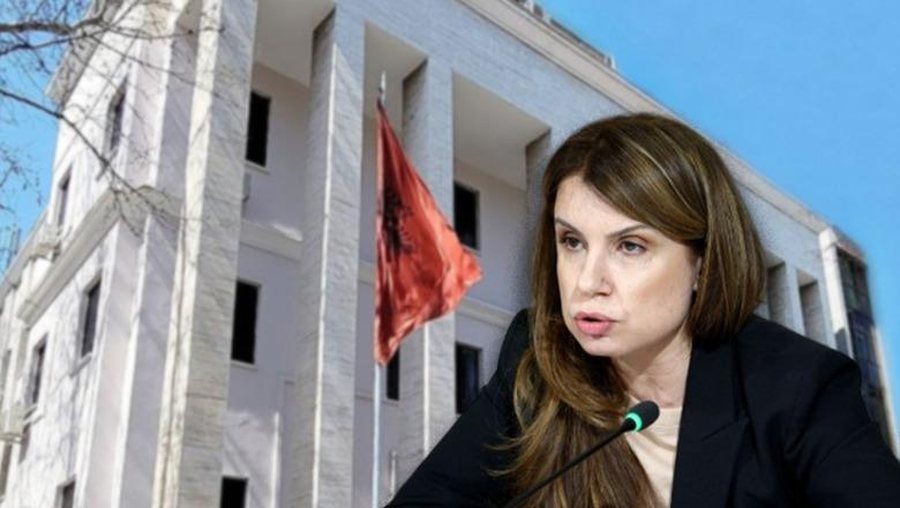
The High Court requests that the Administrative Court of First Instance declare the lack of jurisdiction over the lawsuit filed by Naureda Llagami against the vote that led to the election of Judge Asim Vokshi as a new member of the Constitutional Court. According to her, if such an act were to be considered, it would be “potentially dangerous for the constitutional order”. Ms. Llagami claims that the vote declared invalid was in her favor, and thus would grant her a mandate to the Constitutional Court.
The Administrative Court of First Instance is expected to review on Monday the request for securing a lawsuit filed by the former head of the High Judicial Council (KLGJ) Naureda Llagami, against the voting procedure at the Special Meeting of the High Court for the election of the new member of the Constitutional Court. Llagami received 8 votes out of 9 that would have given her the position, after one vote was declared invalid.
Ranked first by the Judicial Appointments Council (JAC), Judge Asim Vokshi was automatically declared the selected candidate for the Constitutional Court.
Llagami has requested from the Administrative Court the suspension of the implementation of the decision of the Special Meeting as well as the procedures until the final resolution of the case.
But the Supreme Court warns that considering the lawsuit would be “an attempt at unprecedented and potentially dangerous jurisdictional intervention for the constitutional order.” In its submission to the Administrative Court, which Report TV and Shqiptarja.com have read, the Supreme Court emphasizes that “such an action would constitute a violation of the principle of separation of powers, an excess of judicial jurisdiction and a direct violation of the principle of the rule of law.”
For this reason, the Supreme Court is convinced that the Administrative Court should declare a lack of jurisdiction.
In the document that the Administrative Court has in its hands, the Supreme Court notes that "the decision of the Supreme Court is a constitutional and not an administrative act and is not contested in the Administrative Court" and that "the intervention of ordinary jurisdiction in the decisions of the Supreme Court would violate not only the principle of separation of powers, but also the institutional integrity of the Supreme Court as a constitutional body."
The Supreme Court also recalls that it “exercises a function of the highest constitutional level, which cannot be questioned by an ordinary judicial body, such as the Administrative Court of First Instance”, and if the latter “were to agree to examine this lawsuit, it would create an unprecedented precedent in Europe”.
According to the submission, "no other court, including the administrative one, has the competence to assess the selection or appointment process. The control of the process before the appointment is institutional (within the appointing body), while the control after the appointment is constitutional (by the Constitutional Court itself)."
And referring to the Constitution, "only the Constitutional Court is competent to decide on the ineligibility of one of its judges, on the incompatibility of the mandate or the validity of the appointment."
Referring to the doctrine, the Supreme Court notes that "the distinction between administrative act and constitutional act is a fundamental element of the rule of law and any attempt to blur this boundary is unconstitutional."
In the document it has already submitted, the Supreme Court calls on the Administrative Court of First Instance to "be aware that any attempt to exercise jurisdiction over a constitutional decision constitutes an excess of powers and a violation of the fundamental principles of the rule of law; it endangers institutional stability and public confidence in the independence of the judiciary and could create an abusive precedent that would allow lower courts to control the actions of constitutional bodies in the future."
For these reasons, according to the Supreme Court, "declaring the lawsuit inadmissible for lack of jurisdiction is not only a legal obligation, but an act to protect the Constitution and the rule of law itself."
Contested vote by Llagami
Llagami claims that her name was marked twice on the ballot paper, but was declared invalid intentionally to change the result. If this vote had been read correctly, according to Llagami, she would have had 9 votes, or 3/5 of the votes, and she would have been the new Constitutional Court judge and not Vokshi, who was elected as the highest ranked in the Judicial Appointments Council's score.
Report TV learns that the ballot declared invalid had two marks, one in the box where one of the marks provided for by the Special Regulation for the meeting of its judges for the election of a member of the Constitutional Court should have been placed, and another mark in front of Ms. Llagami's name, a circle that had circled the number 2, which in the order belonged to her.
For Ms. Llagami, such a thing cannot lead to invalidity as the will in favor of her candidacy remains clearly expressed.
But in its submission on the case, the Supreme Court notes that the voting process takes place according to established rules.
She cites Article 12, point 6 (last sentence) of the Regulation which “prohibits any other marking on the ballot paper, except for the designated mark”, as well as Article 13, point “b” which determines the invalidity of the vote, “when markings in favor or against the candidates have been made on the ballot paper”.
Both of these articles, says the Supreme Court in the submission submitted to the Administrative Court, "are rules of absolute prohibition: they are not related to the fact of whether the will is clear or not, but sanction invalidity if there is a second mark or an additional note on the sheet, precisely because this mark compromises confidentiality."
The Supreme Court further explains that clarity of will is not sufficient.
"In institutional processes, such as the vote for the election of a judge of the Constitutional Court, the clarity of will is not enough; it must be expressed in the correct legal form, otherwise it violates the integrity of the process. Moreover, the voters are the judges of the Supreme Court, who know the law quite well. In this context, it seems that the judge of the Supreme Court himself filled out the ballot with the will to declare it invalid."
According to the Supreme Court, "any claim raised over an invalid vote is legally unfounded and ethically discrediting to the losing candidate." / Shqiptarja.com







Lini një Përgjigje