


 Shkruar nga Pamfleti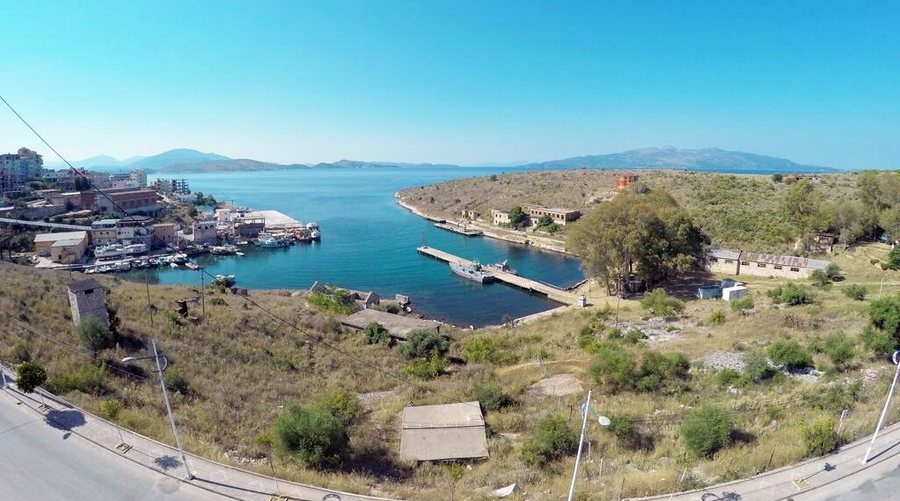
The Constitutional Court has released the decision rejecting the request of the company "Marina Bay Saranda" to lift the seizure of the maritime base of the Limion port in Saranda.
The decision was made in November last year and announced a month later.
The court has decided that the port of Limioni will continue to remain under seizure until the investigation by SPAK is completed.
The naval base of the Limion port in Saranda was seized by decision of the GJKKO in February 2023, following the request of SPAK with the justification that the privatization of the base has compromised the operationality of the naval forces.
The decision remained unchanged even after it went to the Appeals and Supreme Court.
The case then went to the Constitutional Court, which again upheld the same decision.
The Constitutional Court's decision states that "the seizure also meets the public interest in terms of protecting national security related to the readiness and operationality of the FD, given that the property in question is part of the PVP of the KFD's properties."
In relation to the applicant's claim for disproportionality of the interference, i.e. that the relationship between the seizure and the aim pursued is reasonable, "the court analyses, in line with its practice, several elements directly related to the nature of the consequences produced by the decision to impose the seizure measure, in terms of balancing the rights between the general interest and the protection of the fundamental rights of the individual, in this case a commercial company. For this purpose, it focuses on assessing the necessity, appropriateness and severity of the seizure measure, taking into account the speed of the procedures, i.e. that the interference with one of the rights to property (in this case the enjoyment and disposal of it) lasts for a limited time, as well as the damage resulting from the infringement, which should not go beyond what is inevitable ".
Regarding the severity of the seizure measure, and consequently the further prevention of the criminal offense, the trial panel was divided in two.
According to the court, “ one view is that the seizure measure does not exceed the criterion of severity, taking into account the type of criminal offense and its consequences in terms of the interest of protecting national security, which, as the Supreme Court has emphasized, has precedence over the private interests of individuals, commercial companies, and even state ones. At this point, it should be noted that the object of the criminal proceedings is related to the fact of abuse of office by senior state officials for actions related to the administration of military forces’ property, which does not exclude the possibility that the claim for the applicant’s expectations is not protected by the principle of legal certainty. Furthermore, the duration of approximately 1 year and 9 months of the seizure is not to the extent of transforming it into an excessively harsh measure, reiterating that in any case the investigations must be rapid, so that the eventual damage to the applicant’s property rights is beyond what is inevitable. In light of these arguments, it is considered that there appears to be a reasonable relationship of proportionality between the seizure decision and the aim pursued, therefore the restriction of the applicant's right is in fair proportion to the situation that dictated it ."
Meanwhile, the other part judges that, “ referring to the content of the judicial decisions subject to the request, it appears that the seizure measure exceeds the criterion of severity, since an excessive burden has been imposed on the applicant, as long as her activity results from being based on legal procedures and by-laws approved by public authorities, which has led to the applicant having legitimate expectations regarding the enjoyment of the rights and interests arising from this contractual relationship and related to the exercise of the economic activity in question. In the specific case, the applicant has entered into relations with public authorities, based on their powers and authority, while it has not resulted that she was made aware of or had any information about the possibility of affecting state interests or violating national security. The courts have assessed only the fact of the inclusion of property no. 696 in the PVP, which is related, according to them, to the operationality of the base and national security and have not verified the real and factual situation, whether there have been consequences in this regard, their extent or the possibility of irreparable consequences, nor whether the applicant's claims for her investment in the public interest in this area are well-founded and find support in the investment plans and related acts of the state authorities. In this sense, without questioning the importance of protecting state interests, the public authorities had the obligation to conduct a fair and in-depth investigation in order to avoid the violation of the substantive rights of third parties in the criminal process (in this case the applicant) who are not only not involved in illegal activities, but have been proven to have acted in bona fide. Consequently, it is considered that the contested measure is disproportionate in terms of its severity, so the request should have been accepted .
Because a majority of 5 judges was not formed, the request of the Marina Bay Saranda company was rejected. / MCN







Lini një Përgjigje