


 Shkruar nga Pamfleti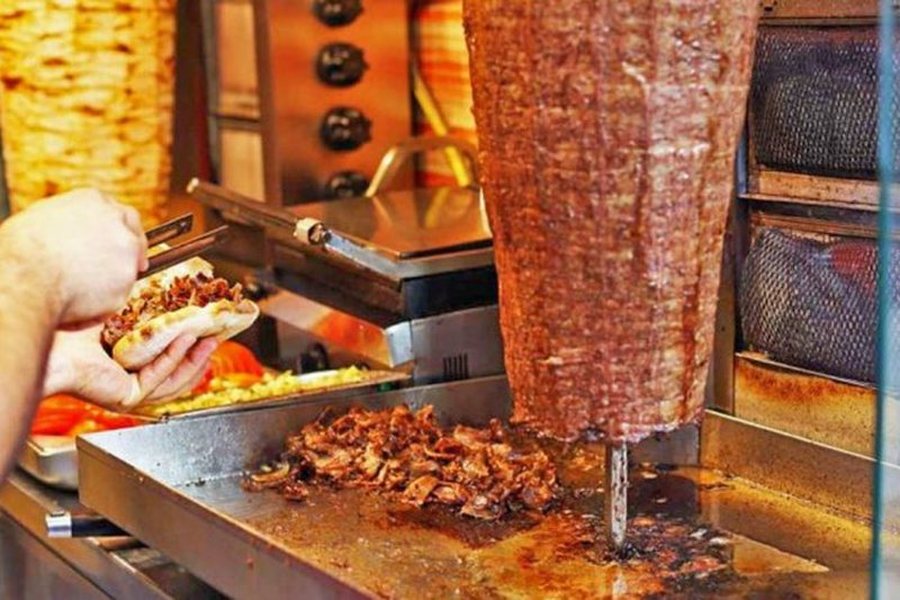
The National Food Authority, which is charged by law with the responsibility of ensuring food safety, told Inside Story that it has blocked thousands of kg of meat, meatballs, krennacki or hamburgers contaminated with salmonella.
The cases of the contaminated product entering the market have been confirmed by the AKU, which admits that only for the first 5 months of 2025, 3 salmonella-laden practices were found. Initially, about 4,500 kg of frozen pork fillet were identified, which fortunately was in the entity's possession, so it had not been traded. The entity was fined 300 thousand lek and the destruction of the entire problematic quantity was ordered.
In another case, 1,650 kg of “grilled meatballs” were seized, as well as 3.2 kg of “minced meat”, which were ordered to be destroyed. The subject was fined 100 thousand lek for acting in violation of traceability requirements.
"We have made improvements, but we have many problems in maintaining documentation and carrying out inspections and controls, so that this information is carried as required by law in all links. This shows that in this production and storage chain there may also be links that become sources of contamination", said Kapllan Sulaj, Dean of Biotechnology and Food, UBT.
According to the NFA, during 2023, one case of salmonella was identified, while during 2024, four cases.
In one case, the entire production line was blocked. 38 kg of minced meat and 92 kg of ready-to-eat meat were ordered to be destroyed after they were found to be infected. The subject was fined 100 thousand lek. He was also ordered to take measures to clean and disinfect the entire production line.
In another problematic case, 200 kg of kernacka and 50 kg of hamburgers were blocked and ordered to be destroyed. It is not known which entities imported the contaminated product.
The AKU refused to make available the names of the companies where the infected products were found until the full conclusion of the procedure and the relevant complaints. So, it is clear that what we see every day is only the tip of the iceberg of an alarming phenomenon.
In October 2024, thousands of tons of meat infected with salmonella were imported by the entity "Bajraktari Food".
According to the National Food Authority, this involves over 26 thousand kg of imported chicken meat, which was used as raw material for the production of 17 thousand 500 kg of gjiro. As we otherwise know, chicken soufflés.
When the tests confirmed the presence of salmonella, this amount had already ended up on the market. The subject was fined 600 thousand lek for two different violations. But it was too late. Tons of dangerous meat had already ended up with the consumer.
"There are a number of food safety issues in Albania. The legislation has significant shortcomings, or sometimes, to appease business, it exposes the consumer to certain microbial loads," said Ervin Resuli, a food safety expert.
"What has been lacking throughout the history of salmonella outbreaks is the fact that notification has often been made late, leaving no time for measures to be taken to prevent further spread of infection or exposure to pathogens in the population," said Kapllan Sulaj, Dean of Biotechnology and Food, UBT.
The Bajraktari company released thousands of kilograms of contaminated meat onto the market, without waiting for the results of the analyses. The map of the spread of the product on the market is not clear. What is known is that there were no public notifications to the consumer regarding this shipment.
We have contacted the company with a request for information about the distribution map of the product, or whether it has taken measures to inform consumers. However, we have not received any response until the broadcast of the documentary. According to safety regulations, the product should have been fully traced, withdrawn and destroyed, which is not known to have been carried out.
If businesses can get away with a fine of only 600 thousand lek, this has no effect on eliminating the risk. On the contrary, history may repeat itself as it has already happened.
"In 2023 there are 76 thousand cases of salmonella in all EU countries, so it is massive. Albania is not alone," said Granit Sokolaj, food safety expert. / Inside Story




Lini një Përgjigje