


 Shkruar nga Pamfleti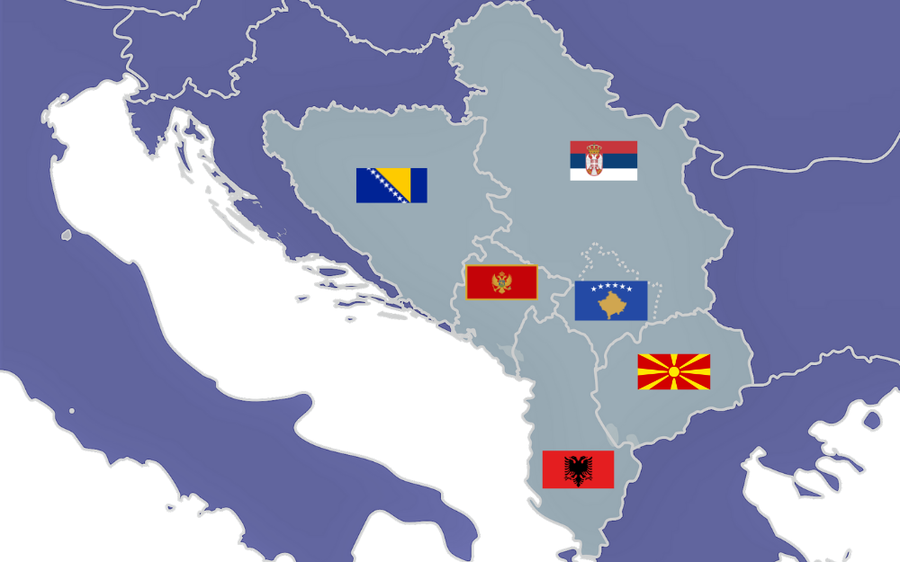
All 6 Western Balkan countries are striving to become EU member states, a protracted process in which geopolitics can be as important as fulfilling alignment tasks.
While international attention is focused on the war in Ukraine, tensions in the Western Balkans are deepening, and Kosovo stands at the epicenter of old and new clashes.
British Foreign Secretary David Lammy's recent visit to the region has clearly highlighted that Russian interference, Western strategic interests, and fragile interethnic relations are making Kosovo and its surroundings a hotbed with the potential for widespread destabilization.
The Western Balkans are described as the "next hot spot" by figures at the top levels of the UK government – and with temperatures now rising, Britain is pushing for all 6 states in the region to join the EU to ward off Russian influence.
"At this time, with the war in Europe and seeing the long hand of Russian intervention also in the region, you would be foolish to take your attention away from the Western Balkans, where there are still legacy issues that have not yet been overcome," British Foreign Secretary David Lammy told Politico.
He stressed that "Putin's interests here are to keep the region destabilized."
He further added that it is in his interest to keep the countries that make up the Western Balkans at an advantage, to have a destabilized population, and to conduct cyber and hybrid warfare.
All six Western Balkan countries are striving to become EU member states, a protracted process in which geopolitics can be as important as fulfilling alignment tasks. They face significant challenges, both domestically and with their neighbors. Bosnia and Herzegovina, for example, has been plunged into crisis after Bosnian Serb leader Milorad Dodik evaded arrest for his separatist policies. Meanwhile, Serbia accuses Kosovo of repression of its Serb minority, while Kosovo blames Serbia for violence within its territory.
Foreign policy experts and ministers also fear that the Kremlin will try to take advantage of deep ethnic and religious tensions to foment further unrest across the Balkans, entrenching Russian interests and creating even more trouble in the EU's backyard.
“For now they need to move forward or they will continue to be Russia’s playground,” said a UK official.
In an interview with Politico during his visit to the region, Lammy stressed that the "long hand of Russian interference" is also evident in the Western Balkans, where Moscow aims to keep the region in permanent crisis to hinder integration into Euro-Atlantic structures.
Kosovo, with its history of independence from Serbia and strong Western support, is a direct obstacle to Kremlin interests.
According to British and Kosovar sources, Russia has been actively involved in supporting Serbian structures in northern Kosovo, including through intelligence operations and disinformation campaigns.
The so-called "Serbo-Russian humanitarian center" near the border with Kosovo, which Pristina calls a "spy center", is one of the points where this influence is seen as institutionalized.
The huge hurdles Serbia must overcome to join the bloc are on display on the streets of Belgrade. The increasingly authoritarian government led by President Aleksandar Vučić, who recently welcomed Dodik with open arms, is being severely tested by a wave of protests on a scale never before seen in Serbia.
Hundreds of thousands have marched against government corruption, in demonstrations organized by students over the collapse of a tent at a renovated railway station in the city of Novi Sad that killed 16 people in November. They continue to block roads every day.
They have even extended their protests to oppose a proposed luxury real estate development by US President Donald Trump's son-in-law, Jared Kushner. The hotel complex is planned on the bombed-out site of the former Yugoslav Ministry of Defense, a memorial to the NATO airstrikes that brought an end to the war with Kosovo in 1999.
The students link that plan to other real estate deals they say are corrupt. Many in the country also feel disgusted by the Trump family's profiteering from a country devastated by a Washington-led bombing campaign.
The students' decentralized model of organization means there is no clear leader who could be targeted in a crackdown, but authorities have been accused of using an illegal sound cannon against demonstrators. Belgrade has also said that Russian spy services helped respond to the unrest.
Lammy told Politico that "we stand with the people," before the protests and allegations of the use of sonic weapons erupted during a meeting with Vucic at his presidential palace on Wednesday. The Foreign Secretary was there to sign a series of agreements with the dual goals of tackling illegal migration and keeping Serbia closer to the West.
Rising tensions between Kosovo and Serbia
Tensions between Pristina and Belgrade are not just diplomatic cold – they have turned into dangerous clashes on the ground. The 2023 incident in the village of Banjska, where a Kosovo policeman and three armed Serb aggressors were killed, represented one of the most serious incidents since the declaration of independence.
Authorities in Kosovo called this an act directed by Serbia, while Belgrade denied involvement.
Kosovo's President, Vjosa Osmani, has been a clear and emphatic voice in condemning Serbia's policies, calling the neighboring state "a crazy hegemon."
She expresses concern that President Vučić is cooperating closely with the "triangle of evil": Russia, China and Iran - giving Serbia a dual position: on the one hand, it keeps the door open to the EU, while on the other, it deepens ties with autocratic powers.
In the meeting with Lammy, Osmani called for strengthening economic and military cooperation with Britain, including a joint security agreement and arms purchases.
She has also expressed Kosovo's willingness to join the peacekeeping forces that Britain and France are organizing for Ukraine – a move that clearly demonstrates Kosovo's pro-Western positioning and the attempt to consolidate its role as a reliable ally in the European security architecture.
However, frustration with the EU is palpable in Pristina. Despite officially applying for membership in 2022, Kosovo is still not recognized by five EU member states.
Osmani has sharply criticized what he calls "attempts to appease Serbia," warning that patience is running out if Brussels continues to ignore Kosovo's progress in favor of maintaining the status quo.
Security in Kosovo remains heavily reliant on the presence of KFOR, with troops from 29 countries – including Britain – deployed to keep the peace. Following suspicious infrastructure explosions in December, NATO has stepped up surveillance of key locations, while military officials have confirmed to Lammy that Serbian activities in northern Kosovo are likely to be supported by Russia.
"Vučić has been dancing to Putin's tune for a long time. It's time for him to decide where he wants to take his country," Osmani said, emphasizing that discord and aggression are not simply Serbia's internal issues, but threats to the entire region.
Kosovo sees it clearly – without a strategic change in the West's approach, the risk that the region will turn into an arena of major confrontations is real and imminent.
In this tense climate, Kosovo stands as one of the few clear stories of pro-Westernism in the region. But without concrete support – such as full recognition, faster integration and security guarantees – it remains exposed to a larger game, where Russia, through Serbia, plays for destabilization, and the West is often reluctant to face reality with determination. / Adapt Pamphlet /


Lini një Përgjigje