


 Shkruar nga Pamfleti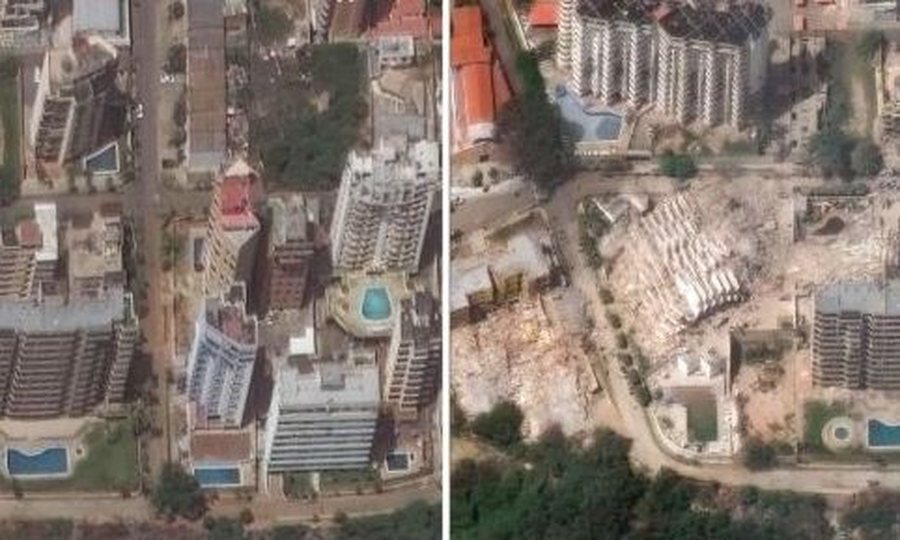
Over 50,000 people remain missing after two powerful earthquakes struck Venezuela.
Two earthquakes, the first with a magnitude of 7.2 and the second, even more powerful, with a magnitude of 7.5, struck Venezuela just minutes later, according to the United States Geological Survey (USGS). The epicenter of the first quake was west of the community of Morón, along the Caribbean coast, about 168 kilometers west of the capital Caracas. The quake had a focal depth of 13 kilometers.
The second earthquake, with a focal depth of 10 kilometers, occurred near the first, with an epicenter 16 kilometers southwest of Morón. The destruction caused by both earthquakes was revealed in satellite images, where hundreds of buildings appear damaged, while entire neighborhoods have been flattened.
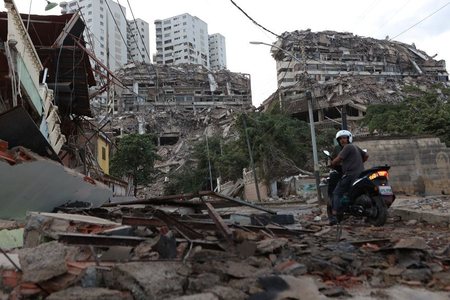
Shocking images show devastated areas across the country before and after the deadly earthquake, which has killed at least 235 people. One photo shows several high-rise buildings reduced to rubble after the devastating quakes. The images of the area before the major quakes stand in stark contrast to the scenes of despair recorded afterwards. Another pair of photos shows a coastal neighborhood before and after the tragedy.
Buildings were seen completely collapsed, with large piles of rubble covering the site where buildings once stood. The US Geological Survey (USGS) warned that the death toll was expected to be "high", with damage widespread across the country. According to USGS estimates, the death toll could reach between 10,000 and 100,000 people.
Venezuela's acting president, Delcy Rodríguez, immediately declared a state of emergency across the country. She announced the creation of a $200 million fund, with resources from the International Monetary Fund, to rebuild infrastructure, hospitals and housing in the coming weeks.
The United Nations said a "massive collective effort" would be needed in the coming days to help survivors. Tom Fletcher, the UN Under-Secretary-General for Humanitarian Affairs and Emergency Relief Coordinator, said: "Even before these earthquakes, almost eight million people in Venezuela were in need of humanitarian assistance. This disaster risks exacerbating existing vulnerabilities. Continued international support for humanitarian organizations operating on the ground is essential and urgent."
Donald Trump, along with dozens of neighboring countries, has pledged to support Venezuela and send supplies to help rescue and recovery operations. U.S. Marine Corps Major General Kevin Jarrard arrived in Caracas this morning to lead the U.S. military's relief efforts.
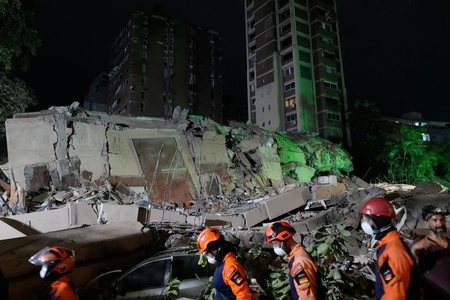
Thousands of people are believed to be trapped in buildings destroyed by the two powerful earthquakes. Videos posted on social media after the tremors showed buildings collapsing, leaving behind piles of rubble and clouds of dust.
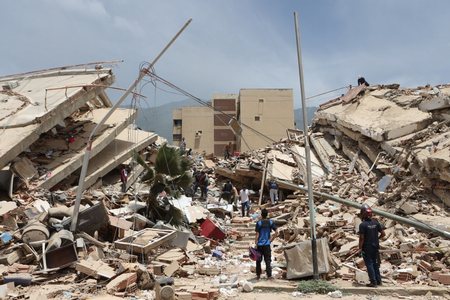
The hardest-hit area was the coastal town of La Guaira, where many buildings appeared to have collapsed. Emergency services were assessing the damage, while rescue teams and residents searched through the rubble. Shocking images showed debris strewn across the streets after the quake.
Interim leader Delcy Rodríguez said the initial death toll does not include La Guaira, due to difficulties in clearing the devastated area and recovering bodies.
She stated: "Dozens of buildings have collapsed and at this moment we are carrying out very intensive rescue operations to save as many lives as God allows us. This is a real tragedy."
Footage from Maiquetía International Airport, near Caracas, shows people running for their lives as one of the terminals fills with dust and the entire building shakes.
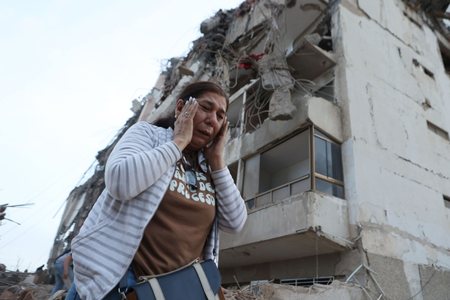
Rodríguez confirmed that the airport was closed after "serious damage" was reported throughout the complex. The two powerful earthquakes struck about 100 miles west of Caracas. There were reports of mass panic in the capital, where residents could be heard screaming as buildings swayed from side to side. Crowds of people took to the streets, waiting for the strong seismic tremors to stop.
Witnesses in the Venezuelan capital said they were forced to rush out of their homes, while others reported cracks in apartment walls and broken windows.
Maria Romero, an 80-year-old pensioner from Caracas, said: " This earthquake was terrible, even worse than the one in 1967."


Lini një Përgjigje