


 Shkruar nga Pamfleti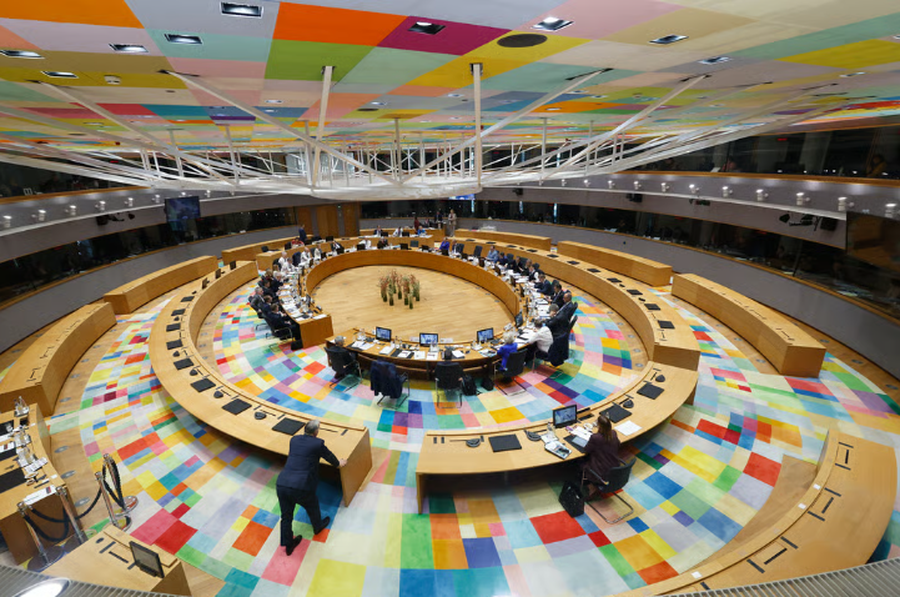
EU leaders were expected to spend Thursday devising ways to boost the European economy. Instead, they faced two wars, a deepening rift with transatlantic partners and a stalemate over Ukraine. After 12 hours of discussions, a few confrontations and a lot of coffee, here’s Politico’s quick summary of what was learned at the European Council:
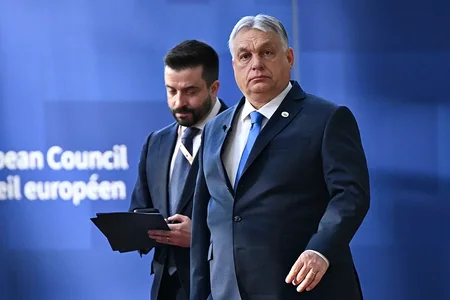
1) Viktor Orban is not a man who changes his mind easily…
The main question before the summit was whether the Hungarian prime minister could be persuaded to lift his veto on the EU's €90 billion loan for Ukraine. He did not.
The European Commission tried to appease Orban by sending experts to Ukraine to inspect the damaged Druzhba pipeline, which supplies Hungary and Slovakia with Russian oil. Orban claims that Ukraine is deliberately not addressing the problem and linked this to the blocking of funds.
Asked if there was any chance of progress, his answer was simple: “No.” Twelve hours later, the answer remained the same.
2) … But he likes to move.
In one of the most significant scenes of the summit, Orban stood outside the hall while other leaders listened to a virtual speech by Ukrainian President Volodymyr Zelensky.
Relations between them have deteriorated significantly, after Orbán refused the loan and Zelensky made implicitly threatening statements, which were also criticized by the Commission.
Faced with the speech, Orban chose to physically leave.
3) The “young one”, happy to be part of the European family
This was the first summit for the new Prime Minister of the Netherlands, Rob Jetten. He said he was looking forward to becoming part of this “family”.
After the meeting, he noted the differences in speaking styles between the leaders and praised Belgian Prime Minister Bart De Wever's humor, especially during long discussions.
4) Not everyone was so understanding
Orbán's stance was not well received. The Swedish prime minister said the criticism of Hungary was "very, very harsh," among the strongest he had ever heard. Jetten described the atmosphere as "cold," with awkward silence.
5) The EU is not giving up on the loan.
Despite discussions about an alternative plan, European leaders and heads of institutions insisted that the loan will be implemented. “We will do it one way or another. Today we have strengthened our resolve,” said Ursula von der Leyen. António Costa added that “no one can blackmail the European Council or the European Union.”
6) Kaja Kallas calls for avoiding deep involvement
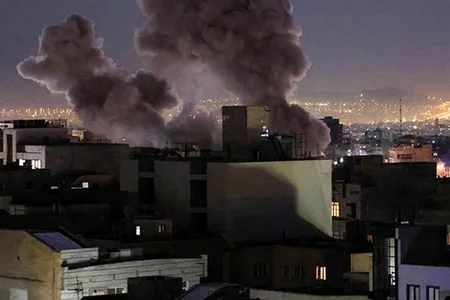
The EU's foreign policy chief warned of the dangers of involvement in the conflict in the Middle East.
"Starting a war is like a love story, it's easy to get in and hard to get out," she said, according to diplomats.
She stressed that there is no support for expanding the EU naval mission in the Red Sea.
7) Relations with the UN remain positive…
Secretary-General António Guterres thanked the EU for its support for multilateralism and international law.
In an interview with Politico, he praised the EU's restraint despite pressure from Donald Trump for a more active role in the conflict.
8) …But not everyone agrees.
A senior EU official called the meeting with the UN unnecessary, criticizing its lack of role in current crises.
9) Celery is very functional.
During lunch, a plate of spring vegetables and beef with celery prepared in three different ways were served, as well as tangerine tart for dessert.
10) Greece and Cyprus call for more seriousness in defense.
The two countries called for a concrete plan for the implementation of the EU's mutual defense clause (Article 42.7), in a context of increasing tensions.
11) The Commission believes it is better prepared for migration.
Von der Leyen said the EU should be ready for migratory flows from the conflict in Iran, but stressed that there will be no repeat of the situation of 2015.
12) Temporary energy measures.
The Commission proposes “temporary, tailored and targeted” measures to reduce the impact of rising energy prices, addressing four main factors: costs, network tariffs, taxes and the carbon price.
13) The ETS system remains in force.
Leaders supported the continuation of the emissions trading system, with some adjustments.
German Chancellor Friedrich Merz called it a 20-year success and stressed that there will be no fundamental changes.
14) Leaders want to leave the summits quickly.
Although there was a risk that the summit would last longer, the leaders managed to conclude it in one day, postponing some issues for later.
15) Conclusion:
The summit showed an EU faced with internal divisions and external challenges, but which maintains its determination to act together.


Lini një Përgjigje