


 Shkruar nga Federico Fubini
Trump has launched new sanctions against Russian oil giants: the companies involved will no longer be able to use dollars to bill for their supplies. But have the sanctions worked in the past? And how much weight do China and India, which buy crude oil from Moscow, have in Putin's war equation?
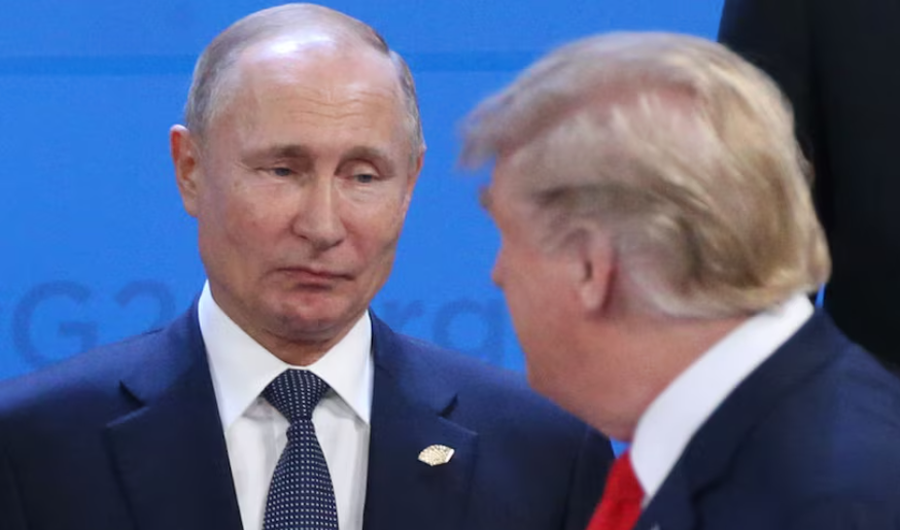
This is not the first time the US administration has hit Russian oil producers with sanctions. Before Donald Trump launched measures against Lukoil and Rosneft in the last few hours, his predecessor Joe Biden had similarly targeted Russian companies Gazprom Neft and Surgutneftegas.
Sanctions and the role of the dollar
Like Trump, Biden’s sanctions are based on a very simple and (in theory) powerful principle: the companies involved can no longer use the dollar to bill for their supplies. And since the dollar is the settlement currency for all international crude oil transactions, this ban alone should significantly reduce the revenues of major Russian oil companies.
Negative precedent and real risks
The experience of Moscow-controlled Gazprom and Surgutneftegas might suggest that not. The export revenues of these companies have not declined significantly since the sanctions were imposed by the US Treasury last January (just before Trump took office). However, the reasons for the partial failure of the first two oil companies suggest that something may be changing now. Trump was not interested in enforcing the sanctions imposed by his predecessor and had largely disbanded the staff of the Office of Foreign Assets Control (OFAC), the Treasury body that manages the sanctions. Now, however, both of these factors may change, as Trump’s own credibility is at stake.
China's weight
However, it seems likely that these measures could somewhat erode, but not destroy, the Moscow government's oil revenues.
The main buyer of Russian oil remains China, which in September alone purchased over 50% of total exports from this source for a turnover of approximately $3.3 billion (according to the Helsinki-based research center Crea).
Beijing could now take advantage of Trump's change to force Moscow to invoice its crude oil in yuan and thus seek to expand the international role of its currency. But for now, there are no signs that the Chinese government intends to curb Vladimir Putin's aggression against Ukraine.
Beijing has three strong reasons for the war in Europe to continue, as it can purchase raw materials from Russia at relatively low prices, thanks to its bargaining power as the main buyer.
It sees the United States’ declining attention to the Indo-Pacific theater and Taiwan, key areas of Chinese interest, and draws on growing intelligence from Russia on drone innovations (including Ukrainian ones) and on the integration of drones and artificial intelligence (thanks to the video database of millions of combat events that Russia now has at its disposal). This last aspect in particular allows China to advance drone applications in the civilian economy, which is now spreading to major cities.
For these reasons, Xi Jinping, the leader of Beijing, is still not showing signs of wanting to reduce crude oil purchases from Russia to the point of forcing Moscow to stop the war.
Modi's India will not stop imports
As for India, the second-largest importer of Russian crude oil with about 35% of purchases (for $2.6 billion in September), it is likely to slow imports for now. But that will not stop them. Narendra Modi’s government is likely to be able to directly influence about a third of Russia’s crude oil imports. Even the private Reliance group, owned by Mukesh Ambani, India’s richest man, has announced that it will stop supplies to Rosneft. But Russian crude may continue to come from other sources.
Lukoil and its operations in the Netherlands, Belgium, Romania and Bulgaria
It remains to be seen how long Lukoil's international operations, which are entirely private, will be able to continue. As incredible as it may seem after nearly four years of war, Lukoil has so far continued to operate its refineries in the European Union (in the Netherlands, Romania and Bulgaria) and its distribution networks (in Belgium, the Netherlands and elsewhere) without hindrance. Lukoil itself is also an active partner in exploration and production projects in Russia and the Middle East with several major Western companies: BP and Exxon in the Shakalin gas project (Russia), Eni in Kazakhstan in the Kashagan project and another major American company, Chevron.
Lukoil, for example, is still active in Iraq.
The impact of the new sanctions remains to be seen. The impression is that they will not block Russian oil revenues. However, they may further reduce them. As of September, Moscow's hydrocarbon revenues fell by 26% compared to a year earlier due to falling prices (according to the Helsinki-based CREA).
Now, a new erosion could slowly lead Putin to realize that for the moment he may have no other alternative than freezing the conflict./ Corriere della Sera




Lini një Përgjigje