


 Shkruar nga Pamfleti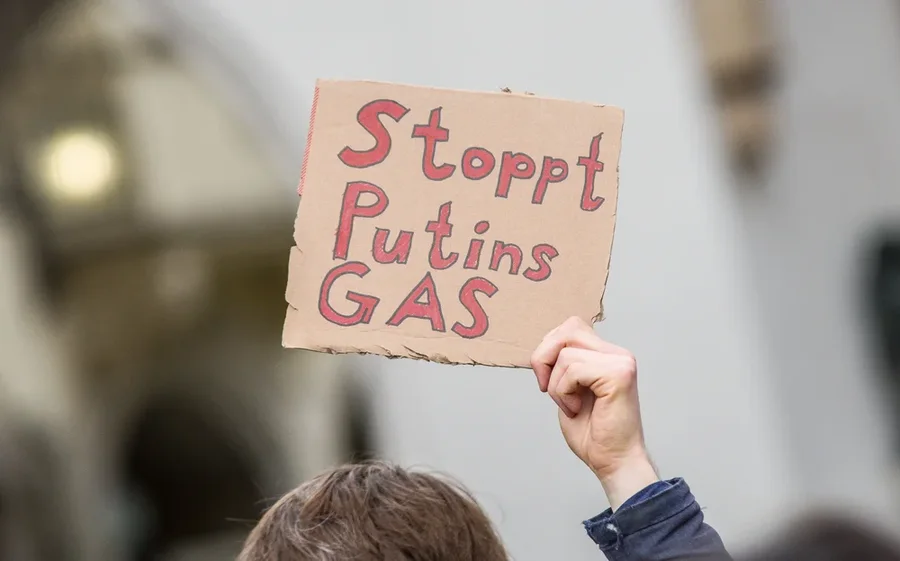
Russian gas certainly has one strong selling point: its price. Contracts set before 2022, largely indexed to oil prices, were negotiated at a price for Europeans that was half the price for gas in today's markets.
What if Russian gas were to flow back to Europe en masse? The European Commission may have confirmed its intention to completely phase out Russian gas by 2027, but some people are expressing opposition. And the prospect of a peace deal in Ukraine is giving them ideas.
Europe has significantly reduced its dependence on Russian gas since 2022, following Moscow and Gazprom’s decision to cut pipeline supplies. Russian gas now accounts for about 14% of European demand (down from over 40% before the war). Of this, 9% arrives by ship as liquefied natural gas (LNG), while 5% comes via the TurkStream pipeline, the only one still supplying Eastern Europe – mainly Hungary – after the end of the transit contract with Ukraine on December 31.
-Cost argument
Another sign of a Russian push into Europe: The Financial Times revealed this weekend that a close associate of Vladimir Putin, Matthias Warnig, a former Stasi agent who ran Nord Stream until 2023, is currently in talks with American investors to reactivate the pipeline connecting Russia to Germany.
A consortium is even said to have laid the groundwork for a post-sanctions deal with Gazprom, for which Europe remains a vital market. If we imagine a world where a peace deal is reached, we will have to reassess the situation.
Russian gas certainly has one strong selling point: its price. Contracts set before 2022, largely indexed to oil prices, were negotiated at a price for Europeans that was half the price for gas on today’s markets. But Europe is confident that wholesale prices will fall in the next two to three years, with the commissioning of new liquefaction capacity in the United States and Qatar. Moreover, Europe is committed to increasing its biomethane production and reducing its consumption.
If trade with Russia is to resume, the situation of the various players must first be clarified. Since Gazprom halted its supplies, some of the company’s customers have turned against it and won their cases in court. Examples include Austrian company OMV and German company Uniper, which was granted the right by an arbitration court last summer to claim more than $13 billion from Gazprom for failing to meet its commitments.
-France is studying this question.
German company RWE and French company Engie have also taken legal action and filed lawsuits against their former supplier. For its part, Engie, which was one of Nord Stream's creditors and had 987 million euros written off in its accounts for this reason, has not ruled out the possibility of getting gas from Russia again, although it remains cautious. CEO Catherine MacGregor called the question "premature" during the presentation of Engie's annual results last week.
"But if we imagine a world where a peace agreement is reached, we will need to reassess the situation with our former suppliers. We still have contracts that are valid, even if they are subject to legal disputes ," she says.
MacGregor believes there would be contractual and logistical work involved initially, especially because infrastructure has been damaged.
" It will take time and in any case, we will never fully return to the pre-crisis situation. The key will remain the diversification of supply sources for Europeans ," he says.
This is also Brussels' position, but some member states may choose to make their own decisions./ Adapted from "Pamphlet" by "WorldCrunch"


Lini një Përgjigje