


 Shkruar nga Pamfleti
From strategic mistakes to the risk of losing global credibility, four perspectives on the conflict with Iran
Does Donald Trump still have a chance to win this war? Is the ayatollahs' regime, or more precisely the Revolutionary Guards' regime, now convinced that it "won't lose"?
Four analyses and a common concern are offered about the war as seen from Washington. If we combine the assessments of Walter Russell Mead, Gerard Baker, William Galston, and Seth Cropsey, a coherent picture emerges, despite ideological differences. The four perspectives complement each other: strategic miscalculation, asymmetric nature of the conflict, crisis of internal consensus, risk of loss of global credibility. Together, they reveal one truth: this war is more difficult, more ambiguous, and more dangerous than anticipated.
Historian Walter Russell Mead starts from a statement that sounds like a double indictment: both the “doves” and the “hawks” were wrong. The former nurtured the illusion that it was possible to coexist with the Iranian regime through a combination of restraint and dialogue, believing in an internal evolution of Iranian society. The latter underestimated the costs and risks of a direct military confrontation. The result is a war that, according to Mead, is both “more necessary” than the former thought and “more difficult” than the latter predicted.
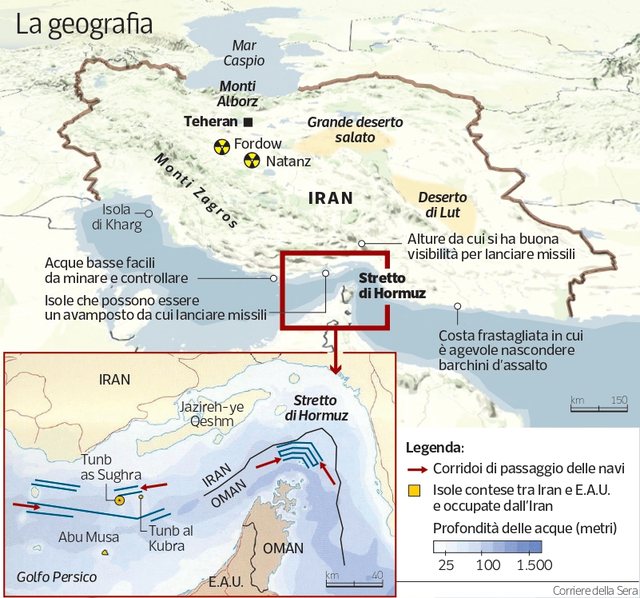
This double underestimation explains the current stalemate. On the one hand, American and Israeli attacks have inflicted significant damage on the Iranian military apparatus. On the other, they have not yet achieved their main objective: to keep the Persian Gulf open and protect allied countries from attacks by Tehran. Military superiority does not automatically translate into strategic control.
Mead makes a crucial point: Gulf security remains a vital interest for the United States, even in an era of relative energy independence. It is not just about oil, but about the stability of the global system: trade routes, financial markets, critical supplies. The fact that Iran is still able to threaten these infrastructures shows that the problem was underestimated.
Gerard Baker analyzes the nature of the conflict and does so through the concept of asymmetric warfare. According to him, in this type of war, the parties have different objectives: the United States must win, while Iran needs only to not lose. This asymmetry changes everything. For Washington, “not losing” is a political loss, as the experiences in Iraq and Afghanistan show. For Tehran, survival is already a victory. The Iranian regime can withstand huge losses – human, economic and political – without falling, because it does not respond to public opinion. Whereas in the US, the political cost of any loss is high.
Baker identifies three dimensions of this asymmetry. The first is the pain threshold: Iran can afford more. The second is the choice of targets: while the US strikes complex military targets, Iran can achieve great effects with simpler actions, such as threatening the Strait of Hormuz or attacking energy infrastructure. The third is the ultimate goal: for Tehran, resistance is enough, while for Washington, a concrete result is required. His conclusion is that both sides can simultaneously achieve their objectives: the US can weaken Iranian capabilities, while Iran survives and retains the ability to destabilize the global system. An outcome that is not a complete victory for anyone, but which for the US translates into a loss of prestige.
William Galston shifts attention to the interior of the US, where another decisive battle is being fought: that of consensus. His analysis is critical of Trump. According to him, the president made a fundamental mistake: he entered the war without preparing public opinion. In a democracy, without public support, no war can be sustained for long. It is not about a formal mandate, but about building a consensus by explaining the objectives, risks and costs. Trump did not do this. He gave a weak initial justification and did not build a sustainable narrative. As a result, public support is falling rapidly. Only a third of Americans consider the conflict justified, while the majority wants a quick end.
Even more significant is the refusal to accept economic sacrifices. The increase in fuel prices is not perceived as a patriotic contribution, but as an unjustified burden. The fear of even limited ground involvement is met with strong opposition. Galston highlights the political contradiction: Trump built his career criticizing long wars in the Middle East, while now he is leading one without preparing the ground. The risk is not only electoral, but also institutional: a war without consensus undermines democratic legitimacy.
Former military officer and strategic scholar Seth Cropsey represents the opposite approach: he worries about the lack of action. In his opinion, stopping now would be a historic mistake comparable to the Suez Crisis in 1956. He sees the war as a test of the US’s global credibility. If Washington does not complete the operation – reopening the Strait of Hormuz and neutralizing the Iranian threat – the consequences could extend beyond the region: encouraging China’s push for Taiwan, strengthening Russia against NATO, and weakening the alliance system.
According to Cropsey, the lesson of Suez is that when a great power shows an unwillingness to back up its actions, it loses status. In 1956 this marked the end of the global ambitions of France and Britain; today, he suggests, the same could happen to the US.
From this he draws a controversial conclusion: to win, escalation is needed, including the possibility of a limited ground intervention to secure the Strait of Hormuz. This contradicts the public opinion described by Galston, but reflects a different strategic logic: an immediate cost is better than a deeper decline in the long term.
Putting these four analyses together, a central tension in American policy emerges. On the one hand, strategic logic pushes toward stronger engagement: Gulf security, international credibility, deterrence of Iran. On the other, domestic political logic pushes toward the opposite: avoiding escalation, reducing costs, quickly exiting the conflict.
Mead shows that war was difficult to avoid and win. Baker explains why victory is problematic in an asymmetric conflict. Galston demonstrates that without internal consensus even a justified war becomes unsustainable. Cropsey warns that an unfinished war can have serious strategic consequences.
Each option has high costs. Continuing the war means a long and uncertain escalation. Stopping it means accepting an incomplete outcome, with consequences for American credibility. It is the classic dilemma of great powers in an unstable world, exacerbated by an additional factor: the growing conviction that the international system has entered a more dangerous phase.
The war against Iran is not an isolated episode, but a test of the United States' ability to manage global competition. Beyond the differences, everyone agrees that this conflict is not just about Iran, but about America's role in the world. A test that, for the moment, remains open. / Adapted from "Corriere Della Sera"




Lini një Përgjigje