


 Shkruar nga Pamfleti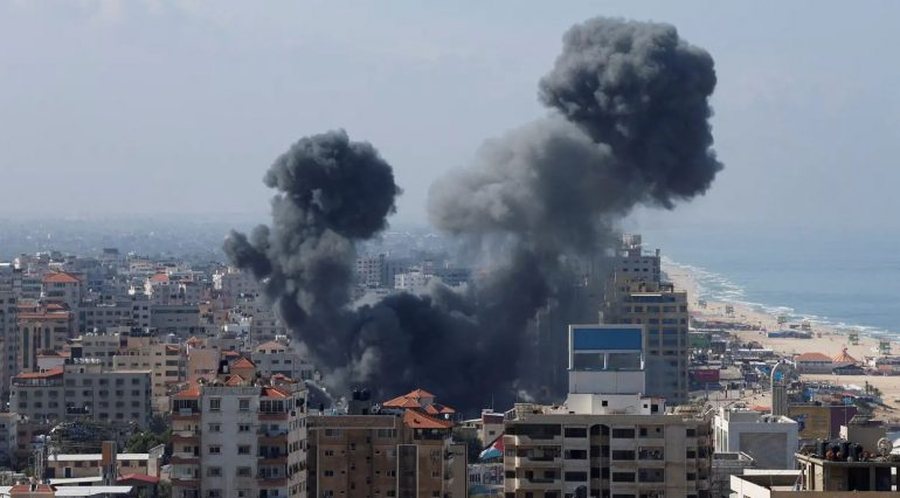
The ongoing fighting between Israel and Hezbollah has begun to weaken Israel's self-defense capabilities, and why Tel Aviv says it can respond to provocations coming from the north.
An Israeli government spokesman on Thursday called on the international community to take a stand now against the "brazen" actions of Iran-backed Hezbollah instead of criticizing the decisive Israeli response, which will happen soon if Tel Aviv continues to be provoked.
Senior Israeli officials have likewise sent the message, in the form of a warning, that an Israeli military invasion of southern Lebanon is not something that can be ruled out.
Israel's armed forces on one side of the border and Hezbollah on the other have exchanged fire from a distance since Hamas attacked Israel on October 7.
These exchanges of fire have so far led to the displacement of many tens of thousands of residents, reportedly 80,000 in northern Israel and 64,000 in southern Lebanon, and more than 150 people in Lebanon and about 10 people in Israel have reportedly lost their lives. namely the Lebanese and the Israelis.
Israel and Hezbollah last fought in the summer of 2006.
"If the international community and the Lebanese government do not take action to remove Hezbollah from the border and prevent attacks against those living in the northern areas of Israel, then the Israel Defense Forces will take action," said the former defense minister. Israel, Benny Gantz, on Wednesday.
He underlined that the time left for a diplomatic solution to the crisis is running out and that the next phase in the Israeli battle against Hezbollah will be deep, dynamic and unexpected. In the same way, the chief of the general staff of the Israeli armed forces, Herji Halevi, has emphasized that the Israeli army must be ready to strike if necessary.
Israel is calling on the Lebanese government to take action against Hezbollah, but in practice this cannot be done. Beirut currently has no president, no functioning government and no money, while Hezbollah in turn has members of the Lebanese parliament, ministry officials and an armed force that is more powerful than Lebanon's official army.


Lini një Përgjigje