


 Shkruar nga Richard Haass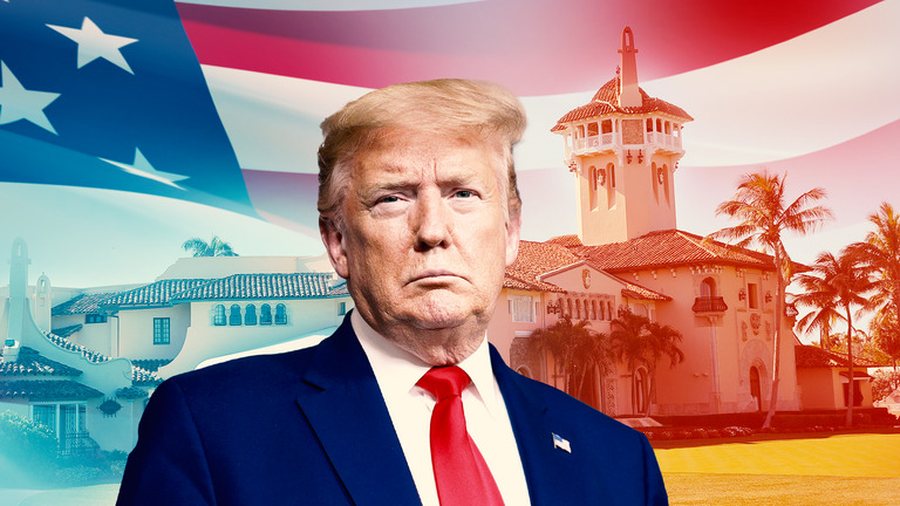
Between the 250th anniversary celebration and the degradation of institutions. Will 2026 be remembered as the moment when the US restored balance, or as the time when Trump's "great experiment" paved the way for unlimited power and a new world order?
Writing about the year 2025 from an American perspective is both easy and difficult. Easy, because you can choose from a multitude of events, but also difficult for precisely the same reason.
Domestically, a short list would include: the longest government shutdown in history; a national debt exceeding $38 trillion; persistent inflation coupled with rising unemployment and inequality, despite economic growth fueled by Artificial Intelligence.
We have also seen increasing political violence, attempts to close the southern border through mass deportations, and the deployment of the National Guard to Los Angeles and other cities. Attacks on universities, the imposition of massive trade tariffs, cuts to the public sector (including USAID), and reductions in funding for scientific research have completed this landscape of radical transformation.
No less shocking were developments in foreign policy. The United States joined Israel in airstrikes against Iranian nuclear facilities, setting back years in Tehran's program.
A US diplomatic offensive failed to bring peace to Gaza, but it did secure the release of Israeli hostages and thousands of Palestinian prisoners under a fragile ceasefire. Similarly, efforts to end the Russia-Ukraine war have so far failed, serving mainly to bring Washington closer to Moscow and distance it from Europe.
Closer to home, a large military presence has been massed near Venezuela, where suspected drug-trafficking ships have been attacked and oil exports blocked to force regime change. The sovereignty of Canada, Greenland, Panama and Colombia has been at various times targeted by President Donald Trump's rhetoric.
The US withdrew from the World Health Organization and global climate agreements, favoring fossil fuels over renewable energy. The promotion of democracy and human rights was almost completely forgotten.
A world without balance
In 2025, serious imbalances in power emerged. Domestically, the first year of Trump’s second term was marked by a confirmation of the extreme supremacy of government. Trump signed hundreds of executive orders, signed thousands of pardons, fired officials who tried to maintain independence, and retaliated through lawsuits against political opponents.
The demolition of the East Wing of the White House to build a ballroom and the renaming of the Kennedy Center were symbols of the rejection of norms and legal control. What stood out was the unwillingness of Republicans in Congress to balance the behavior of the president and the Supreme Court chapter before him.
Not since Franklin D. Roosevelt has any president amassed so much power, but unlike FDR, Trump did not inherit an existential crisis like the Great Depression or World War II. He simply acted and others stood by.
This presidency, with its unlimited power, runs counter to the American tradition of “checks and balances.” This system has failed: Trump acts, and the reactions are almost nonexistent.
The challenge of 2026
Abroad, Trump's focus on the Western Hemisphere - seen as an extension of homeland security - has come at the cost of distancing himself from allies in Europe and Asia. As a result, the balance of power has tilted in favor of Russia and China.
The year 2026 will be very significant. First, we will see how the Supreme Court will decide on the use of emergency powers for economic tariffs. Second, we will see whether Republicans will start to distance themselves if Trump becomes an electoral burden.
But the crucial test will be the midterm elections in November. History suggests that Democrats could take control of Congress, which would give them the power to investigate the administration. The question is not just whether Democrats will win, but whether the elections will be allowed to be free and fair, a dramatic test for American democracy on its 250th anniversary.
The future of global order
On the world stage, the Trump administration’s abandonment of Ukraine and doubts over Taiwan’s defense signal a retreat from the US role as a guarantor of stability. His planned visit to China in the spring of 2026 will show whether the obsession with trade balances will triumph over the need to maintain the balance of power in the world’s most critical region.
Systems out of balance tend to evolve toward greater chaos or toward a new order. Donald Trump's actions will define this evolution and with it, the history of our era. The year 2026 promises to be a turning point for America and the world./ Adapted from "Pamphlet" by " Project Syndicate" .
Note: Richard Haass, president of the Council on Foreign Relations.







Lini një Përgjigje