


 Shkruar nga Pamfleti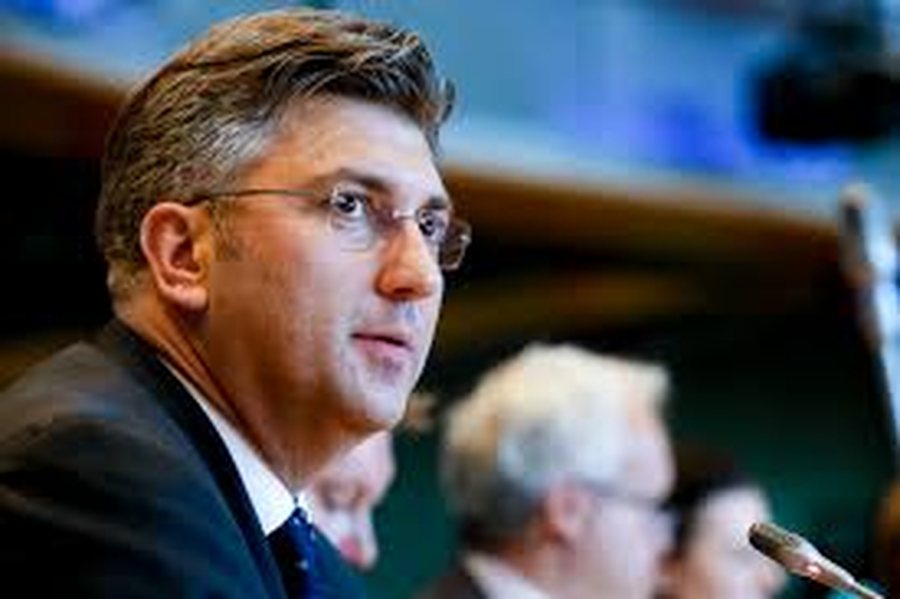
Andrej Plenkovic, Prime Minister of Croatia, expresses support for the membership of Balkan countries in the EU, but emphasizes meeting the membership criteria.
As the 27 countries consider expanding the Union to include new states, especially Ukraine, Andrej Plenkovic welcomes this "new political will within the EU." Croatia is the latest country to join the 'Twenty-Seven' club in 2013 and aspires to be a bridge between the EU and the Balkan candidate countries.
"The countries of Southeastern Europe are on the front lines of joining the EU. We support all of them, especially Bosnia and Herzegovina, where Croats represent a part of the population along with Serbs and Bosniaks." "All of our neighbors, our friends, must meet the membership criteria," he adds in an interview with France24.
At a time when strong demonstrations have been recorded in several Balkan countries and where Russian influence is present, Andrej Plenkovic insists on the need to "discuss the situation in the Western Balkans at the next European Council."
He mentions Bosnia and Herzegovina, Serbia, Kosovo, Montenegro, Albania and North Macedonia, which, according to him, "are ready to accelerate their integration into the EU". However, he calls for caution. "There is a political situation and tensions that Europe should pay attention to first. We must act for stability, support political forces that are for stability and European integration", he stressed.
In Serbia, demonstrations have rocked the country after an accident that killed 15 people at the Novi Sad train station. A trans-partisan youth movement is shaking up Aleksandar Vučić, the nationalist in power since 2014. "These demonstrations are carried out by very heterogeneous groups in Serbian society. The ball is now in President Vučić's court to propose a new government and demand stability. We are for stability and democratic processes," the Croatian prime minister explains.
Serbia, which signed a military cooperation agreement with Croatia in 2010, has sometimes adopted a very pro-Russian discourse. “The day will come when Serbia will have to choose whether to be on the side of Europe or Russia,” says the Croatian prime minister. “If there is a real desire to be inside the EU, we have to make strategic choices,” he continues.
While he acknowledges the “good-neighborly” relations with this country, especially in the trade field, he emphasizes “the questions that remain open since Serbia’s aggression 30 years ago.” “We want to resolve all issues related to the Croat minority [living in Serbia] while supporting the Serb minority in Croatia,” he says.
In Bosnia and Herzegovina, the political leader of the Bosnian Serbs, Milorad Dodik, is accused of attacking the constitutional order after a series of separatist actions carried out by the autonomous institutions of Republika Srpska, the Bosnian Serb entity. The country issued an international arrest warrant against him. “We are very concerned about the situation in Bosnia and Herzegovina. We are the first to have an interest in political and institutional stability, a sincere and constructive dialogue between the three peoples of the country and between the two entities: Republika Srpska and the Federation of Bosnia and Herzegovina,” explains the head of the Croatian government. “I call on all political forces and leaders to respect the legal order in Bosnia and Herzegovina,” he concludes.



Lini një Përgjigje