


 Shkruar nga Pamfleti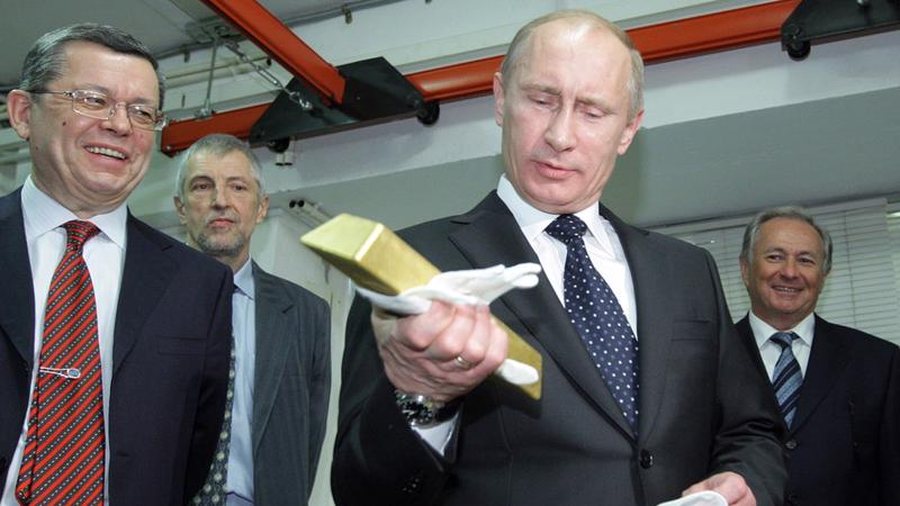
Russia is the world's second largest producer of gold, with 324.7 tons mined in 2023, an amount that represents a resource of great economic and strategic value...
While public debate focuses on economic sanctions and the geopolitical implications of the Russian-Ukrainian conflict, one crucial element often goes unnoticed: the strategic importance of gold in Russia's economic and military dynamics. This precious metal, in addition to being an economic resource, has become a fundamental lever that the Kremlin uses to circumvent Western sanctions, keep the war machine running and consolidate geopolitical influence, especially in Africa.
Gold as an economic anchor
According to the World Gold Council, Russia is the world's second largest producer of gold, with 324.7 tons mined in 2023, an amount that represents a resource of great economic and strategic value. Thanks to a sophisticated trading system and the support of friendly countries such as the United Arab Emirates, China and Turkey, Moscow is able to use gold to obtain hard currency, strategic goods and weapons, effectively bypassing the restrictions imposed by international sanctions.
The link between the ruble and gold, created by the Kremlin, further strengthens Russia's economic stability, allowing the government to maintain a modicum of internal stability and finance military operations in Ukraine. Each ton of gold is worth about $65 million, a figure that allows the Kremlin to access critical resources without depending on traditional Western financial circles.
Global centers and the role of Africa
Russian strategy extends far beyond national borders. Countries such as Armenia and Sudan play a central role in Russian gold traffic. Armenia, for example, acts as a major logistics hub, importing large quantities of Russian gold and then re-exporting it to the United Arab Emirates and China, thereby circumventing bans imposed by the G7. Between January 2023 and March 2024, Armenia moved 111 tons of gold, a volume equal to a third of its GDP, highlighting the global reach of this trade network.
In Africa, the Russian presence is even more entrenched. In war-torn Sudan, gold has become a major asset for financing conflicts and deals with Moscow. Wagner Group mercenaries, now under the direct control of Russian military intelligence, manage mining activities and deal with local warlords, using gold as a bargaining chip for weapons and geopolitical influence. This pattern is repeated in other African countries, such as Mali, where Russian mercenaries have taken control of several gold mines, strengthening the link between natural resources and geopolitics.
A silent weapon against sanctions
Russia's ability to use gold to prop up its economy and finance war shows the effectiveness of alternative strategies adopted by Moscow to resist international pressure. Western sanctions, while broad and widespread, have failed to completely block Russian income from this parallel trade network. Moreover, the control of mining in Africa and the expulsion of Western companies from local markets strengthens Russia's position on the continent, to the detriment of former colonial powers such as France.
Global implications
Russia's growing dependence on gold highlights a transformation in global economic dynamics. The precious metal is not only an economic resource, but also a tool to build strategic alliances, bypass international restrictions and consolidate geopolitical influence. However, this strategy raises important questions: To what extent can Western powers ignore the role of gold in financing Russian operations? And what impact will this flow of gold have on the political and economic stability of the countries involved, especially in Africa?
Conclusion
Gold is one of the most undervalued assets in the debate over Russia's international relations and economic strategies. Its importance goes far beyond simple economic value: it represents a geopolitical lever that Moscow uses very skillfully to maintain domestic control and strengthen its global presence. Ignoring this dimension means neglecting a fundamental element in understanding Russia's stability and the future of global geopolitical balances. /Adapted "Pamphlet" from "Inside Over"



Lini një Përgjigje