


 Shkruar nga Pamfleti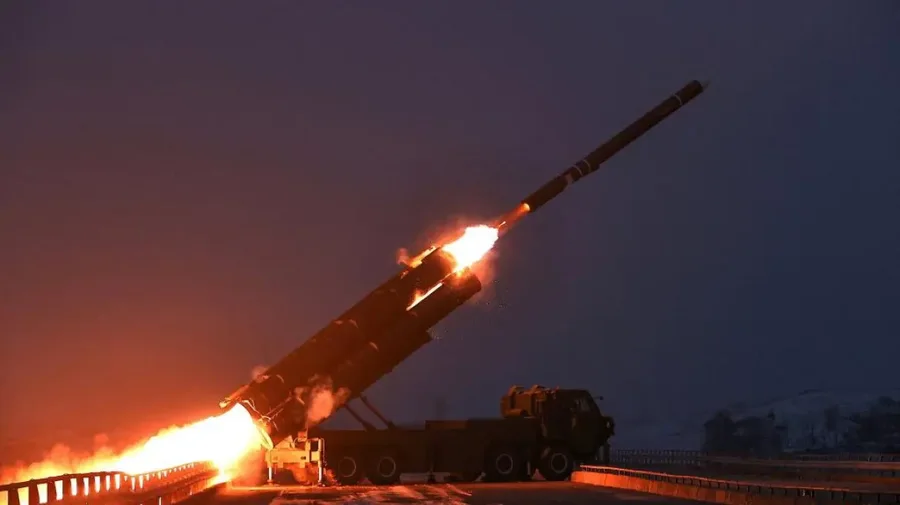
North Korea launched at least two ballistic missiles into the East Sea, or Sea of Japan, on Tuesday, its first weapons test of the year, a day after the US military captured Venezuela's president, in a plot that Pyongyang has long accused Washington of trying to use against its own leaders.
"Our military detected the launch of what is believed to be a ballistic missile into the East Sea from the outskirts of Pyongyang at around 7:50 a.m. (00:50 GMT)," South Korea's Defense Ministry said.
The Japanese Defense Ministry also said it had detected the launch of a suspected ballistic missile, which landed at around 08:08 (local time; 01:08 Greek time), without specifying where.
??????????????? BREAKING | South Korea's presidential office has convened an emergency security meeting following missile launches by North Korea, Reuters reports. pic.twitter.com/Ss94tTLMtc
— Strategic Eye (@sarah00043) January 4, 2026
"North Korea's development of nuclear weapons and ballistic missiles threatens the peace and stability of our country and the international community and is absolutely intolerable," Japanese Defense Minister Shinjiro Koizumi told reporters.
The test "perhaps reflects the great pressure that Pyongyang is feeling due to the situation in Venezuela," Hong Min, an analyst at the Korea Institute for National Unification, told AFP.
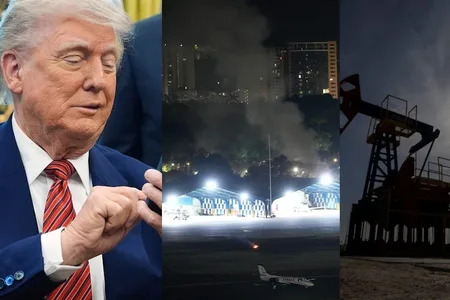
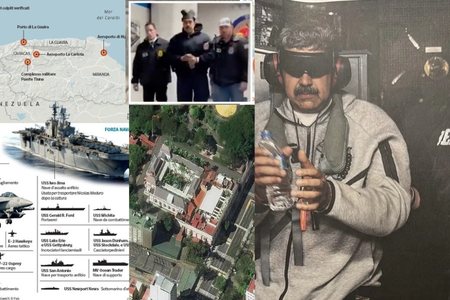
The US military invaded the Latin American country early Saturday morning and captured President Nicolas Maduro, who was then taken to US territory where Donald Trump's administration intends to put him on trial for "narcoterrorism."
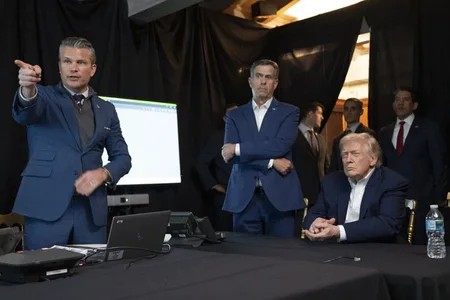
President Trump said Washington intends to "govern" the country - he did not explain how - until there is a "safe, orderly and just transition".
North Korea has repeatedly accused the US of plotting to overthrow its government.
"Although the missile specifications are still being verified, the underlying message (of the test) is likely that attacking North Korea would not be as easy (...) as attacking Venezuela," Hong Min concluded.
Lee Il-kyu, a former political adviser at the North Korean embassy in Cuba who defected in 2023 and now lives in South Korea, commented on Facebook that he hoped Seoul would "learn at least one lesson from the recent US elections, decisions and actions."
In South Korea, the presidency announced that the national security council had convened urgently and called on North Korea to stop "provocative actions that violate Security Council resolutions."
The US joint command responsible for the Asia-Pacific region (INDOPACOM, "Indo-Pacific Command") said that the test "poses no immediate threat to US personnel or territory", adding, however, that Washington was monitoring developments in "close coordination" with its allies in the region.
The missiles traveled about 900 kilometers before falling into the sea, according to Seoul.
North Korea's test occurred hours before South Korean President Lee Jae-myung was due to depart for China to meet with his counterpart Xi Jinping.
He hopes that Beijing, close to Pyongyang, will use its influence to help him push forward a thaw in bilateral relations, which have been at their lowest point.
The test also comes as North Korean leader Kim Jong-un has been increasingly vocal about his country's efforts to strengthen and modernize its arsenal.
He visited a shipyard where a nuclear-powered submarine is being built, ordered an increase in domestic missile production and the construction of factories to produce military equipment, oversaw the testing of two long-range cruise missiles, and assessed the power of new multiple rocket launchers.
Overall, Pyongyang has accelerated its weapons testing in recent years.
It conducted its previous ballistic missile test on November 6 after US President Donald Trump gave the green light to South Korea's plan to build its own nuclear-powered submarine.
Pyongyang, analysts say, aims to improve its precision strike capabilities, test weapons for export to Russia and demonstrate its defiance to the US and South Korea.
The first congress of the Workers' Party of Korea, North Korea's only one in five years, is expected to be held in the coming weeks, focusing on economic and defense policies.
Mr. Kim visited a factory that produces tactical guided weapons on Monday, the official KCNA news agency reported, adding that he ordered production capacity to be increased 2.5 times.




Lini një Përgjigje