


 Shkruar nga Pamfleti
After Viktor Orban, EU leaders no longer have anyone to blame for their problems
With the removal of the "turk's head," Europe is finally forced to be honest with itself. Life after Viktor Orban means that, in the future, leaders will have no one to blame but themselves.
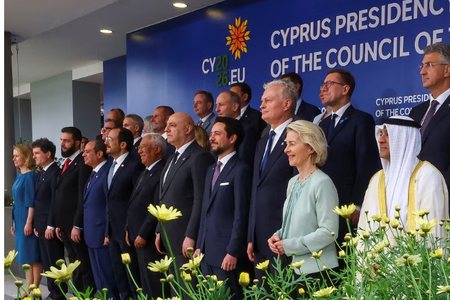
When EU leaders arrived in Cyprus for two days of talks, the atmosphere was as bright as the Mediterranean island. The absence of Hungarian Prime Minister Viktor Orban, who boycotted the summit after losing an election and has been a problematic figure for his counterparts for 16 years, ensured this climate.
However, after intense discussions on the mutual defense clause, energy policy, and the seven-year budget of 1.8 trillion euros, Europe's heads of state and government were forced to admit that their problems, and the differences between them, are much bigger than a single person.
“In some ways, Orbán was probably the person everyone blamed,” Estonian Prime Minister Kristen Michal said in an interview with Politico on the sidelines of the summit. In the future, leaders will need to “be open and honest about their intentions.”
Over the course of the two days of the meeting, this honesty began to emerge.
The first divisions emerged over Ukraine. While some leaders supported Kiev's rapid EU membership, others were cautious. Croatian Prime Minister Andrej Plenković gave Ukrainian President Volodymyr Zelensky, who was present on the first day in Ayia Napa, a realistic assessment, saying that Ukraine's membership in the near term was not "realistic", referring to Croatia's long experience of joining the EU.
Another point was energy. The leaders discussed “short-term measures” to deal with the global energy shock caused by the war in the Middle East, but ultimately decided to postpone decisions. Cyprus President Nikos Christodoulides said that finance ministers would be tasked with presenting “very concrete proposals” within about a month.
"We hope to reach an overall agreement by June," he added.
However, the continent is already facing jet fuel shortages. Transport Commissioner Apostolos Tzitzikostas warned that countries could be forced to share their emergency reserves.
"Extremely difficult negotiations"
That was just the first day. If the first day focused on security, energy and EU enlargement, the second day was dedicated to the budget. Although seemingly a softer topic, it proved just as divisive.
Dutch Prime Minister Rob Jetten declared that the EU's long-term budget needs "modernization" and that its size should be "significantly reduced." He was supported by Germany.
This puts them at odds with other countries, such as Poland, which are calling for increased funding, as well as with European Commission President Ursula von der Leyen, who has strongly advocated a large budget.
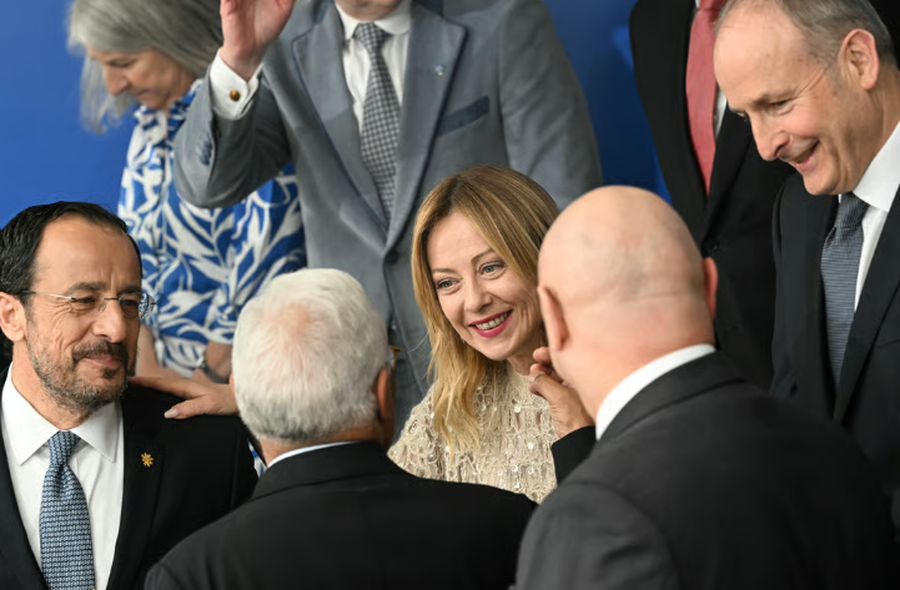
“Either national contributions increase, or spending capacity decreases. These are the only options,” she said. According to her, reducing capacity would mean “less Europe at a time when more Europe is needed.”
Italian Prime Minister Giorgia Meloni summed up the situation by calling the budget an "extremely difficult negotiation."
An EU official, speaking on condition of anonymity, told Politico that there was also disagreement over when the disbursement of the Recovery and Resilience Fund (RRF), the main part of the post-pandemic plan, should begin.
And for this, Orbán was not needed.
End of the "honeymoon"
This is not to say that there were no points of agreement. Some leaders expressed optimism about reaching consensus without the Hungarian prime minister.
“For the first time in years there are no Russians in the hall,” Polish Prime Minister Donald Tusk wrote on social media, referring to Orbán’s closeness to Russian President Vladimir Putin. “A big relief.”
Estonian Prime Minister Michal said that without Orbán, the leaders are going through a "honeymoon" period.
“You can feel the positive energy,” he said, adding that “Viktor Orbán was a symbol, nothing personal, but the symbol was that he was inside the EU, benefiting from it, but at the same time fighting against it. Now that this legacy is out of the room, yes, you can feel it. Everyone is discussing what will happen next in Europe.”
What happens next depends on the leaders' ability to overcome differences, from Ukraine's membership to the bloc's finances. The meeting in Cyprus was informal and not expected to produce major decisions.
Decisions are expected at the formal summit on June 18 in Brussels.
By then, the effect of Orbán's departure will have faded and European leaders will need to show more honesty than ever. /Adapted from Pamphlet /


Nuk ka ekzistuar kurrë realisht një union politik Europian.E mbante gjallë frika nga Bashkimi sovjetik,pas tij e mbajti gjallë Amerika. Tani që amerikanët u hoqën mënjanë del zbuluar ky fakt : europianët janë gati t'i shpallin luftë njëri tjetrit por nuk kanë mundësi dhe kanë frikë. As që mund të imagjinohet më një union europian