


 Shkruar nga Pamfleti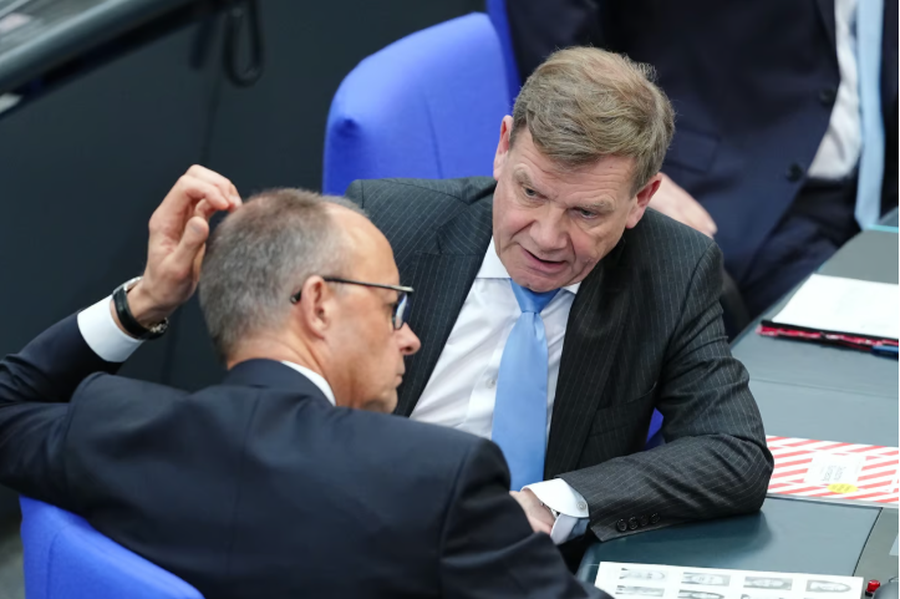
Germany's new Foreign Ministry leadership signals tougher stance on China and Russia and a more sovereign Europe
Johann Wadephul, a veteran conservative and defense policy expert, will be Germany's next foreign minister, at a crucial moment in Europe's relations with traditional allies and adversaries.
His appointment to the government of Chancellor Friedrich Merz (CDU) marks an important milestone for a more security-oriented and transatlantic foreign policy – and could reshape Berlin's stance towards Moscow and Beijing.
Wadephul, a member of the Bundestag since 2009 and deputy chairman of the CDU parliamentary group, has long been one of the most outspoken Atlanticists in German politics. He has consistently advocated for stronger German military support for Ukraine, deeper integration within NATO, and a more critical stance toward China's growing influence in Europe.
In light of United States President Donald Trump questioning the fundamental nature of the transatlantic alliance, Wadephul has been clear about the challenges.
In an interview with the German daily Frankfurter Allgemeine, he described the recent confrontation between Trump and Vice President JD Vance against Ukrainian President Volodymyr Zelensky at the White House as "shocking - both emotionally and intellectually."
Wadephul warned that, despite the unpredictability of American policy under Trump, he had not expected "such a shift of responsibility for the war in Ukraine."
Although he believes that "America stands by NATO," Wadephul warned that some recent acts and statements in Washington are "disturbing" and do not reflect the relationship between true allies.
He noted widening value gaps with the US, noting that Germany would not exclude journalists from press conferences, cut funding for politically disadvantaged universities or "so openly favor a technology platform operator like Elon Musk through government actions."
Germany, he argued, must prepare for greater strategic independence. Wadephul stressed that "there are many reasons for Europe to become sovereign."
His appointment to Merz's grand coalition with the center-left Social Democratic Party (SPD) comes as European allies are increasingly concerned about U.S. security guarantees and internal divisions within the European Union.
While previous German foreign ministers – including the Greens’ Annalena Baerbock – balanced economic pragmatism with values-based diplomacy, Wadephul is expected to push for a tougher strategic alignment with Washington and Paris, despite Trump’s departure from Europe.
Defense spending, energy security, and resilience to hybrid threats are likely to become top priorities.
Wadephul's data suggests that Berlin will push for stronger controls on Chinese investment in critical sectors and for stronger EU coordination on technology exports and infrastructure protection.
He has been a vocal advocate of military and financial support for Ukraine "for as long as necessary" and is expected to support broader NATO expansion and an expanded security footprint in Eastern Europe.
For German industry – especially the heavy manufacturing sector, which has deep ties to China – Wadephul’s appointment could signal a shift from trade diplomacy to a security-first economic policy. /Adapted from Pamphlet by Politico/


Lini një Përgjigje