


 Shkruar nga Pamfleti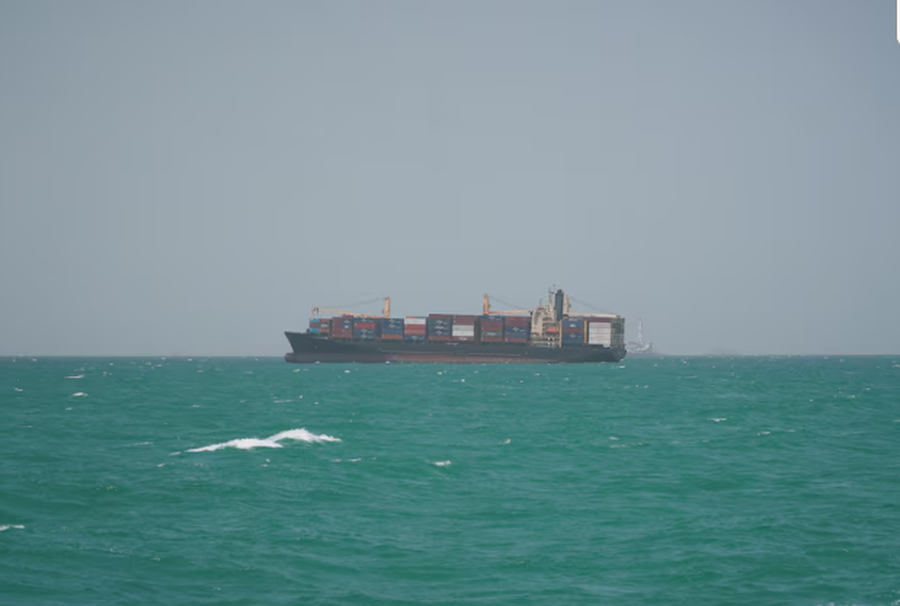
The situation has worsened after the publication by Iranian authorities of a new map, with which Tehran reaffirms its claims to control a vast area of water on both sides of the Strait of Hormuz.
Iran's decision to tighten control over the Strait of Hormuz is worsening the situation of thousands of sailors stranded in the Persian Gulf, while war and regional tensions continue to paralyze one of the world's most important energy corridors.
According to Reuters, more than 20,000 sailors are currently stranded on about 2,000 ships in the Persian Gulf. Many are not allowed to leave their ships, face shortages of basic supplies such as food and drinking water, and live in constant insecurity due to the risk of military attacks.
The situation has worsened after Iranian authorities published a new map in which Tehran reaffirms its claim to control a vast area of water on both sides of the Strait of Hormuz. The move is being interpreted as a signal that Iran intends to extend its effective control over the strategic sea passage.
The Strait of Hormuz is considered one of the most important points for the transportation of oil and gas globally. Any restriction of movement in this corridor directly affects international energy markets and global supply chains.
Sailors face constant isolation and fear
Sailors stranded in the Persian Gulf describe harsh living conditions and a deep sense of isolation. Reuters reported that during a visit by a supply ship off the Saudi coast, the crews of the anchored ships came out to the railings to greet each other, in one of their rare contacts with the outside world.
For nearly three months, many crews have lived isolated in the ships' limited spaces, spending time between small cabins, common areas and decks exposed to high temperatures.
"The only thing we do here is think about how to get through the night and pray that we don't get hit during an attack ," Indian sailor Salman Siddiqui told Reuters from the ship where he is stranded.
According to the report, the Strait of Hormuz was closed by Iran after the US-Israeli attacks against Iran began on February 28. Since then, thousands of ships have remained stranded in the Persian Gulf, while ceasefire negotiations have not yielded results.
Iran imposes new rules for ship passage
The newly created Iranian authority "Persian Gulf Strait Authority", set up to manage requests for passage through the strait, published a new map defining what it calls a "controlled maritime zone".
According to Reuters, ship owners seeking to remove their vessels and cargo from the area must go through a complex system of fees and permits set up by Iranian authorities.
This situation has created major delays in maritime transport and increased operating costs for international shipping companies.
International Transport Workers' Federation warns of dire conditions
The International Transport Workers' Federation (ITF), which represents seafarers and transport workers globally, said it has received thousands of requests for help from stranded crews.
Mohamed Arrachedi, ITF coordinator for the Arab world and Iran, said seafarers have become particularly vulnerable due to the conflict.
He cited cases of delayed payments, lack of supplies, refusal to repatriate crews, and constant fear of missile and drone attacks.
"Bringing war to such a vital maritime corridor has created enormous pressure on crews and the shipping industry," the ITF said in its assessment.
Consequences for global trade and energy markets
Shipping and energy experts warn that any extension of the blockade in the Strait of Hormuz could have direct consequences for the global economy.
A significant portion of the world's oil exports pass through this strait. Restrictions on maritime traffic have begun to affect the pace of supplies and increase insurance and transportation costs.
Meanwhile, the sailors remain awaiting a diplomatic solution that would allow them to get their ships back on the water and return home.







Lini një Përgjigje