


 Shkruar nga Pamfleti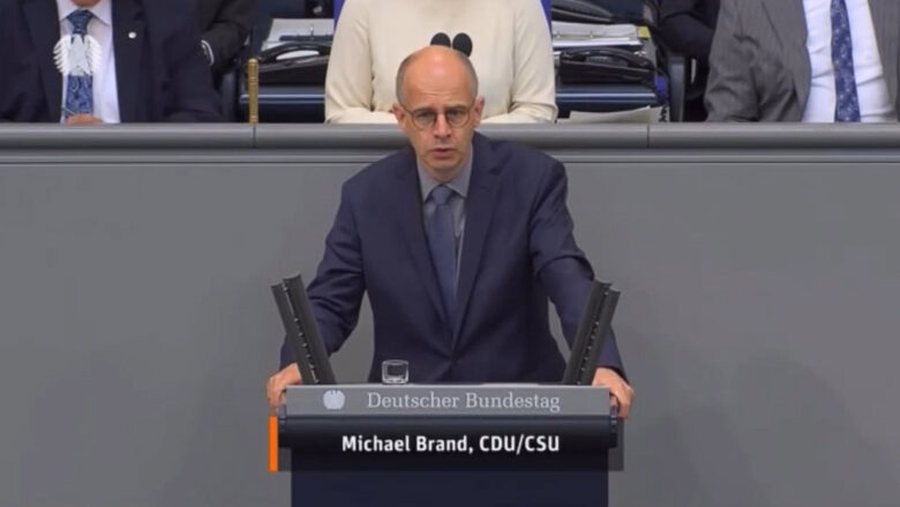
The German Parliament (Bundestag) held a solemn commemorative session to mark the 30th anniversary of the Srebrenica massacre, one of the darkest chapters in modern European history, where over 8,000 Bosniaks, mostly men and boys, were killed by Bosnian Serb forces in July 1995.
The session, which was attended by members of parliament, two genocide survivors, and the ambassadors of Bosnia and Herzegovina and Kosovo, focused on the importance of confronting the past and the urgent need for justice and lasting peace in the Balkans. In their speeches, the members of the Bundestag strongly condemned Serbia's role in the bloody wars of the former Yugoslavia, emphasizing the lack of reflection and responsibility on the part of official Belgrade.
Michael Brand, a member of parliament for the Christian Democratic Party (CDU), gave a powerful speech in which he accused Serbia of waging devastating wars in the region since 1991, supported by Russia. Brand called the current Serbian president, Aleksandar Vučić, the “heir to Slobodan Milošević’s policies,” accusing him of close ties to Russian President Vladimir Putin and of obstructing efforts at reconciliation in the Balkans.
“Serbia must confront its past and stop glorifying war criminals,” Brand said, referring to the nationalist tendencies that continue to dominate political discourse in Serbia. A highlight of the session was the speech by Jasmina Hostert, a Sarajevo-born Bundestag member who is herself a survivor of the Bosnian war.
Hostert, who was injured during the conflict, shared her personal experience and the unending pain of victims and survivors.
“Srebrenica is not just a tragedy of the past, but a constant reminder of the need to build a future where hatred and violence have no place ,” she said.
Her emotional speech touched the audience, reminding them of the importance of remembrance and education to prevent the recurrence of such crimes. The session, however, was not without controversy. A member of parliament from the far-right Alternative for Germany (AfD) party attempted to downplay the Srebrenica genocide, calling it a “complex event” and questioning the number of victims. This statement provoked a strong reaction from other members of parliament, who condemned the attempt to downplay the crimes confirmed by the International Criminal Tribunal for the Former Yugoslavia (ICTY). The incident highlighted the sensitivity of the issue and the ongoing challenges of combating genocide denial in some political circles.
The Ambassador of Bosnia and Herzegovina to Germany expressed gratitude for the support of the Bundestag and stressed the need for justice for the victims of Srebrenica, including the prosecution of those who still deny or justify the crimes. The Ambassador of Kosovo, on the other hand, noted the parallels between the wars in Bosnia and Kosovo, calling for a unified international approach to address the consequences of the conflicts in the Balkans.
This anniversary brought the debate on responsibility for war crimes and the role of the international community in preventing similar tragedies back into global focus. The Srebrenica massacre, officially recognized as genocide by the United Nations and the ICTY, remains a symbol of the international community’s failure to intervene in time to protect civilians during the Bosnian war. The session also highlighted the need to strengthen transitional justice mechanisms and support reconciliation initiatives in the region, as well as to counter nationalist narratives that continue to fuel tensions. The Bundestag’s commemorative session closed with a minute of silence in honour of the victims of Srebrenica and a pledge to support efforts for peace and stability in the Western Balkans.
German MEPs called for tougher sanctions against figures and institutions that deny the genocide, as well as increased support for Bosnia and Herzegovina on its path to European integration. At a time when the Balkans still faces the challenges of ethnic divisions and political tensions, the Srebrenica commemoration serves as a powerful call for reflection and action.
“Justice for Srebrenica is justice for all of us,” Hostert concluded, underlining the need for a continued commitment to building a future free of violence and injustice.



Lini një Përgjigje