


 Shkruar nga Pamfleti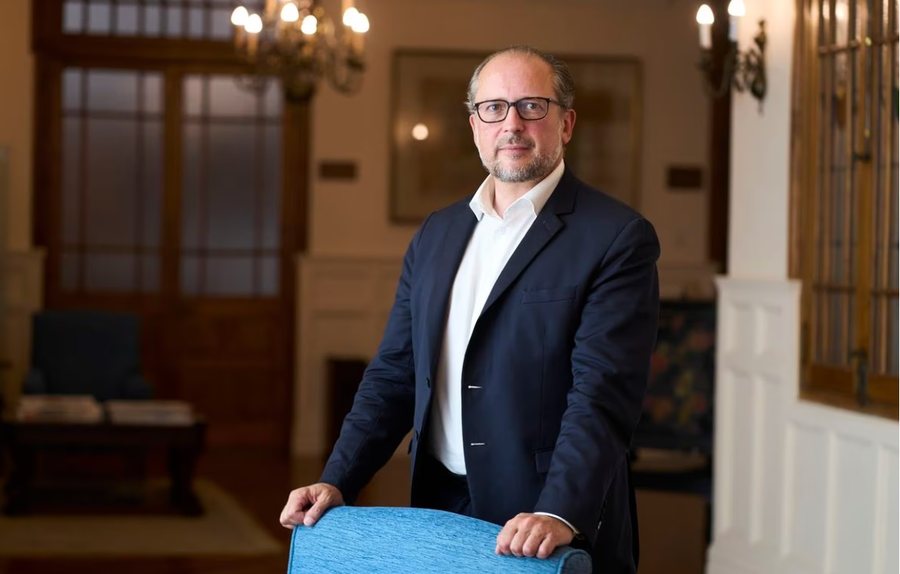
The Minister of Foreign Affairs of Austria, Alexander Schallenberg, together with the head of European diplomacy, Schallenberg participated in a round table, which focused on the challenges of the foreign policy of the European Union, "Quo Vadis Europe?", organized by the International University Menéndez Pelayo in Santander, Spain.
"What is valid for Ukraine is also valid for the Balkans. Russia has the capacity to intervene in the Balkans" - declared the conservative ÖVP politician during a conversation with "El País".
Austria is a neutral country and not a member of NATO. This means that it does not provide military aid to Ukraine…
Austria's neutrality is enshrined in our constitution and most citizens support it. On the other hand, we are neutral in military terms, but not in terms of values. When the war in Ukraine started, Josep Borrell told me that he would activate the European Defense Mechanism.
I told him that there was no problem: I contribute with a constructive abstention. In this way we do not prevent our partners from moving forward. And we cooperate on the humanitarian aid that Ukraine receives. The Austrian government has given about 150 million euros to Ukraine, but if we include everything, between public and private contributions, the figure is between 600 and 800 million euros.
Some Austrian parties oppose any kind of aid to Kiev. And one of them is the far-right Freedom Party (FPÖ), which is leading the polls ahead of the next election…
This situation is not unique to Austria, because this type of debate between the government and the opposition exists in many countries, including Spain. Some polls put the FPÖ in the lead, but we are still more than a year away from new parliamentary elections. We have experienced difficult times. First a pandemic and then a war just 500 kilometers away from Vienna. However, the Austrian government has faced all these challenges. We are optimistic. For this it is enough to see the results in the last elections in Spain.
You say that the European Union has a responsibility to ensure that the countries of the Balkans will remain connected to the European family. Has there been some kind of change in Brussels' approach in recent years?
The EU is responsible for its neighboring countries. Even more so when they are located in the heart of our territory. It is unacceptable that 20 years after the beginning of membership, none of them are part of the EU, and here I mean Albania, Serbia, Bosnia-Herzegovina, North Macedonia and Montenegro. This situation is very disappointing.
When the European Union admitted Greece in 1981, this country was not able to apply all the economic rules. But membership was done to protect a new democracy. Something similar happened in 1986 with Spain and Portugal. Our lifestyle was expanding. Obstacles had to be overcome, but 5 years later, Spain was part of the European Community. Unfortunately, this has not happened with the Balkans.
And what are the consequences of this situation?
We risk creating a political vacuum, which will be replaced by another model. For this reason, the export of stability and security in the Balkans should be a geostrategic interest for the EU. Otherwise, we risk importing instability and uncertainty from there.
Zgjidhja gjendet tek përfundimi e raportit të fundit të Këshillit Evropian: integrimi horizontal. Deri më tani, ka qenë një integrim total. Nuk kishte një rrugë të mesme. Kjo ishte një qasje e gabuar: i njëjti problem po ndodh me Ukrainën dhe Moldavinë, pasi do të duhen vite për të negociuar anëtarësimin e tyre në union.
A jeni i shqetësuar për ndikimin e Vladimir Putinit në Ballkan?
Rusia e ka aftësinë të ndërhyjë në Ballkan. Ajo përdor lajme të rreme dhe dezinformata për t’i nxitur ballkanasit kundër evropianëve dhe amerikanëve. Moska është në gjendje që të shkaktojë një krizë. Dhe Ballkani është një rajon i paqëndrueshëm. Ka një situatë shumë komplekse në Bosnje-Hercegovinë.
Po ashtu ka pasur destabilitet në Malin e Zi por edhe probleme midis Kosovës dhe Serbisë. Sa më të pranishëm të jemi atje si BE, aq më pak mundësi ka që të ndërhyjnë të tjerët. Ballkani Perëndimor është një provë gjeostrategjike për Bashkimin Evropian.
Një sfidë tjetër është shfaqur në Afrikë me trazirat e radhës në Sahel…
Fuqia e butë evropiane në Afrikë është shumë më e vogël nga sa e mendonim. Pas Malit dhe Burkina Fasos, po shohim se gjendja është jashtëzakonisht e rrezikshme për shkak të pasojave të saj ekonomike, të sigurisë dhe migracionit. Vitin e kaluar, Austria kishte numrin më të lartë të azilkërkuesve për frymë në të gjithë kontinentin evropian.
Ne jemi të rrethuar nga shtete sovrane – disa prej të cilave janë anëtarë të BE-së – dhe vitin e kaluar patëm 112.000 kërkesa për azil. Ajo që po ndodh në Niger është një problem afrikan dhe duhet të ketë një zgjidhje afrikane. Por ne duhet të ndihmojmë në gjetjen e kësaj zgjidhjeje.
A duhet të riformulohen marrëdhëniet e Evropës me Jugun Global?
Në përgjithësi, ne mund të bëjmë shumë më mirë në raport me ta. Ne duhet të bisedojmë me këto vende dhe të përpiqemi t’i kuptojmë, në vend se t’u bëjmë vazhdimisht moral apo japim leksione. Në nivelin politik, ne mund të kishim një strategji të BE-së më të mirë-artikuluar.
Shumica e ministrave të jashtëm evropianë udhëtojnë në të njëjtat vende – Senegal, Afrika e Jugut, ndonjëherë Ruanda – duke lënë në harresë shumë vende të tjera. E njëjta gjë është e vërtetë në Amerikën Latine. Ne mund të bëjmë më mirë duke u koordinuar. Për më tepër, nuk mund ta marrim si të mirëqenë bashkëpunimin me Jugun Global. Tani, vende si Kina ofrojnë zgjidhjet e tyre dhe ne duhet të konkurrojmë me ata, por edhe të përballemi me narrativat e rreme të Rusisë. Në këtë aspekt ne kemi humbur terren në krahasim me rusët.
Austria sapo ka ndaluar përdorimin e platformës TikTok në telefonat celularë zyrtarë, duke ndjekur hapat e vendeve të tjera si SHBA. A përbën një problem ndërkombëtar platforma kineze e mediave sociale?
We take reports about TikTok and information collected through these services very seriously. This is the big difference between private companies in a democracy and their behavior in autocratic systems. In the latter, there is no dividing line between the company and the state. I personally do not use social networks. / "El Pais"


Lini një Përgjigje