


 Shkruar nga Pamfleti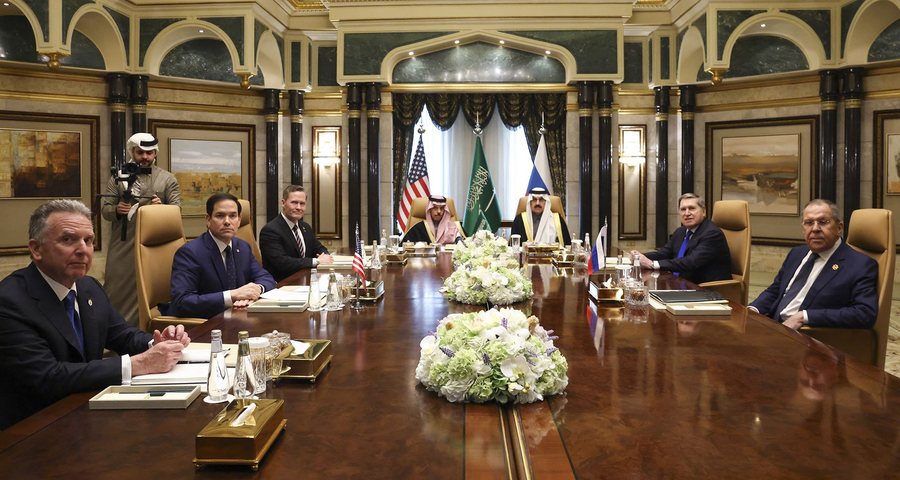
Putin has said he wants Ukraine to officially drop its ambitions to join NATO.
US officials will meet with negotiators from Ukraine and Russia in Saudi Arabia to discuss details of a proposed 30-day ceasefire for strikes on energy infrastructure, as well as a long-term peace agreement.
Russian and Ukrainian negotiators will not be in the same room. Officials sent by Kiev will meet the US team in Riyadh on Sunday night. This will be followed by talks on Monday between Russian and American negotiators.
US President Donald Trump spoke last week with Russian President Vladimir Putin and Ukrainian President Volodymyr Zelensky to boost his efforts to end the three-year war in Ukraine.
Here are some of the issues that Russia, the US and Ukraine are discussing:
-Ending attacks on energy infrastructure
Putin and Trump agreed last week "that the movement toward peace will begin" with a 30-day pause in attacks on Russian and Ukrainian energy facilities, according to the White House.
That narrowly defined ceasefire quickly came into question, with Moscow saying Ukraine struck an oil depot in southern Russia, while Kiev said Russia had hit hospitals and homes and cut power to some railways.
Zelensky said Kiev will draw up a list of facilities that could be subject to a partial ceasefire. This list could include not only energy, but also railway and port infrastructure, he said.
A moratorium on attacks on energy infrastructure could favor Moscow more than Kiev, as it would prevent Ukraine from carrying out long-range attacks on Russian oil facilities, a key way it has inflicted pain on its enemy.
-Nuclear Power Plants
A US statement said Trump had suggested in his call with Zelensky that the US could help run, and perhaps own, Ukraine's nuclear power plants and energy infrastructure.
Zelenskiy said he and Trump discussed the Russian-occupied Zaporizhzhia facility in Ukraine, the largest nuclear power plant in Europe. Russia and Ukraine have accused each other of risking an accident at the plant with their actions.
Zelenskiy said Kiev would be willing to discuss U.S. involvement in modernizing the plant if it were returned to Ukraine. Ukraine would benefit in the long term from regaining control of the facility, which generated 20% of all its energy production before the war.
However, Zelenskiy has warned that it would take two and a half years to get the plant up and running due to the many technical challenges it faces. Industry sources say that large sums of investment would also be needed.
-Transportation in the Black Sea
Putin said the Kremlin had "responded constructively" to a Trump initiative to protect ships in the Black Sea and they agreed to begin negotiations on it.
Turkey and the United Nations helped broker the so-called Black Sea Grain Initiative, an agreement reached in July 2022 that allowed the safe export of nearly 33 million metric tons of Ukrainian grain across the Black Sea, despite the war.
Russia withdrew from the agreement after a year, complaining that its food and fertilizer exports faced serious obstacles.
The World Bank's Global Commodity Outlook to April 2024 says that despite the risks of shipping across the Black Sea, both Russia and Ukraine are shipping grain to global markets without major problems. It also said that the collapse of the Black Sea Grain Initiative had a minimal impact.
-Exchange of prisoners
Russia and Ukraine exchanged 175 prisoners of war each, both sides said on Wednesday, and Russia handed over 22 seriously wounded Ukrainian prisoners, in what the Russian defense ministry called a goodwill gesture. Zelensky described the exchange as one of the largest of its kind and said the 22 Ukrainians were seriously wounded fighters and those persecuted by Russia for trumped-up crimes.
-NATO membership
Putin has said he wants Ukraine to formally drop its ambitions to join NATO. Ukraine sets NATO membership as a goal in its constitution and says membership in the bloc would be the best and most effective form of security guarantee it could receive as part of a peace deal.
Last month, John Coale, Trump's deputy envoy for Ukraine, said the United States had not ruled out possible NATO membership for Ukraine - or a negotiated return to its pre-2014 borders - contradicting comments made the day before by US Defense Secretary Pete Hegseth.
Hegseth had told Ukraine's military allies in Brussels that a return to Ukraine's pre-2014 borders was unrealistic and that the US did not see NATO membership for Kiev as part of a solution to the war, raising concerns that the US had made concessions even before the talks began.
Trump has said he does not believe Russia would "allow" Ukraine to join NATO. Trump blamed his predecessor Joe Biden for pushing the idea, although it was first supported by Republican President George W. Bush in 2008.
-Ukrainian security after the war
Me anëtarësimin në NATO jo një perspektivë të menjëhershme, Ukraina po kërkon garanci të përfshira në çdo marrëveshje paqeje për sigurinë e saj afatgjatë - por kjo e vë atë në kundërshtim me atë që dëshiron Kremlini nga një marrëveshje. Kievi dhe mbështetësit e tij në Evropë bien dakord se çelësi i sigurisë së tij është një ushtri e fortë dhe e papenguar ukrainase. Moska ndërkohë ka thënë se një kusht për një marrëveshje paqeje është reduktimi i ushtrisë së Ukrainës.
Britania dhe Franca po ndjekin një plan për të krijuar një forcë parandaluese të trupave, anijeve dhe avionëve të huaj që do të bazoheshin në ose rreth Ukrainës pas nënshkrimit të një marrëveshjeje paqeje. Detajet se si do të funksionojë forca dhe kush do të kontribuojë janë ende të paqarta. Por disa zyrtarë rusë kanë thënë se nuk mund të pranojnë një forcë të tillë.
-Sanksionet perëndimore dhe zgjedhjet
Putin ka thënë se dëshiron që sanksionet perëndimore të lehtësohen dhe zgjedhjet presidenciale të mbahen në Ukrainë.
Kievi nuk ka mbajtur asnjë zgjedhje që nga viti 2019 për shkak të ligjit ushtarak të kohës së luftës, i cili ndalon mbajtjen e zgjedhjeve. Zyrtarët ukrainas thonë gjithashtu se mbajtja e zgjedhjeve gjatë luftës do të ishte e pamundur në praktikë. Zyrtarët ukrainas thonë se ata janë një komb sovran dhe nuk është vendimi i Moskës të diktojë kur ata të mbajnë zgjedhjet e tyre.
Shtetet e Bashkuara drejtuan përpjekjet e gjera të sanksioneve kundër Rusisë nën Biden. Hapat përfshijnë masa që synojnë kufizimin e të ardhurave të saj nga nafta dhe gazi, duke përfshirë një kufi prej 60 dollarë për fuçi në eksportet e naftës të Rusisë.
Që kur Trump u kthye në pushtet në janar, duke u zotuar për të arritur paqen në Ukrainë, burime i thanë Reutersit se administrata e tij ka studiuar mënyrat se si mund të lehtësojë sanksionet nëse Moska pranon t'i japë fund luftës. Megjithatë, këtë muaj Trump ka ngritur gjithashtu mundësinë e vendosjes së kufizimeve dhe tarifave bankare në shkallë të gjerë ndaj Rusisë derisa të arrihet paqja.
-Territori i mbajtur nga Rusia
Rusia dëshiron të kontrollojë tërësinë e katër rajoneve lindore të Ukrainës që i ka pretenduar si të sajat, plus gadishullin e Krimesë të cilin e kapi dhe e aneksoi në vitin 2014. E përditshmja ruse Kommersant citoi burime të paidentifikuara që morën pjesë në një ngjarje private biznesi me Putinin të martën duke thënë se ai dëshiron që SHBA të njohë zyrtarisht katër rajonet - Luhansk, Donetsk, Zaporizhzhia dhe Kherson - si pjesë e Rusisë së bashku me Krimenë.
Ukraina thotë se tashmë e njeh se nuk mund të rimarrë me forcë një pjesë të territorit të okupuar ukrainas dhe se do të duhet të kthehet diplomatikisht me kalimin e kohës. Megjithatë, Kievi thotë se nuk do ta njohë kurrë sovranitetin rus mbi territorin ukrainas.
Trump's national security adviser, Mike Waltz, was asked Sunday whether the U.S. would accept a peace deal in which Russia was allowed to keep Ukrainian territory. He replied: "We have to ask ourselves, is that in our national interest? Is that realistic? ... Are we going to drive every Russian out of every inch of Ukrainian soil?"
-Ukraine's natural resources
Kiev and Washington have discussed an agreement under which the United States would receive a financial return from the development of Ukraine's natural resources, particularly rare earths used to produce electronic equipment.
Efforts to sign the deal were thwarted after a disastrous White House meeting between Trump and Zelenskiy late last month. Trump said on March 21 that a rare earths deal would be signed "very soon."
Beyond this deal, Ukraine’s gas infrastructure could be of interest to the White House. Ukraine has the world’s third-largest underground gas storage capacity. It could eventually import liquefied natural gas from the United States, store it and then ship it west to European countries seeking alternatives to Russian natural gas./ Adapted from “Pamphlet” by “Reuters”




Lini një Përgjigje