


 Shkruar nga Pamfleti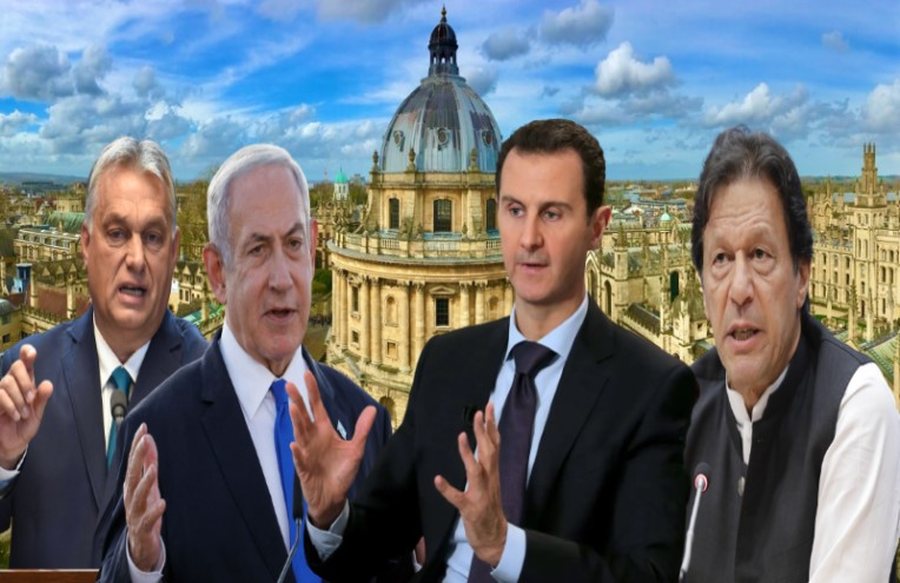
A question that can also be raised is why leaders who spent time in America and England often do not show lasting love or much loyalty to either country...
Who knew that Viktor Orbán, Hungary's autocratic prime minister and friend of Russian President Vladimir Putin, had the same teacher at Oxford as former US president Bill Clinton?
Sure, the pair's weekly lessons with Polish political philosopher Zbigniew Pełczyński, a veteran of the Warsaw Uprising, took place two decades apart, but the professor's message to the table has changed little in the intervening years. Pełczyński was an old-school liberal capitalist who believed in people working together regardless of underlying ideology, and he did everything he could to introduce young Poles, and others from Eastern Europe, to the free market and democratic principles during the last days of communism in Poland.
The thing is, no one was listening - not really. Their minds were already turning to what their next step should be. Clinton no doubt felt that he did not need to be schooled in such principles. On the other hand, Orbán – despite rising through the ranks of the party and considering himself a “naive and dedicated supporter” of the communist regime – was already committed to a total purge of old thinking and had no time for compromise.
Ambition plays a key role in education, not least for those who choose politics as their intended path. And Orbán and Clinton are just two of the 53 current world leaders who studied at British universities. Meanwhile, in the USA, they have studied a higher number of leaders, 54 of them.
But do these students, who often cross entire continents to take their assigned places, go for the quality of education or the opportunity, in the case of America, to become familiar with the number one economic and military power in the world? Or could it just be that English is the world language?
Newly published by the Oxford-based Higher Education Policy Institute, the Soft Power Index 2023 lists 13 hereditary rulers who studied in the UK, ranging from the Emperor of Japan to the kings, queens and princes of Belgium , Norway, Denmark, Luxembourg, Malaysia, Jordan, Bahrain, Monaco, Lesotho and Tonga to various sultans, emirs and sheikhs of the Gulf.
Prominent among the remaining 40 names are the leaders of Egypt, Iraq, Syria, the Czech Republic, Serbia, Switzerland, Cyprus, Malta, Bolivia, Mozambique, Tanzania, Cameroon, Ghana, Zambia, Sierra Leone, Barbados, the Philippines and Singapore.
Pakistan's Imran Khan - an alumnus of Keble College, Oxford - would also feature on the British list had he not, in keeping with tradition, been ousted in 2022 after being accused of corruption. Meanwhile Syrian dictator Bashar al-Assad, who studied ophthalmology at London's Western Eye Hospital, remains in charge of war-torn Damascus, backed by Russian arms.
Among US-born elected leaders, the best-known is undoubtedly Benjamin Netanyahu - Israel's seemingly permanent prime minister - who has a bachelor's degree in architecture and a master's in business administration from the Massachusetts Institute of Technology and, like Prince Albert of Monaco, speaks English with a distinctive American accent.
Others, in no particular order, include Taiwanese President Tsai Ing-Wen, who studied law at Cornell; Costa Rican President Rodrigo Chavez Robles, who studied economics and agriculture at Ohio State; former Bulgarian Prime Minister Kiril Petkov, who was one of the best in his MBA cohort at Harvard.
Duket se ka një farë kimie këtu, aq sa ka të bëjë me klasën dhe traditën, aq edhe me mundësinë akademike, gjë që kompenson rënien relative të vendit si një ndikues global. Ajo që me të vërtetë ka rëndësi, megjithatë është shkalla në të cilën dy modelet "anglo-saksone" mbeten shumë përpara sa i takon arsimit të liderëve botërorë.
Por a ka vërtet ndonjë korrelacion midis një edukimi elitar perëndimor dhe qeverisjes së mirë në të ardhmen, apo edhe mbështetjes për idealin e demokracisë përfaqësuese?
Përvojat e Afrikës dhe Lindjes së Mesme gjatë pesë dekadave të fundit nuk janë frymëzuese – një shembull i tillë është Assad.
Një pyetje që mund të ngrihet gjithashtu është se përse liderët që kaluan kohë në Amerikë dhe Angli shpesh nuk tregojnë dashuri të qëndrueshme ose shumë besnikëri ndaj asnjërit prej vendeve.
Orbán ishte ndër ata për të cilët majat e ëndrrave të Oksfordit nuk ishin veçse një moment kalimtar. Ai e donte "vallen elektrizuese" të ideve në Mbretërinë e Bashkuar, ende nën magjinë e Margaret Thatcher në atë kohë. Por Muri i Berlinit ishte gati të rrëzohej dhe ai tha me vete: "Viktor, çfarë po bën këtu?"
Klinton ishte një tjetër që zgjodhi të mos e tepronte mirëpritjen e tij. Ai mbërriti në Oksford në vitin 1968 për të lexuar PPE (politikë, filozofi dhe ekonomi), por u hutua për zgjedhjen e lëndës dhe u largua vitin e ardhshëm pa një diplomë, për të studiuar më pas drejtësi në Yale, përsëri në SHBA. Edhe pse i pëlqeu shumë koha në Angli, Klinton e pa se ishte i fiksuar pas klasës së ngarkuar me tradita të vjetra.
Ndërkohë, me ndryshimin e demografisë së sotme, është gjithashtu e pamundur të dihet se sa liderë të ardhshëm do të kenë përfituar nga koha e kaluar jashtë vendit. Nga një trup studentor i huaj prej 680,000, rreth 152,000 shtetas kinezë dhe 127,000 indianë janë aktualisht të regjistruar në universitetet e Mbretërisë së Bashkuar, së bashku me afro 45,000 nigerianë dhe 120,000 qytetarë të vendeve anëtare të Bashkimit Evropian.
Në SHBA, 317,000 shtetas kinezë dhe 168,000 indianë përbëjnë gjysmën e një numri të përgjithshëm ndërkombëtar prej 950,000. Por nga vendet e tjera të origjinës, asnjë - me përjashtim të Koresë së Jugut - nuk ka dërguar më shumë se 25,000 studentë, me shumë pak nga Afrika jashtë Nigerisë, dhe vetëm 40,000 nga e gjithë Amerika Latine.
Over the past 25 years, universities have also become big business. The UK's annual income from foreign students is now estimated at £14 billion ($17.6 billion), more than the £13 billion annual cost of the country's EU membership before Brexit. The corresponding figure for America is $38 billion—eight times the Boeing Corporation's most recent gross profit and $12 billion more than Coca-Cola's.
And all the while, in Britain, the thousands who failed to win a university place this year will be wondering what they should do to compete with this ever-growing wave of foreigners./ Adapted Pamphlet from Politico







Lini një Përgjigje