


 Shkruar nga Pamfleti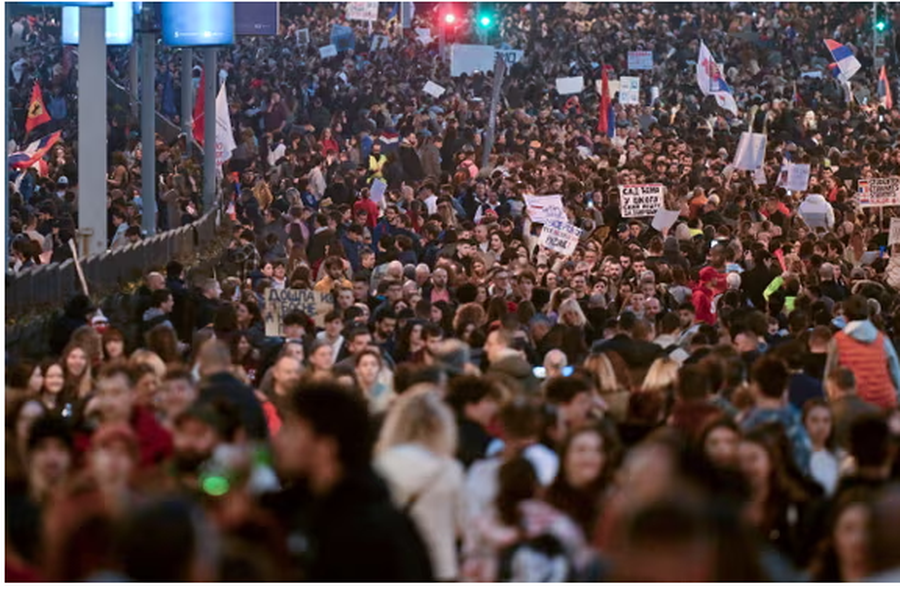
On Tuesday, pro-government media in Serbia said Vucic would attend a cabinet session in the evening to decide whether to appoint a prime minister or call early elections. The decision must be made within 30 days.
Serbia's populist prime minister, Miloš Vučević, has resigned in an attempt to calm political tensions after months of anti-corruption protests.
The protests began in November after the concrete roof of a train station in the northern city of Novi Sad collapsed, killing 15 people. The disaster quickly became a hot-button issue, as people across the country used it to express their growing dissatisfaction with Serbia's increasingly authoritarian rule and to demand greater government transparency.
Here we take a look at what led to the resignation of the country's prime minister and what this could mean for Serbia, a Balkan nation that has been an EU candidate country since 2012.
How did the protests start?
Since the roof collapsed on November 1, Serbia has been gripped by almost daily protests. Led by students from several state universities, the demonstrations have ranged from 15-minute traffic blockades at 11:52 a.m., the exact time the concrete canopy collapsed, to nationwide classes being halted and students camping out inside faculties.
The students’ demands have been straightforward: they demand full transparency about the cause of the roof collapse and call for those responsible to be brought to justice. In a country beset by widespread corruption and where few believe state institutions work in the interests of citizens, the students’ call quickly became known. Small protests quickly grew, as residents from all walks of life began to join in by the thousands.
Waving banners showing a bloody hand — an image protesters said symbolized the government’s responsibility for the collapse — they were joined on the streets by opposition parties and civic groups that linked the roof collapse to alleged shoddy construction resulting from corruption and nepotism. The government has denied these accusations.
In recent weeks, the protests have been marred by incidents, including two cases in which drivers crashed into crowds, resulting in the injury of two women.
How has the government responded?
Protests have continued to spread, taking place in more than 100 cities and smaller towns and attracting growing support from members of the judiciary, teachers, private businesses and the general public.
Duke treguar pak shenja ngadalësimi, protestat kryesisht paqësore paraqesin sfidën më të rëndësishme në vite për sundimin gjithnjë e më autokratik të presidentit populist të Serbisë, Aleksandar Vuçiç dhe partisë së tij në pushtet Progresiste Serbe (SNS), të cilët të dy janë përballur me akuzat për frenim të lirive demokratike. në Serbi.
Pasi një rekord prej 100,000 njerëzve dolën për të protestuar në Beograd më 22 dhjetor, Vuçiç tha se forcat speciale të Serbisë do t'i "shpërndanin ata brenda gjashtë deri në shtatë sekonda". Kërcënimi duket se ka qenë kryesisht i frikshëm, pasi forcat e sigurisë deri më tani nuk janë përdorur për të prishur protestat. Në vend të kësaj, protestat u pritën me lëshime të kufizuara nga qeveria, e cila deklasifikoi disa dokumente që lidhen me shembjen e stacionit. Fatkeqësia ndodhi menjëherë pasi stacioni u rinovua nga një konsorcium i udhëhequr nga Kina.
Trembëdhjetë persona janë akuzuar për katastrofën.
Të hënën, disa orë pasi dhjetëra mijëra njerëz organizuan një bllokadë njëditore të një kryqëzimi të madh në Beograd, presidenti iu drejtua kombit, duke mbrojtur përgjigjen e qeverisë së tij ndaj tragjedisë dhe duke premtuar se do të nisë një dialog me protestuesit.
Pse dha dorëheqjen Vuçeviq?
Vuçeviq tha se ai mori vendimin për të dhënë dorëheqjen pasi një studente në Novi Sad u dërgua në spital pas një sulmi nga sulmuesit që supozohet se ishin nga partia SNS. Prokurorët më vonë thanë se katër persona u arrestuan.
"Është apeli im që të gjithë të qetësojnë pasionet dhe t'i kthehen dialogut", tha Vuçeviç në një konferencë për shtyp të martën. Kryetari i komunës së Novi Sadit, Milan Gjuriq, gjithashtu do të jepte dorëheqjen të martën, tha Vuçeviq.
Kryeministri në largim i lidhi protestat me ndërhyrje të huaja, pa dhënë asnjë provë. “Unë kurrë nuk mund të justifikoj apo kuptoj shumë nga këto protesta, bllokada të jetëve, rrugëve dhe lirinë e lëvizjes së qytetarëve të tjerë”, tha ai.
Dorëheqja e Vuçeviqit – i cili ishte kryetar i komunës së Novi Sadit kur filloi rinovimi i stacionit të trenit – dukej se ishte një përpjekje për të “mbytur” zemërimin e publikut për tragjedinë, tha gazetari Slobodan Georgiev për televizionin N1. “Ata [partia në pushtet] kanë qenë në një rënie të lirë që nga tragjedia e Novi Sadit,” tha ai.
Çfarë do të ndodhë më pas për Serbinë?
Të martën, media pro-qeveritare në Serbi tha se Vuçiç do të marrë pjesë në një seancë të kabinetit në mbrëmje për të vendosur nëse do të emërojë një kryeministër apo do të thërrasë zgjedhje të parakohshme. Vendimi duhet të merret brenda 30 ditëve.
Presidenti ndoshta shpresonte se dorëheqja do të ishte e mjaftueshme për të shuar mospajtimin dhe për ta lejuar atë të vinte protestat nën kontroll, tha Marta Szpala, një anëtare e lartë në Qendrën për Studime Lindore në Varshavë.
"Otherwise, he could call a snap election, seeking to regain control of the narrative and take advantage of a decentralized and highly diverse social movement following the protests," she said.
The timing of the snap election would probably work in Vučić’s favor, Szpala said. “He would hope to take advantage of the fact that there is no strong, united political structure to challenge his rule, as the opposition expected the next vote to be in 2027.”
Opposition parties have said they will insist on a transitional government that would create conditions for free and fair elections. Vučić's populists have faced accusations of irregularities during past elections.
Branimir Jovančićević, a senior member of the opposition Democratic Party and former member of the national assembly from 2022 to 2024, said he doubted that Vučević's resignation – largely seen as subordinate to the country's president – would be enough to stop the protests.
“If the president thinks that by replacing an essentially insignificant figure … [he] will solve the problem … he is deeply mistaken,” Jovančičević told the Associated Press.
Others pointed to the broader impact of the protests, suggesting they could be a sign of changing political tides in the Balkan country.
“Even judges – prominent state employees – reportedly left the courts to support the protesters,” Edward Joseph, a former US diplomat at the Johns Hopkins School of Advanced International Studies, wrote on social media this week.
“The fear factor has disappeared. Even in a degraded Balkan democracy, people still have freedom and can still demand accountability,” he said. / Adapted Pamphlet from The Guardian /


Lini një Përgjigje