


 Shkruar nga Tamar Jacoby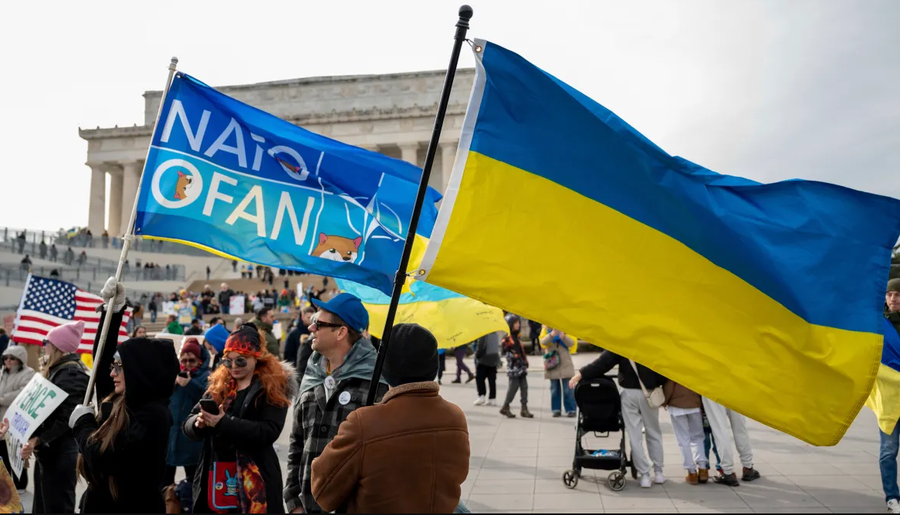
Trump has turned what was once an indispensable nation into just another contentious player in a chaotic world that will become even more dangerous and disorderly without American leadership...
The United States struggled for more than 100 years — since we entered World War I in April 1917 — to be the leader of the free world. It took Donald Trump just a month to relinquish that leadership, destroying everything his predecessors — from Woodrow Wilson to Franklin D. Roosevelt to Ronald Reagan — had built through two global conflicts, the Cold War and the creation of the post-World War II Western alliance.
Trump thinks he is strong and is making America stronger. But his brutal behavior toward Ukraine and capitulation to Vladimir Putin are making us weaker. It is causing a loss of reputation and power that is unlikely to ever be regained.
Americans sympathetic to Ukraine have long worried that Trump would turn against the country in the wake of Russia's brutal aggression. But the president's behavior last week surprised many.
The US president has degraded himself to insults by calling Ukrainian President Volodymyr Zelensky a “mediocre comedian,” a “dictator,” and a “thief.” America’s global leadership — and what was once admiringly called the American Century — rested on three pillars.
We were champions of Western values: freedom, democracy, and lawful cooperation between states. And we used our strength to guarantee order and stability, which created the ground for an extraordinary boom in global trade and investment, greatly enriching us and raising the standard of living for billions of people around the world.
Trump's foreign policy is making a mockery of all three of these pillars. Like all great powers, America uses military and economic might to dominate the world. We have not always lived by our values, and we are not immune to colonialism or exploitation.
But our use of power has traditionally been dictated by our values. We have learned to project values through soft power - public diplomacy, foreign aid, culture and tourism - to cooperate rather than impose on others.
There is a strong reason why we were seen as a “benevolent superpower” and “indispensable nation” in the world. Our strength rested as much on values as on our power, and as a rule, we tried to use our power for worthy purposes.
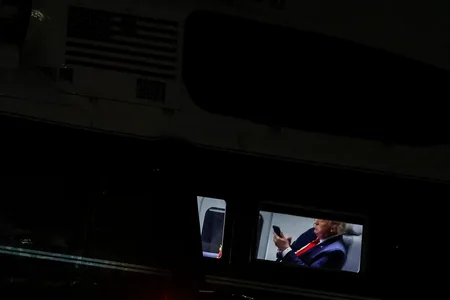
Trump has no interest in this. Like a traditional great power, he equates strength with brute force — the ability to impose his will on others. The 47th president has long questioned the value of alliances, NATO and others. He despises international organizations. In his first executive orders, the U.S. withdrew from the World Health Organization and several U.N. agencies. He seems determined to end U.S. foreign aid, starting with dismantling USAID.
And it does not hesitate to threaten treaty allies - Canada, Mexico, Panama and Denmark - with economic coercion and the use of force. It does not even make the slightest attempt to hide the motives for this behavior: self-interest.
In his second and final term, he wants to leave his historical legacy by expanding the territory of the United States, even if this means violating with both feet the values, including the inviolability of borders and the territorial integrity of states that we have defended with blood and money in two world wars.
The second pillar of America's global leadership was to advance not only the noble ideals in the Constitution and the UN Charter, but also the values we once saw as the core of our national character. We once prided ourselves on being just, decent, true, and trustworthy.
And we generally tried to act in this way in the world, including fighting for the freedom of others and brokering peace. We shared our intelligence with other countries and promoted their development.
People from more cynical countries sometimes called us naive, yet we commanded respect and admiration, and other nations aspired to be like us, free and democratic. Of course, we were not selfless, but we did not see international relations as a zero-sum game.
The strength of our allies did not diminish us. Sometimes we won, just because they won. If Trump believes in any of these things, he has yet to show it. His temperament is nothing like the typical American ideal, which is not only fair but also hopeful, including for other people. He is so eager to make a deal with Russia that he seems to care little whether it is fair or not.
His lies about Ukraine - who started the war, how much the US has spent to support Kiev, and Zelensky's popularity, all borrowed from Kremlin propaganda - make a mockery of the truth and our reputation as an honest broker.
In fact, European countries have given $139 billion, while the US has given $120 billion, not $350 billion, as Trump claims. And Zelensky is viewed favorably by 57 percent of Ukrainians, not 4 percent, as Trump says.
The rude behavior of recent weeks has destroyed the world's trust in us, and it will be a long time - if ever - before anyone considers us a reliable partner again.
The third pillar of American power should make more sense to Trump. While not exactly calculative, it was more transactional. World War I was in its third year when Woodrow Wilson finally decided to join it, driven not by values or alliances but by the resumption of German submarine attacks on passenger and merchant shipping in the North Atlantic.
So we fought to “keep the sea lanes open,” primarily for trade. It was a principle that, along with our values, would underpin American foreign policy for years to come, enabling trade and investment that produced profits for us and economic growth globally.
Most importantly: it helped keep the peace. In the post-World War II era, the US kept the sea lanes open, and guaranteed peace largely through the threat of its nuclear weapons. Without our umbrella, many of our allies in Europe and Asia, as well as many adversaries, would have developed their own nuclear weapons.
And in a matter of weeks, Trump has turned what was once an indispensable nation into just another contentious player in a chaotic world that will become even more dangerous and disorderly without American leadership.
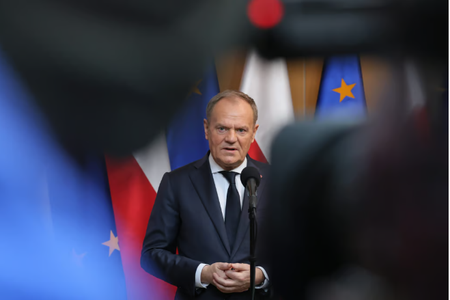
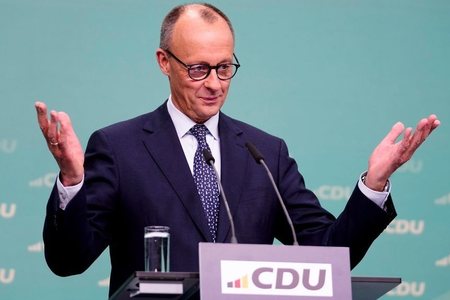
Europe will try to replace us, but it is unlikely to fill the void, as our opponents will benefit from it. / Pamphlet from "Washington Monthly"



Lini një Përgjigje