


 Shkruar nga Alina Polyakova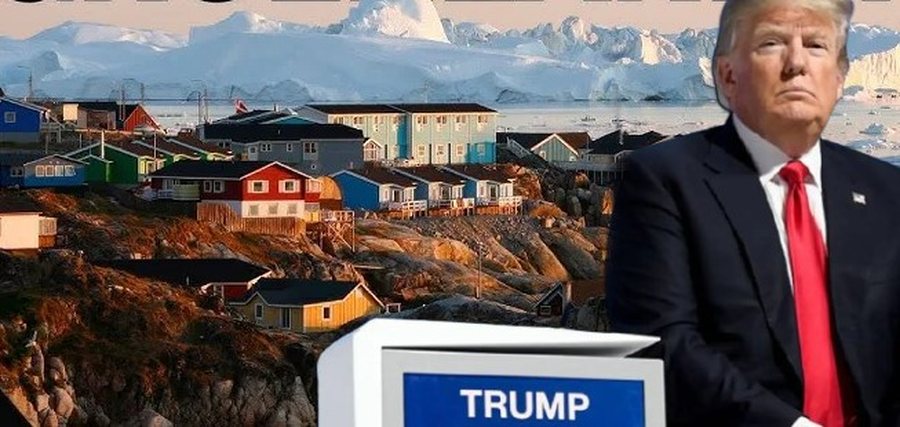
Recent developments have shown that the Arctic is no longer a geographical periphery, but a new center of strategic gravity. This region is redesigning NATO's defenses and dictating the need for a stronger American military presence...
If you had asked someone a year ago what urgent international challenge would be the focus of attention for global leaders gathering in Davos last week, no one would have said Greenland.
However, on the eve of the forum, President Trump's focus on the world's largest island ensured that it would be the issue dominating the Alpine summit. Between US threats of tariffs on European countries and Europe's retaliatory warnings of blacklisting billions of dollars of US imports, it seemed as if no solution was in sight.
However, shortly after his arrival, Trump ruled out the use of force to take the island and announced that he and NATO Secretary General Mark Rutte were working on a framework to ensure an expanded US presence on the island. The agreement is still lacking in details, but it is said to aim to restore US bases throughout the island, which would include some territorial autonomy for those areas.
The easing of tensions is good news for an already strained Europe-US relationship after disagreements over trade, technology regulation and negotiations to end Russia's war in Ukraine. But what have we learned so far from the Greenland issue?
1. The Arctic is important
For years, President Trump has talked about the strategic importance of the Arctic and Greenland, particularly to U.S. national security. And it's true: the island sits at the crossroads of security, economics, and strategic competitiveness.
Since Greenland connects North America and Europe geographically and politically through Denmark, it has become strategically central to NATO and the broader transatlantic relationship. The recently published US National Defense Strategy also elevates Greenland as a core US security concern, while downplaying US engagement with Europe, reinforcing the argument that Europeans will have to bear responsibility for their own defense.
Russia and China also see the Arctic as a key area of competition with the United States. The dispute has underscored that the American president is not bound by traditional notions of national sovereignty and international security. A greater U.S. presence in the High North and Greenland would support U.S. and NATO security, which are mutually reinforcing.
It is true that the US has significantly reduced its previous presence in Greenland, creating potential vulnerabilities for adversaries to exploit. At the height of the Cold War, the US had 17 bases and approximately 10,000 troops in Greenland. Now, the only US base in Greenland, Pituffik Space Base, is home to fewer than 200 US troops.
2. European engagement and diplomacy with the US works
Europeans, and certainly Denmark and Greenland, were and are against any violation of sovereignty by force. On the eve of the Davos Forum, many European leaders addressed the US president directly to express their concerns and position, which did not seem to work until the last moment.
US allies have historically welcomed greater US engagement and, in the case of Greenland, a larger US military presence. The US remains an indispensable ally for Europe, because it possesses an international network of willing partners and allies that provide an unparalleled global network of military bases.
This serves vital U.S. interests around the world, from the Western Hemisphere to the Indo-Pacific to Europe. So U.S. global power rests on this web of trust and cooperation, which means that achieving broader security objectives is best done by relying on cooperation and cohesion among allies.
3. Turning a blind eye to the most important threat only serves our adversaries
For NATO, this is Russia, which continues its brutal war against Ukraine while escalating its shadow war against Europe. The diplomatic drama over Greenland nearly derailed the very delicate negotiations that the US has been conducting with Ukraine, Europe, and Russia.
This is exactly what Putin wants. Such a distraction also benefits China, which will exploit the frustrations and high emotions in both the US and Europe to present itself as the most reliable partner. Europeans should not fall for this facade, but tensions between transatlantic allies will embolden those seeking closer cooperation with China.
We know from experience that working with our natural allies multiplies our power and influence. The leadership in Moscow and Beijing knows this too, which helps explain why they have deepened their relationship. Democracies are in a better position to protect their interests and security when they are united rather than divided./ Pershatati "Pamphlet" By the “Center for European Policy Analysis”
Note: Alina Polyakova is the president and executive director of the Center for European Policy Analysis (CEPA).




Lini një Përgjigje