


 Shkruar nga Pamfleti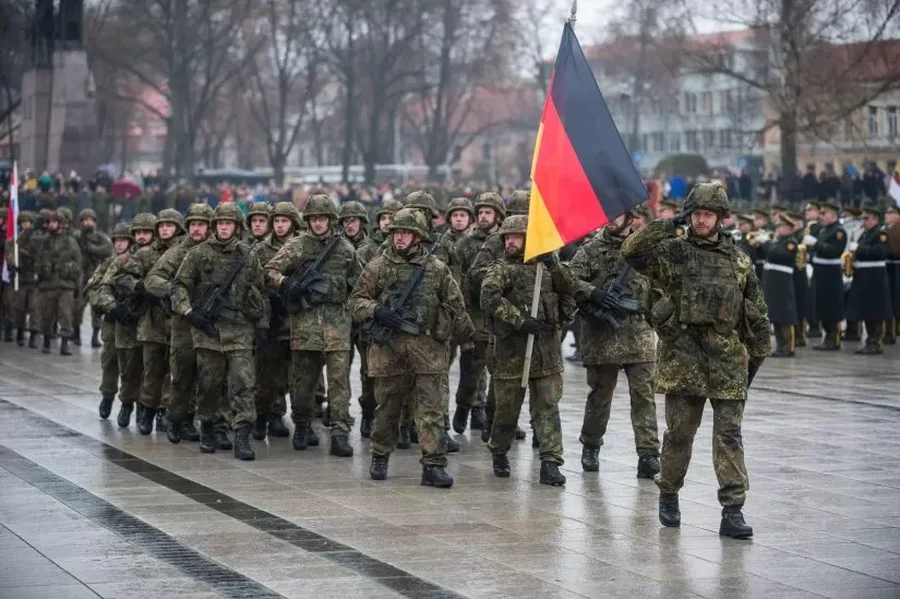
For decades, the European Union has operated under an unwritten agreement: Germany handled the economy, France the military. Today, that order is being reversed.
As Germany aims to become Europe's leading military power, the political balance is shifting. France is struggling to maintain its relevance, while in Poland, German rearmament is reviving old memories and creating the idea that a Berlin-Warsaw axis might be the most effective way to contain Russia.
“Everywhere I go, from the Baltics to Asia, everyone is asking Germany to take on more responsibility,” said Christoph Schmid, a German Social Democrat lawmaker. “There is an expectation that Germany will finally match its economic weight with its defensive power.”
Germany on track to have the largest army in Europe
From a weak and poorly equipped Bundeswehr, Germany is transforming into a genuine military power. This military power also means political and economic influence, and Europe will have to adapt to a dominant Germany.
By 2029, Germany is expected to spend 153 billion euros a year on defense, about 3.5% of GDP, the largest military expansion since reunification.
In comparison:
France is targeting around 80 billion euros by 2030.
Poland is spending 4.7% of GDP this year, the highest level in NATO, and is building one of the largest and most modern armies on the continent.
Meanwhile, Germany has ample fiscal space to arm itself: France's debt has exceeded 110% of GDP, the deficit is over 5%, while Poland is struggling with the cost of increasing military spending.
One EU official called this shift in German military potential a fundamental change. Another diplomat put it more simply:
"It's the most important thing happening today at the EU level."
Is Germany building a European military power… or a German one?
Most of the new money for weapons is staying within the country.
Internal documents obtained by POLITICO show that Berlin is preparing to approve 83 billion euros in defense contracts by the end of 2026, from tanks and frigates to drones, satellites and radars.
This is just the first phase. Behind it lies a “wish list” of 377 billion euros, which includes over 320 new weapons programs.
Less than 10% of the contracts will go to American companies, a drastic change after years when Germany was among the US's main customers. The vast majority will go to European industry, especially German.
France worried: a Germany armed to the teeth
In Paris, German rearmament is greeted with a mixture of distrust and fear.
“In France, every official is at the end of the day also a defense official,” said an EU official, underscoring the French security culture.
Franco-German relations remain fragile:
A French defense official said:
"It's a combination of vigilance and threat. Germany will be very dominant."
Disagreements over the largest joint military project, the next-generation FCAS aircraft, have only deepened the gap.
Germany is considering alternative cooperation with Sweden, Britain or just Spain, which alarms Paris.
For France, FCAS is not simply a technical project; it is linked to French nuclear weapons and its claim to military leadership in Europe.
“If Germany excludes us, doesn’t it bother you?” the CEO of Dassault Aviation told French lawmakers.
Poland: cautious but clear
In Warsaw, German rearmament is seen as necessary, but always with reservations.
“We can't ask everyone to spend more on defense, except Germany,” said a former Polish ambassador.
But memories of the war and suspicion of Merkel's old pro-Russian policy remain strong.
Polish Deputy Minister of Defense, Paweł Zalewski, said:
"Germany combining economic and military power has always brought fear. This time it must be seen in context: all of Europe is rearming."
He also warned about the influence of the AfD, the German far-right party, pro-Putin and with territorial revisionist ideas:
"We can't open this discussion in Europe. World War II started like this."
The new center of gravity is shifting eastward.
If Germany becomes the military engine of Europe, while Poland rises as NATO's leading land power, the European balance is shifting.
In Brussels the question arises:
Can the EU channel this momentum towards a common defense, or will military fragmentation deepen?
For most diplomats, one thing is clear:
“It may seem scary, no doubt. But Germany is part of the EU and NATO — and anything can happen between now and then.” / Politico


Pa një Gjermani të fortë Putin do të marshonte që nesër në Evropë! Edhe nëse nuk ka ndërmend ta bëjë këtë gjë, atij i duhet rënë në kokë sepse qenia e tij në krye të Rusisë nuk ka asnjë garanci dhe stabilitet!