


 Shkruar nga Pamfleti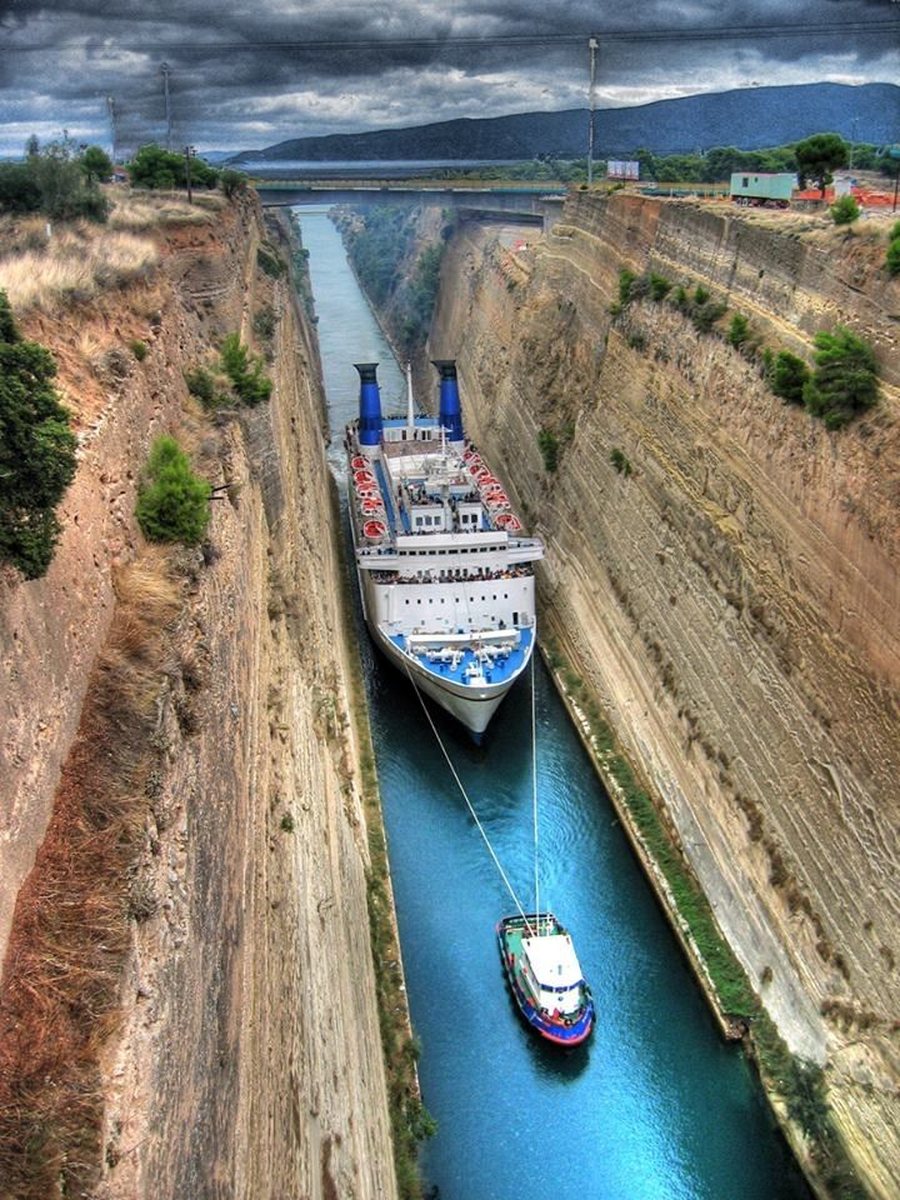
November 17, 1869 - The Suez Canal opens
The Suez Canal, connecting the Mediterranean Sea and the Red Sea, was inaugurated in a grand ceremony attended by the French Empress Eugenie, wife of Napoleon III. In 1854, Ferdinand De Lesseps, the former French consul in Cairo, secured an agreement with the Ottoman governor of Egypt to build a 160 km long canal across the Isthmus of Suez.
An international team of engineers drew up a plan, and in 1856 the Suez Canal Company was formed, which was granted the right to use the canal for 99 years after the completion of the works. Construction began in April 1859, and at first the excavation was done with picks and shovels by local workers.
Later, European workers arrived with more modern equipment. However, labor disputes and a cholera epidemic slowed construction, and the Suez Canal was only completed in 1869, four years later than planned. When it opened, the canal was only 25 feet (7.7 m) deep, 72 feet (22 m) wide at the bottom, and 200 to 300 feet (60 to 90 m) wide at the surface.
As a result, fewer than 500 ships sailed through it in its first year. However, major improvements began in 1876, and the canal became one of the busiest shipping corridors in the world. In 1875, Britain became the largest shareholder in the Suez Canal Company when it bought shares from the new Ottoman governor of Egypt.
Seven years later, it invaded Egypt. The Anglo-Egyptian Treaty of 1936 made Egypt virtually independent, but Britain reserved the right to defend the canal. After World War II, Egypt demanded the withdrawal of British troops from the Suez Canal Zone, and in July 1956, President Gamal Abdel Nasser nationalized the canal, hoping to raise taxes to build a large dam on the Nile River.
In response, Israel occupied the canal area in late October, and British and French troops landed in early November. Under UN pressure, Britain and France withdrew in December, while Israel withdrew in March 1957. Today, dozens of ships sail through the canal every day, transporting more than 300 million tons of goods a year.
Other important events that occurred on November 17:
In 1777, the United States Congress sent the Articles of Confederation to the states for ratification after 16 months of intense debate. The Articles were the first document to create a governing structure for the United States. Final ratification was delayed by disputes over land ownership.
In 1863, during the American Civil War, Confederate forces led by General James Longstreet began a siege of the city of Knoxville, Tennessee. After two weeks and a failed assault, they withdrew to join the rest of the Confederate army. This was a significant episode in the military campaign for control of the South.
In 1973, during the Watergate scandal, US President Richard Nixon publicly declared: “I am not a thief!” This statement was made during a question-and-answer session with reporters. The scandal later led to Nixon’s resignation.
In 1989, a massive student demonstration against the communist regime in Czechoslovakia was held in Prague. The demonstration was violently suppressed, but it was in fact the beginning of the Velvet Revolution, which led to the overthrow of the communist regime in the country.
In 2003, the famous Austrian-born actor Arnold Schwarzenegger was sworn in as governor of the state of California./ Pamphlet




Lini një Përgjigje