


 Shkruar nga Pamfleti
Iran's rulers are ruthless precisely because of their weakness. They have nowhere to go and nothing to offer the people but violence...
As protesters took to the bazaars and streets of Iran, Supreme Leader Ali Khamenei met them with bullets. After two weeks of chants of “death to the dictator,” militants affiliated with the Revolutionary Guard, armed with automatic rifles, moved into the crowds. With snipers, they shot their fellow citizens, aiming for the face and genitals. Morgues are overflowing. Bodies, stuffed in bags, are piled on bloodied sidewalks. Several thousand people may have been killed. Thousands of the wounded have been arrested; some have been dragged from hospital beds to prison cells, and their fates remain unknown.
This should be the moment to end 47 years of theocratic rule. Iranians deserve to live in a democratic and prosperous country, not just because of their bravery. The world would also benefit if Iran were transformed from a nuclear threat and exporter of violence across the Middle East to a tolerant and stable trading power. But protests alone are not enough to end tyranny. What would a US strike, as President Donald Trump has warned, to topple the mullahs bring? And if the regime were to fall, what would come next?
Iran’s rulers are ruthless precisely because of their weakness. They have nowhere to go and nothing to offer the people but violence. At home, Iranian citizens face a shrinking economy, skyrocketing food prices, unemployment, and deepening poverty. Abroad, the regime has been humiliated: its proxy forces in Lebanon, Syria, and Gaza have been hit or destroyed, mostly by Israel, since 2023. Last year’s 12-day war showed that the regime was unable to protect either its commanders or its nuclear facilities. After crushing protests in previous years, Khamenei has occasionally offered concessions, such as relaxing the dress code for women. This month, his government proposed a monthly payment of $7, hoping to buy off public anger. That was met with derision.
The coming days are filled with uncertainty and danger. Protesters have retreated from the streets, though no one knows for how long. The worst-case scenario would be for the regime to remain in power, bound by blood, dooming Iranians to a frozen and enduring oppression. Equally bad would be Iran’s slide into even greater violence.
The breakup of Yugoslavia in the 1990s, the invasion of Iraq in 2003, and the civil war in Syria offer grim lessons about how difficult it is to end decades of oppression without causing massive bloodshed. Kurdish, Azeri, Baluchi, or other separatist groups could rise up, and Iran could descend into chaos. Add to that the presence of enriched uranium, nuclear scientists, and religious extremists, and the risks become enormous. Fear of what might come next explains why some inside Iran have so far not joined the protests.
Among these scenarios are variants in which the regime fragments. Perhaps the Revolutionary Guards will overthrow the supreme leader. Or a faction of it could seize power in the name of the people and seek legitimacy by holding rival factions accountable for the recent killings. In this case, they could be supported by the regular army, which has so far remained neutral. However, the new leaders could aim for a deal in which America would lift sanctions in exchange for strict restrictions on Iran’s nuclear and ballistic missile programs.
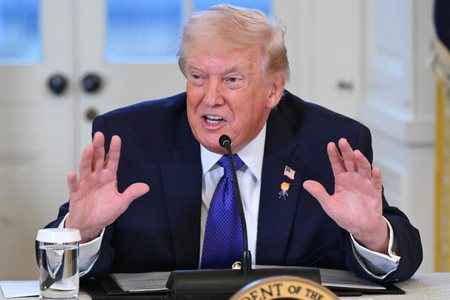
America could try to strike a regime that has been a constant problem for Washington for more than four decades. This week, Trump initially threatened “very strong” action against Tehran, prompting more protests, then appeared to back down; whether that was a ploy or an act of caution remains unclear. If he were to strike, his preferred option would likely be a limited strike. Perhaps a political “decapitation” from the air, similar to the one he recently oversaw in Venezuela, in which the hated Mr. Khamenei would be toppled or killed. Or America could bomb selected targets inside Iran, particularly structures linked to the Revolutionary Guard.
With less risk, America could help by ending the regime’s communications blockade by smuggling Starlink equipment into Iran. One indication of the importance of this is the fact that security forces are searching for those already in the country. The White House is also giving tacit support to an exiled opposition figure, Reza Pahlavi, the former crown prince who fled Iran when the Shah was overthrown in 1979. From a safe distance in Maryland, he too has called on protesters to rise up for democracy. In the absence of an organized opposition within Iran, perhaps the country could restore some form of monarchy.
Yet even a simple examination of these options shows how difficult it would be for American action to succeed. If Mr. Trump orders strikes, Iran possesses a powerful arsenal of short- and long-range missiles capable of hitting the Middle East and causing unpredictable escalation, and countries in the region are warning against a US attack. An aerial takedown would require extraordinary intelligence against an already alerted adversary. Even with the ayatollah gone, a Caracas-style deal with the Revolutionary Guards would be unlikely to bring long-term stability, as wounded Iranians would seek revenge against generals with so much blood on their hands.
A new way of the world
The stakes are extremely high. With Trump in office, the old guarantees of geopolitics are dissolving. His concern has never been respect for international law or fostering a club of liberal democracies. Yet even as Iran has been abandoned by its allies China and Russia, he is more willing than any recent American president to undertake major changes if he believes they will enhance America’s influence and personal prestige. Any intervention will be a test of the world that is being shaped.
Once upon a time, every popular uprising seemed to herald the birth of a new democracy. Unfortunately, after the failures of the Arab Spring, it is no longer easy to imagine that Iran’s path will be so simple. However, the hope remains that, in time, the regime’s collapse will favor the courageous Iranian people, who have once again proven to be their country’s greatest asset./ Adapted from “Pamphlet” by “The Economist”


Po por thelbin ju nuk e keni pershkruar qi asht pasuria gjigante nentoksore e Iranit qi don Amerika per mi marë per vedi ! Në rast qi Ayatollah bijn dakord dhe ja japin Amerikaneve ket pasuri atherë ata menjiher do jan dakord me bashkpunu me Ayatollah dhe do I heqin sanksionet , se Amerikaneve i intereson vetum NAFTA ! I njajti shkak ka qen Venezuela ????????, Irak ????????, Syrie ????????, Kuwait ????????, Afghanistan ????????, Libya ????????, Nigeria ????????, mavon Columbia , Burkina Faso ???????? rezerva enorm të Arit! Djali I Shahut Pahlavi nuk ka asnji shans per me ardh në pushtet dhe populli nuk e don se akoma i ka kujtimet i babes I ti qi ka udheheq Iranin me nji diktature ku gjithe cilli i dyti njeri ka qen agjent i Savak- ut dhe kur asht largue nga Irani e ka marë pasurin me vedi qi i takonte popullit Iranian ! Si ashtu familia Pahlavi jan te lidhun me SIONISTA !