


 Shkruar nga Pamfleti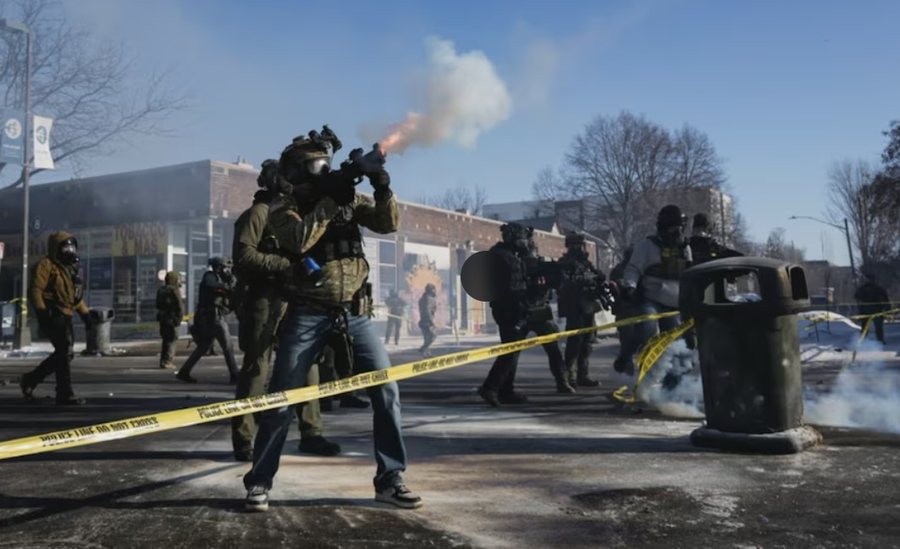
Murders, arrests and fear: how Trump's 'strong state' is being implemented on immigrants
The US Immigration and Customs Enforcement agency, known as ICE, has become the centerpiece of one of the largest mass deportation operations in US history under the Trump administration. The situation in the country has become very tense after two murders linked to the agency's interventions, reviving fierce public debate and opposition from local communities.
ICE has been involved in thousands of arrests in public spaces since Trump returned to the White House in January 2025, and these actions have often sparked clashes with protesters who oppose the agency's practices. The agency is leading the implementation of the Trump administration's mass deportation initiative, a central promise of his election campaign.
Since returning to office, Trump has significantly expanded ICE—both in budget and mandate—to track and detain people believed to be in the U.S. without proper documentation. The agency also has responsibility for investigating illegal immigration and removing undocumented immigrants from the country.
ICE was established in 2002 under the Homeland Security Act, following the September 11, 2001, terrorist attacks, as one of the bureaus within the U.S. Department of Homeland Security. The agency says its mission covers both public and national security. Its agents have the authority to stop, arrest, and detain people suspected of being in the country illegally, but a court order is required to enter homes or private spaces.
In certain cases, agents can also detain U.S. citizens—for example, when someone resists an arrest, assaults an officer, or is suspected of being in the country illegally. However, the news organization ProPublica reported that in the first nine months of Trump’s presidency, there have been more than 170 cases where federal agents have detained U.S. citizens against their will after they were wrongly classified as undocumented immigrants.
ICE's use of force is governed by the U.S. Constitution and laws, as well as Department of Homeland Security policy guidelines. Under the U.S. Constitution, deadly force can only be used when a person poses a serious risk to agents or others, or when they have committed a violent crime, explained Christopher Slobogin, director of the criminal justice program at Vanderbilt University.
However, the U.S. Supreme Court has traditionally shown a high tolerance for officers acting under duress without the possibility of a subsequent trial. A 2023 DHS guidance states that federal agents “may use deadly force only when absolutely necessary” and when there is a reasonable belief that the individual poses an imminent threat to life or serious injury.
The killing of a U.S. citizen with the initials G. in Minneapolis, who was shot while in her car, has sparked fierce reactions. The Trump administration claims the agent acted in self-defense, but local officials say she posed no danger. Following the incident, Minnesota officials sued the government to stop sending federal immigration agents to the state.
ICE operates primarily within the U.S., while other agencies like Customs and Border Protection (CBP) typically focus on border security. Under the Trump administration, the roles have become more blurred, involving agents from various federal agencies in domestic operations, often alongside ICE.
While ICE operations have involved thousands of agents in cities like Los Angeles, Chicago, and Minneapolis, the administration reports that between January 20 and December 10, 2025, about 605,000 people were deported, while 1.9 million immigrants "departed on their own" after pressure campaigns to encourage them to leave before arrest.
An immigrant who comes into contact with ICE can face a variety of scenarios: in some cases they are temporarily detained and released after verification, in others they are sent to larger detention centers. Many seek legal status while in custody, but if they fail to do so, they risk deportation.
As of the end of November 2025, about 65,000 people were in ICE custody, according to data from Syracuse University's Transactional Records Access Clearinghouse (TRAC). Immigration lawyers said families often don't know the whereabouts of detained relatives for days.
Public reactions to ICE operations have been mixed. While some Americans support the need for immigration enforcement, polls show that most are concerned about the methods used, often documenting arrests through video footage. In Chicago, a media group sued Customs and Border Protection, alleging excessive use of force against journalists, religious leaders, and protesters; a federal judge initially ruled in favor of the group, but the decision was later overturned on appeal.
In addition to G.'s case, an ICE agent reportedly shot a Venezuelan national in the leg in Minneapolis after he attempted to resist arrest, and there have also been incidents in Los Angeles where agents shot at drivers, claims that DHS has argued were in response to vehicle threats.
The debate over the role of ICE and the US government's measures against immigration remains at the center of public and political attention in the United States, with divided opinions on the necessity and manner of implementing deportation policies.








Lini një Përgjigje