


 Shkruar nga Roberto Saviano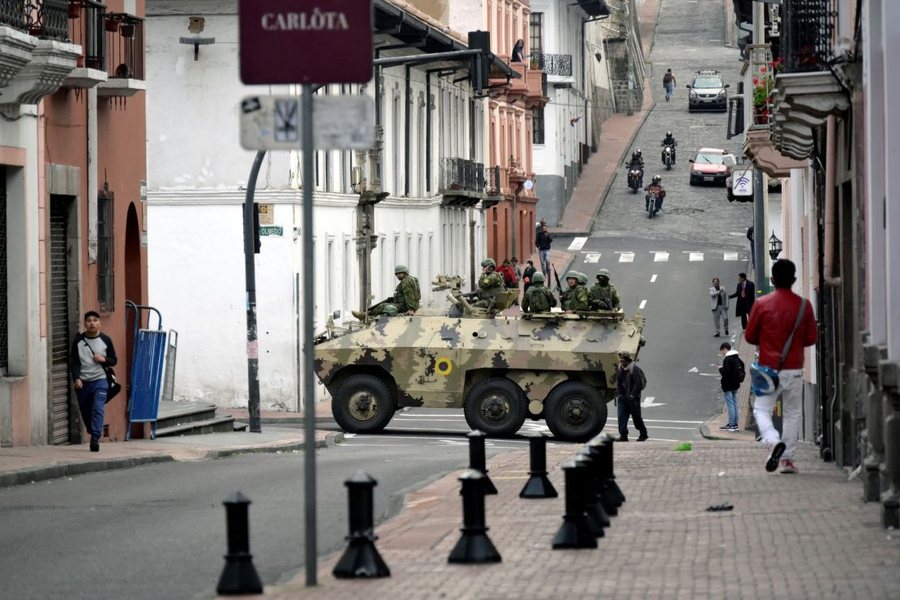
What is happening in Ecuador is about any western nation and not about moral involvement, because the more the labor crisis grows, the more difficulties dominate daily life, the more difficult and notorious life becomes, the more it grows drug consumption.
What all observers expected to happen, sooner or later, in South America is happening in Ecuador: a narco-coup.
A jumbled, unplanned, word-of-mouth-only riot with TikTok and Instagram buzzwords: create disorder, shoot randomly, take over the city, prevent life from proceeding in an orderly manner. As regular as life can be in Quito.
And so the pushers, post offices, branches have turned into narco-guerrillas, you can see men with bazookas on the streets, they have started shooting without logic at the cars of families who had just gone to pick up their children from school.
Kidnapping people in public gardens or bus stops is being done with the sole purpose of using them as a tool to blackmail the government.
In these hours, dramatic videos are circulating, often published by the narcos themselves: a little girl in a school uniform soaked in blood, hit by a bullet in the arm, getting out of the car asking for help.
Prison video where masked drug gangs crucify prison guards with homemade tripods.
The government has turned off the lights in an attempt to prevent social media from becoming the communication tool for narcotics, as it has always been, to spread their crimes and give orders for action.
The objective of the narco-coup is not to take power, it is not to administer with their people, nor to control the state. Far from it. The narco-coup wants to terrorize the country, re-establish his supremacy over the government and force it to negotiate.
The negotiation for the freedom of José Adolfo Macías "Fito", the head of the hegemonic cartel in Ecuador, Los Choneros and the negotiation for the power of the cartels who consider themselves the true supporters of the government and betrayed by it.
Fito had escaped from prison many days before the escape was noticed: a double had replaced him in the cell.
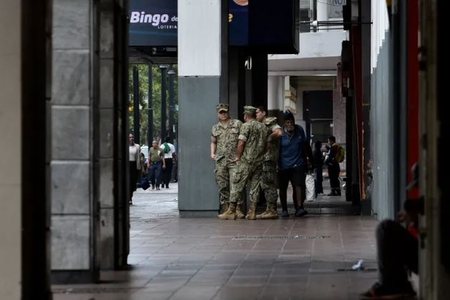
When the Ecuadorian president, Daniel Noboa, discovered the escape ruse, he declared a two-month state of emergency, curfews, roadblocks, movement restrictions, helicopters to search for the boss who escaped from the maximum security Litoral prison in Guayaquil.
This caused riots and caused the order from the narcos to set fire to Ecuador.
Why Ecuador?
However, this small country of 18 million inhabitants, located in the northwestern part of South America, has always been among the countries least surrounded by crime compared to neighboring countries, Colombia and Peru, and compared to the situation in the Caribbean. This is now history.
Ecuador in the 80s and 90s and throughout the first phase of the 2000s never had hegemonic cartels or gangs with bloody criminal practices.
Everything changes since 2018 when changes in the geopolitical structures of narcotics make Ecuador a key space for large global drug trafficking groups. The change occurs with 4 major earthquakes:
1) the end of the big Colombian cartels: becoming many fragmented groups, they no longer have top-down management of cocaine cultivation and shipments. At this point, everyone starts cultivating where they can and everyone must save.
2) The end with a peace treaty of the Colombian communist guerrilla, the FARC (Revolutionary Armed Forces), which was the oldest guerrilla in the world, so long-lived because it was financed by coca and cocoa. The guerrillas earned their income from farming and transportation; ending their control over the head, it can now be transported elsewhere and grown anywhere.
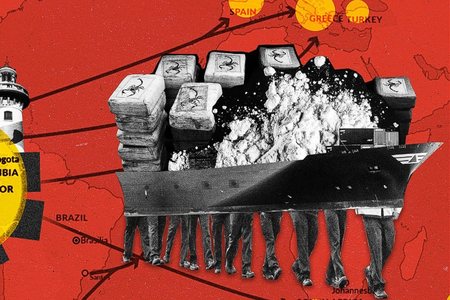
3) The hegemonic power of the Mexican cartels as global empires of drug trafficking. Colombian cartels are employed by Mexican cartels and the latter have decided to grow Colombian and Peruvian crops. Where do they store and refine cocaine? Exactly in Ecuador.
4) The recent earthquake which in just a few years made Ecuador one of the most violent countries on earth, the political change of Venezuela. Venezuela, now a failed state in the post-Chavez years, has fallen under the control of a cartel, the Cartel de los soles: drug gangs made up of military officers (who have the sun as their rank symbol) who control the departure of drug shipments. coca directly from the ports of Venezuela.
As cocaine production increased and European and Middle Eastern demand increased, they charged ever higher prices. In Venezuelan ports, the shipment of cocaine is a consolidated practice that does not require concealment: it is possible to organize and store tons of cocaine on ships. A service that the government pays very dearly for. The Cartel de los Soles has now raised prices and the Mexicans have decided to move everything to Ecuador.
What does it mean when a Mexican cartel joins a new group?
In 2005, Los Choneros numbered around ten. You read that right: literally ten men commanded by Jorge Bismark Véliz España aka Chonero. Almost all the children of the group come from the city of Chone, but the cartel is consolidated in the coastal city of Manta. Imagine 10 desperate people, addicted to alcohol and snorting cocaine, getting one, two million first a week, then a day for leaf storage, head refining and finally delivery.
What's happening? It happens that in a few months they start to build an incredible consensus and do what mobsters always do: they control poverty, organize poverty and divert it into narco-capitalism.
And they invest in relationships. As ten, they command an army of ten thousand affiliates across the country and a "subcontractor" working for them of over half a million people.
Los Choneros becomes the first company in the country to infiltrate politics, decide on mayors, buy votes, move ministers and police chiefs and kill politicians when they stand between them and their targets as happened in front of the cameras on August 10 with the presidential candidate . elections Villavicencio and, six days later, the other candidate Pedro Briones.
The Government's Response (and the Risks)
Now the government that they consider an ally has not only declared a state of emergency, but in a video where they appeared together with the opposition, they announced "amnesty and immunity" for soldiers and policemen who are trying to restore order.
What does it mean? Anyone in uniform can shoot anyone without having to be ordered or held accountable.
This will only lead to a worsening of the violence, which will actually end up forcing the government to mediate with the narcotics. Someone will sell Fito's head and get government benefits to stop everything.
What is happening in Ecuador is about any western nation and not about moral involvement, because the more the labor crisis grows, the more difficulties dominate daily life, the more difficult and notorious life becomes, the more it grows drug consumption.
Ecuador's blood is produced by tons of coca, heroin (derived from opium grown in Sinalona), marijuana and painkillers (fentanyl) for which the world is increasingly hungry.
Drug traffickers profit from the pain ignored by the governments of the world: drugs are nothing more than a terrible and poisonous sedative for the suffering and anxiety created by our time and which occupy millions of people./ Corriere della Sera



Lini një Përgjigje