


 Shkruar nga Ian Williams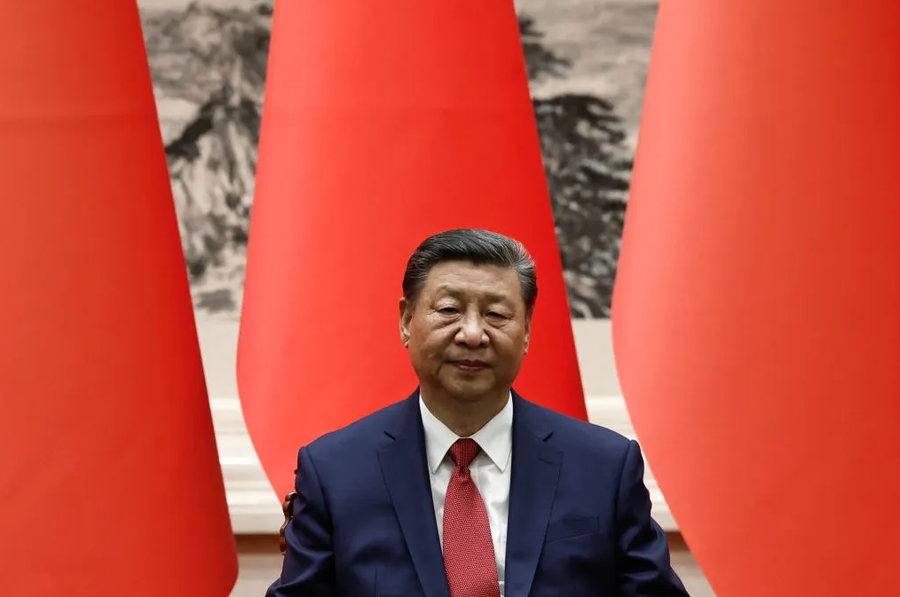
Xi has a host of other coercive measures at his disposal. Other weapons in China's toolbox include boycotting American companies or goods, as has already been seen against clothing firms that have criticized the use of forced labor in Xinjiang's cotton fields.
The port of Shanghai is the world's busiest. Activity there is closely monitored by financial analysts, who distrust official statistics and seek data on what is really happening in the world's second-largest economy. Recent days will have seen rapid developments.
There was chaos at first, as ships rushed to load containers, half of them destined for the United States, in an attempt to avoid the new tariffs. By last weekend, the country was reportedly at a near standstill. “Ships that failed to leave on time are now sitting idle and in large clusters at ports.
Many carriers are either pulling their cargo or trying to find alternatives,” notes the Chinese business magazine Caixin. After a series of successive increases, total U.S. tariffs on Chinese goods are now at 145 percent, while China has retaliated with 125 percent tariffs on American imports.
After the latter hiked on Friday, Beijing suggested it would be the last, as such levels have destroyed trade between the two countries, and there is no point in going any further. As the Shanghai port was halting operations, Xi Jinping was hosting Spanish Prime Minister Pedro Sanchez, telling him that the rest of the world needed “unity and cooperation.”
He will deliver the same message to Vietnam, Malaysia and Cambodia next week, urging them to stand with China in the face of Trump’s US and embrace a “shared future” (i.e. Chinese). Chinese state media is presenting Xi as a champion of free trade and globalization and promoting the need to “build an anti-Trump coalition.”
It is now clear that Beijing is not ready to give up, and is determined to extract maximum diplomatic benefits from this trade war that is escalating by the day. Beijing's accusations of the US for "coercion", "bullying" and "violation of the rules" are certainly hypocritical, as all three of these schemes have been a central element in China's rise to the global stage.
But Xi has figured his statements will still be welcomed by some countries that have been shaken by a US president with rampant behavior, who is alienating the US from both friends and enemies. He also needs new markets to guarantee a wave of cheap Chinese exports redirected to the US, the world’s largest consumer market. So he needs Southeast Asia in particular to turn a blind eye to shipments of Chinese goods. The latter are re-labeled as if they were made elsewhere. Supply chains are complicated. Often a single product (an iPhone, for example) has components that come from multiple sources, and Chinese logistics companies have been very adept at circumventing trade restrictions long before the recent clashes.
So Xi has a host of other coercive measures at his disposal. Other weapons in China's toolbox include boycotting American companies or goods, as has already been seen against clothing firms that have criticized the use of forced labor in Xinjiang's cotton fields.
Beijing could also step up regulatory investigations for bogus reasons like tax evasion, antitrust, or data security. Google and DuPont are already facing investigations for antitrust behavior. A nightmare for foreign companies is hostage diplomacy, in which China is becoming increasingly adept.
Under Xi, there has been a worrying increase in cases where foreign executives of companies involved in business disputes, real or imagined, are barred from leaving the country. Beijing could abandon its modest cooperation on the flow of chemicals that helped fuel America’s fentanyl drug crisis and the laundering of proceeds involving Chinese banks. It could target American service companies, law firms and banks, where America enjoys a trade surplus with China, for example.
There could also be increased pressure on US companies, desperate to curry favor with Xi's regime, to hand over intellectual property. But there could also be further restrictions on key exports on which the US is heavily dependent, such as vital minerals used in the technology and defense industries.
Beijing could also manipulate its exchange rate to make its exports cheaper and dump its US Treasury bonds. China is the second-largest holder of US debt after Japan, and there is already speculation - although without hard evidence - that last week's sharp swings in US bond markets were provoked by a massive sell-off by the Chinese.
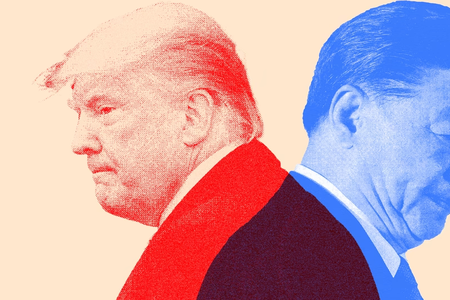
That development, the biggest rate hike since the pandemic, appears to have been the reason Trump backed down, suspending the highest tariffs against the rest of the world (although they still face a minimum of 10 percent), while further increasing them against China.
Whatever the reason, the decline will have encouraged Beijing to think it can outlast America. On paper at least, the Chinese economy is fragile, still suffering the consequences of the property crisis, with heavy debt and falling domestic investment.
In the absence of meaningful economic reforms, Xi has pinned his hopes on cheap exports to revive the economy. It looks more fragile than the US. Yet China is also an autocracy and its tolerance for suffering is higher. It can impose more suffering on its people.
And with Xi betting on higher inflation, job losses and economic setbacks from the trade war, it is Trump who will face early and greater political and popular pressure to change course.
Meanwhile, the US is a much more open economy than China, and as last week’s bond market swings showed, it is much more exposed to market sentiment, even as Trump has been dismissive of dramatic stock market developments.
While it is true that the legitimacy of the Chinese Communist Party depends on the performance of the economy, things would have to get much worse to provoke the kind of popular protests that were seen at the end of China's harsh Covid-19 lockdowns, which forced Xi to abandon his stubborn "zero cases" policy.
The PKK is also using a familiar tactic to stoke nationalist sentiment by portraying the trade war with America as a patriotic one. Last week, the Foreign Ministry circulated a video of a famous 1953 speech by Mao on determination in the Korean War against America.
Beijing's warning that "China will fight to the end" has become a point of reference on social media. The separation of the European Union from America is a long-standing goal of the CCP's policy, and Xi will have felt encouraged by the Spanish prime minister's visit.
Sanchez told him he was in favour of “a more balanced relationship between the European Union and China”. But others will be more cautious. China’s support for Russia’s aggression in Ukraine casts a long shadow over EU-China relations, and they will not be helped by the news of the Ukrainians capturing two Chinese soldiers who were fighting for Russia./ Adapted from The Spectator Pamphlet


Lini një Përgjigje