


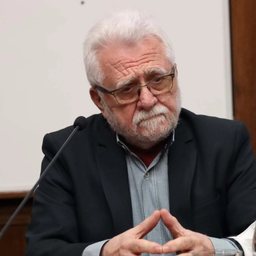
 Shkruar nga Zoran Radovanoviç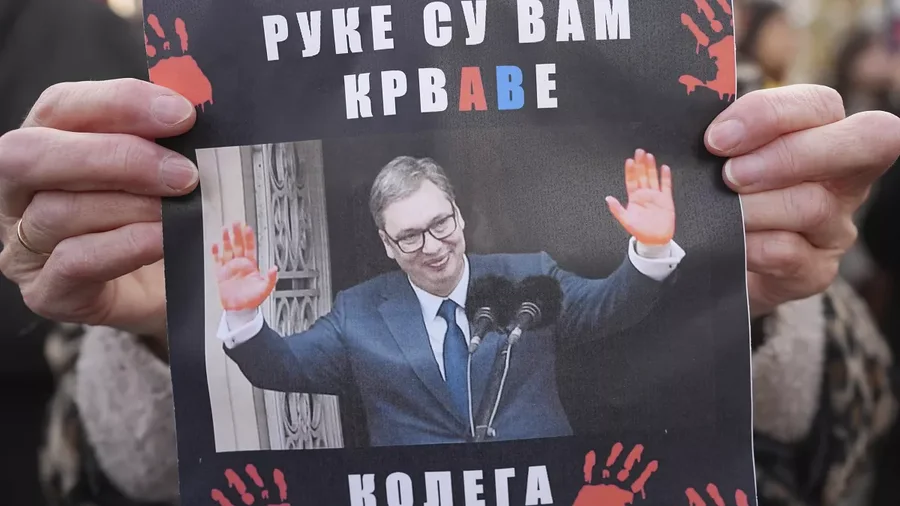
When The Guardian reports on an autocrat, the leaders of the free world should tremble
The chances of the oppressed masses being freed from the yoke of oppressive regimes increase significantly when the world learns about their suffering. The only problem is that injustices abound on the face of the earth, so the attention of public opinion is drawn to those hot spots where citizens' calls for justice and democracy are met with extraordinary and brutal repression. Exactly such a process is currently taking place in Serbia.
The spread of the truth, at least through electronic media, was spurred by the actions of students in Strasbourg and Brussels. The subsequent actions of the authorities, violence against protesters, arrests, burning of their property, blackmail and dismissals, raised concerns not only in Europe, but throughout the world. Recently, Serbia has become a frequent topic in the most prestigious and influential world media.
One of the oldest medical journals in the world, “The Lancet”, which this year marks 203 years since its founding, published an article on August 14 titled “Serbia is in crisis”. The choice of this topic is not accidental, as the journal proudly emphasizes that its editorial line is based on global equality for the right to health, care for climate change and commitment to social justice.
The editorial, which has particular weight because it comes from the editorial board itself, states that the collapse of a shelter in a public institution is a symbol of the price that citizens pay with their lives due to systemic corruption in the increasingly authoritarian regime of Aleksandar Vučić. It is emphasized that in March and April alone, over 3,500 protests and rallies were registered, that this is the largest student mobilization in Europe since 1968, and that it is becoming increasingly difficult to justify the silence of European leaders, especially when three fundamental pillars of any society are collapsing in Serbia: democracy, education and healthcare.
The message is clear: Serbia is at a crossroads. If Serbian authorities continue to respond with repression and the international community remains silent, then the erosion of democratic institutions, social trust, and public health could become irreversible. The only solution is a radical change of political will in Serbia and a real commitment on the part of the international community.
Just four days later, another editorial was published by the prestigious newspaper “Financial Times”, with the title “It is time to end the tolerance of Serbia's authoritarian president.” Editor-in-Chief Roula Khalaf personally recommended it as her favorite read.
The article emphasizes that the autocrats, after a decade in power, face a clear dilemma: to increase repression and strengthen crony capitalism, destroying even the few independent media that may remain, or to respond to the opposition's calls for reform. According to the editorial board, Vučić is pursuing a dual policy, of the "good morning, bazaar, to the four corners of the world" type, while European leaders continue to support him due to interests mainly related to lithium resources.
The Financial Times editorial board acknowledges that Vučić could still choose to ease pressure on independent media, open up political space for the opposition and push for independent investigations into scandals – such as the collapsed Novi Sad station – and that these actions could mark a positive turn towards EU integration. But it is stressed that this is not a path that an autocrat like Vučić will willingly follow. For this reason, the conclusion is clear: if he is left free to decide, the responsibility will not only lie with him, but also with Western partners who choose to look the other way.
Aware of the influence of the Financial Times on international opinion, Vučić tried to appear moderate by sending a response titled “Serbian authorities remain committed to dialogue”. He tried to present himself as a reasonable party that always seeks talks in good faith, but, according to him, faces a lack of will from the other side. But the reaction of the Serbian diaspora from all continents (except Antarctica) rejected this rhetoric in a letter sent to the newspaper, which has not yet been officially published, but is widely circulated online.
Vučić also addressed the British newspaper “The Guardian” with a reaction to a critical article about the situation in Serbia published on August 25. But there he experienced a rare humiliation for a state president: the editorial office of “The Guardian” published his letter on August 29, but in a completely inappropriate place – in a supplement on advice for housewives, under a photo of carrots and other vegetables.
On the same day, an article titled “When students lead, professors must stand by them to protect health and human rights” was published in the prestigious British magazine “British Medical Journal”. The authors are two medical students and a professor from Belgrade, as well as a professor from London.
In conclusion, the article emphasizes that the response to repression must be collective and courageous, that the situation in Serbia requires solidarity across state and disciplinary borders, and that the international academic community must understand that an attack on democracy, wherever it occurs, constitutes a global threat to knowledge and public health. Universities have a duty to protect scientific research and civic responsibility.
In the face of this devastating exposure of how he manipulates power, Vučić is powerless. He can lie to his misinformed citizens, as his predecessors did in dark periods of history, but there is no deception that can work on the average American, British or Swedish citizen. And these anonymous but heavily voting citizens are the ones who decide how long Von der Leyen, Macron or Scholz will be in power.
Only the naive believe that the leaders of the free world are not informed about Vučić's sins and abuses. They have chosen him precisely because of his dark biography and submission to blackmail. He humbly hands them everything, ready to turn Serbia into the garbage dump of Europe. But when "The Guardian" speaks of an autocrat with dangerous influence in the Western Balkans, Western leaders cannot remain silent, because the impact of these words could damage them in the eyes of their electorate. You cannot have a quiet alliance with a tainted partner. /Adapted from Danas
The author is a retired professor at the Faculty of Medicine.


Lini një Përgjigje