


 Shkruar nga Pamfleti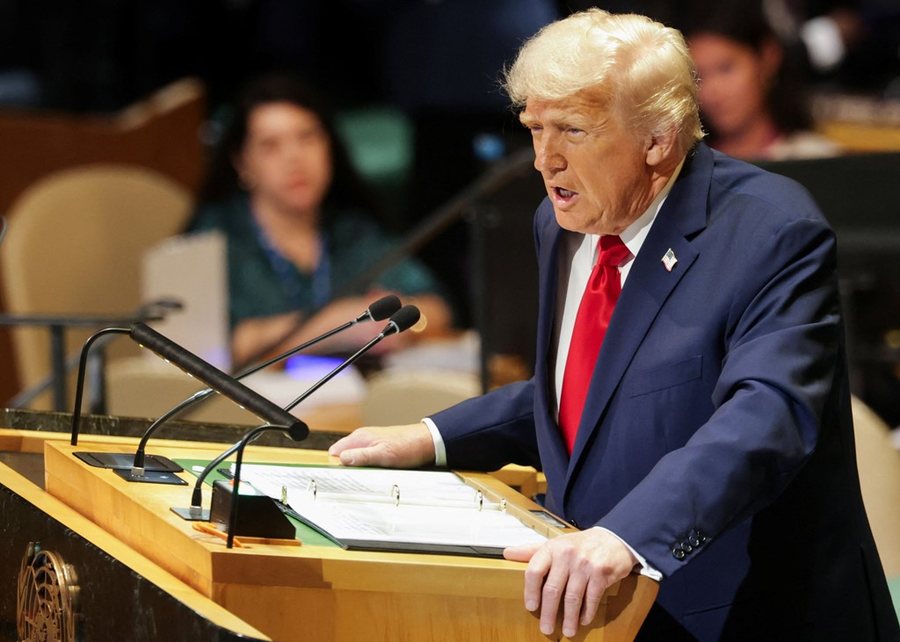
This week, many of the world's most powerful leaders descended on New York for the UN General Assembly. They addressed topics ranging from climate change to the wars in Gaza and Ukraine to immigration and more. But six of the biggest moments that left their mark on the Assembly were:
1-Zelensky's warning
"We are living the most destructive arms race in the history of mankind," Zelenskyy told the UN.
He warned of Russia's actions and the threat posed by the ongoing drone war, and said there were no guarantees of security except from friends in arms.
"Weapons decide who survives. Your Excellency, you know very well that international law does not fully function if you do not have powerful friends who are truly ready to defend it," Zelensky added.
Zelensky also met with Donald Trump this week, and after sitting on the sidelines of the meeting in New York, the US president surprisingly said he believed Ukraine could reclaim all of its occupied land.
2-Trump against the UN
Speaking about the man in the Oval Office, our US correspondent Mark Stone described Trump's speech to the General Assembly as a "full-scale assault" on global institutions.
In an extraordinary moment, the American leader far exceeded his 15-minute time limit to rebuke the UN and take aim at immigration and climate change.
"I'm here to tell the truth, I don't care," Trump told the UN.
3-The Palestinian flag waves high
This week began with several countries officially recognizing the Palestinian state, joining the United Kingdom, Canada, and Australia, which did so on Sunday.
Mahmoud Abbas, president of Palestine and the Palestinian National Authority, was not in New York after the US refused to let him in, but he spoke virtually. It was a poignant speech in which he promised that Gaza would resist as Israel continues its war against Hamas.
"In conclusion, we say to our sons and daughters at home, in exile and in the diaspora, that no matter how much our wounds bleed and no matter how long the suffering lasts, they will not break our will to live and survive. The dawn of freedom will rise," he said.
The symbolism of having the president of the Palestinian nation, newly recognized in many Western countries, was a significant moment at the UN, one that its supporters hope will translate into change on the ground.
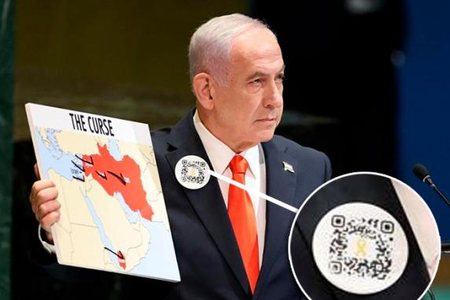
4-Delegates walk out of Netanyahu's speech
As Benjamin Netanyahu approached the podium, dozens of delegates walked out of the hall in protest. But Netanyahu wanted to make sure his speech at the UN could be heard by those in Gaza, with loudspeakers on the territory's border loudly repeating his speech, theoretically aimed at the hostages and Hamas, though it is unclear whether any group could hear it.
"We have not forgotten you, not for a second," he said in a message to those held prisoner by Hamas. Meanwhile, he urged the group to "release the hostages now" and warned "if you don't, Israel will come after you."
5-China's Green Curve
As we've already mentioned, climate change was one of Trump's targets at the UN. But while the US president called it "the biggest hoax ever perpetrated," Beijing's Xi Jinping made his country's first commitment to reducing greenhouse gas emissions.
Xi pledged that China will cut emissions by 7-10% by 2035, while "trying to do better."
6-Syria's historic comeback
Ahmed al-Sharaa is leading a country struggling to recover from decades of brutal dictatorship and civil war. He became the first Syrian leader to address the assembly in almost six decades. His presence alone was a historic moment.
He called for the lifting of international sanctions on Syria "so that they no longer hold the Syrian people in shackles" and condemned the numerous Israeli attacks on his country since he took power in January.



Lini një Përgjigje