


 Shkruar nga Pamfleti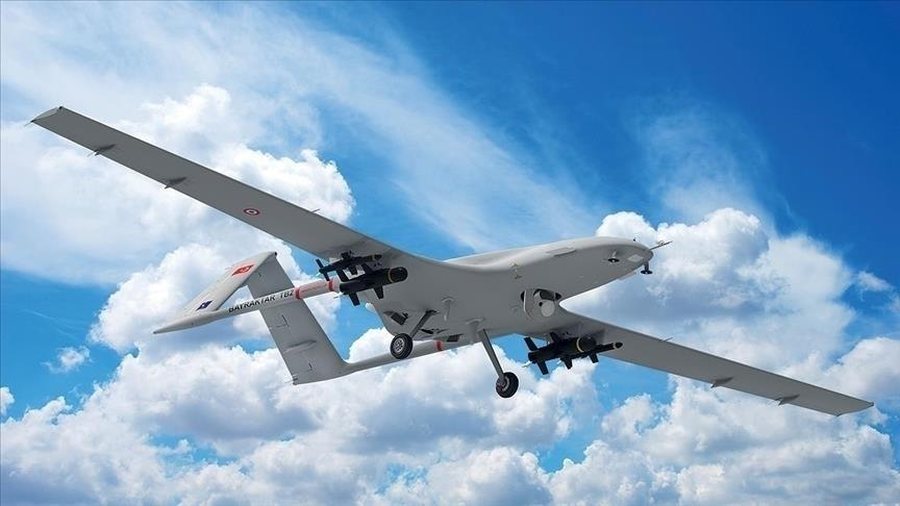
The risk is "high," German Interior Minister Alexander Dobrid said on Saturday, referring to the numerous sightings of drones in European skies.
Germany and NATO countries as a whole have so far lacked a reliable system to deal with them, which must change immediately. This requires the creation of a “Drone Defense Center.”
This center will combine the expertise of the Federal Police, the Federal Criminal Police Office and state police authorities. Dobrid said he wanted to gather all the knowledge in this field and launch new research projects.
The Bavarian politician spoke of a technological war between threat and defense that must not be lost. The multitude of different types of drones that have been spotted in parts of Germany and neighboring countries in recent weeks is a major challenge.
Several drones, for example, were spotted over the state of Schleswig-Holstein on Friday evening. Dobrid spoke of "drone swarms," something that had never happened like this before.
The army is also in "battle"
Combating drones with nets or "jamming," i.e. by interfering with radio signals, has limited effectiveness, according to the minister, so new technologies must be developed. "We can't wait for others to provide them," he said.
The new defense center, according to the Minister of Interior, is the first part of a two-pillar strategy.
As a second pillar, Dobridi announced a revision of the Aviation Security Act to regulate the legal basis for protective measures. The essence of this reform focuses on the fact that the Bundeswehr, the German army, will be able to participate in defense against drones as part of its official assistance to the police. This also includes shooting down aircraft whenever necessary.
The necessary agreements between the Interior Ministry and the Defense Ministry, as well as a draft law, are expected to be finalized this fall, the Christian Socialist politician explained. This will not be a spontaneous intervention by the Bundeswehr when drones are detected, but planned cooperation with the police to protect critical infrastructure or events with large crowds. The risk assessment will be carried out on a case-by-case basis, Dobrid explained. The flight of a drone alone does not constitute a threat.
Destruction as a last resort
As Bild newspaper reports, a drone should be able to be shot down if it poses an acute threat to human life or critical infrastructure and other protective measures prove insufficient. In such crisis situations, the final decision-making should lie with the Ministry of Defense.
Foreign Minister Johann Vandevoll, however, appeared skeptical of Dobrind's plans.
"We must now create the necessary legal and organizational conditions to be able to prevent such phenomena," the Christian Democrat said on the sidelines of the UN General Assembly in New York and did not comment on the role of the Bundeswehr in such a scenario.
The Foreign Ministry, however, will be involved in this process. "Then it will be necessary to determine in detail who will be responsible for handling such flights. We will also have to discuss this intensively with the federal states," he added.
Reactions from the police
The police union initially rejected Dobridi's plans. Its leader, Jochen Koppelke, told the Handelsblatt newspaper that it was good that Dobridi was now dealing with drone protection.
"As a responsible minister, however, he should strengthen his police and not rely on the army, because its deployment is difficult and only possible in rare exceptions," he said.
The police are always available, Koppelke stressed, adding that "an immediate legal basis is therefore required for the immediate downing of drones by all law enforcement agencies in Germany."
Practical and political issues
According to security expert Ulrike Franke, Germany is not well equipped to deal with drone attacks.
"Even in critical infrastructures, such as major airports, there are no or very few protective measures. We should have no illusions about protection against drones throughout Germany," she said.
"Multiple systems are needed to deal with different types of drones, such as jamming systems, interceptor drones, lasers and microwave weapons," the EXPERT told Der Spiegel.
A practical problem, however, also concerns the risks of crashing a drone, especially in a residential area, as its debris could cause damage or even injury.
However, there is general concern about the strengthening of the military's role in another area, which adds to the general "warlike" climate cultivated by recent statements by politicians in the country.




Lini një Përgjigje