


 Shkruar nga Pamfleti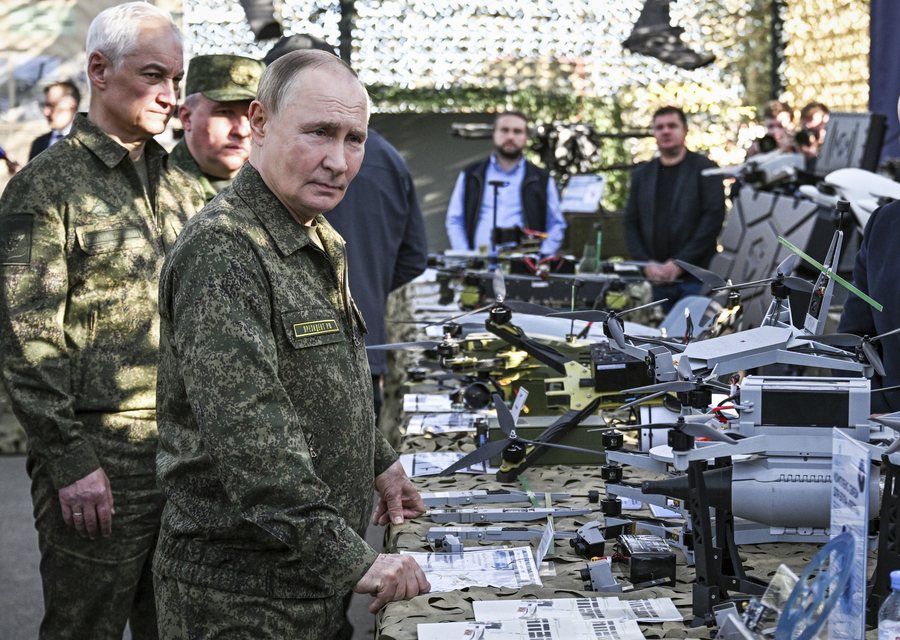
Russia is showing that, even if the fighting in Ukraine stops, its war machine will continue to be a central axis of its economic strategy.
Even if the fighting in Ukraine calms down, the Russian economy will find it difficult to break away from its war path.
In recent years, massive defense spending has militarized industry and absorbed hundreds of thousands of workers, averting recession but also creating a dependency trap.
Vladimir Putin shows no signs of backing down. He sees maintaining a strong and well-equipped military as a strategic priority, something the West sees as a potential threat to NATO.
The explosive production of tanks, missiles and drones may find opportunities in markets such as China, but it also weighs on an economy already struggling with sanctions, a weak banking system and limited growth.
Production and expenditure data
The increase in military production is impressive: before the 2022 invasion, Russia had planned to supply about 400 tanks a year. Today, it is supplying ten times that number. At the same time, it has developed its own drone production lines, reaching 1.5 million units by 2024, compared to just 140,000 in 2023.
Defense spending between 2022 and 2024 reached at least 22 trillion rubles ($263 billion) and shows no signs of slowing down in the near future. Annual budget gaps are widening, but the Kremlin continues to pour resources into military production.
Russia is a global arms exporter
The experience of World War II is a guide: then, the Soviet war industry laid the foundation for the USSR to become a major arms exporter. Today, the Center for the Analysis of the World Arms Trade estimates that after the war, Russia could export military equipment worth $17-19 billion a year.
State-owned Rosoboronexport says orders have risen to $60 billion, with countries in Asia, the Middle East and Africa interested in joint production and technology transfers. The increased scale of production is lowering costs, making some Russian products cheaper than before.
Prospects and risks
Despite the commercial momentum, the order book is significantly below Russia's large defense budget. In addition, Western pressure on client countries, as happened with oil, could limit exports. Factory lines may be maintained, but future layoffs or layoffs are not ruled out, as demand will not reach current levels of war intensity.
Dual use and the Kremlin's strategy
Putin insists that investments are not wasted and promotes so-called “dual-use” technologies in shipbuilding, aviation, electronics, medical equipment, and agricultural production. However, his main priority remains the maintenance of a fighting military force, with the industrial infrastructure now permanently integrated into the economy.
Russia is showing that, even if the fighting in Ukraine stops, its war machine will continue to be a central axis of its economic strategy, with exports, technological innovation, and geopolitical ambitions that will accompany it for years to come.


Just bullshit disinformation from a lousy KGB dog.